[Membership in Bohemian Grove is restricted to men only]
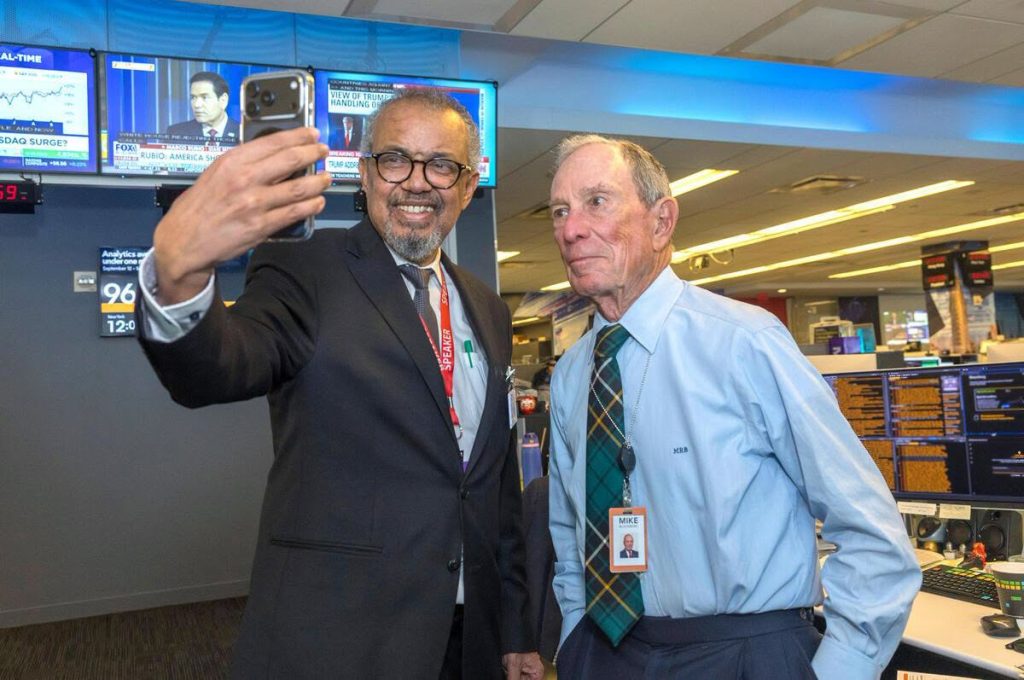
-Congratulations to my friend Mike Bloomberg on his reappointment as World Health Organization (WHO) Global Ambassador for Noncommunicable Diseases and Injuries, marking 10 years of partnership and impact.
From tobacco control and road safety to data for health and now lead poisoning, your leadership has helped put the prevention higher on the global agenda.
Thank you, Mike. I look forward to continuing our work together to save lives and build a healthier future for all. #UNGA
An alleged top-secret roster of the elite Northern California fraternity Bohemian Grove is now searchable — giving the public a rare look into the secret society of the world’s most powerful men.
A roster purporting to show the Bohemian Grove’s shadowy membership list, uncovered by investigative journalist Dan Boguslaw, reveals more than 2,000 business executives, entertainers, government officials and wealthy individuals separated into “camps” with cryptic names like “Rough ‘n Ready,” “Pink Onion,” and “Lost Angels.”
Anyone can search the list here.
The list was reportedly confirmed by a Bohemian Grove member but has not been independently confirmed by The California Post.
Bohemian Grove is stationed on a private 2,700-acre campground in Sonoma County that hosts an annual two-week retreat and has a clubhouse in San Francisco.
Names on the alleged list include former Rep. Nancy’s Pelosi’s husband, Paul Pelosi, late crooner Jimmy Buffett, billionaire Charles Koch, comedian Conan O’Brien, Associate Supreme Court Justice Clarence Thomas, former New York mayor Michael Bloomberg, and ex-Google CEO Eric Schmidt.
A Bohemian Club spokesperson said the group does not maintain membership lists due to its secrecy.
Founded in 1872, the secret society was originally created as a haven for writers and artists before expanding to include prominent businessmen, military commanders and others.
The storied club has been the subject of rumors and conspiracy theories over the years painting it as a cabal of power players in government and business.
Ιn a mini-documentary published this week, journalist Boguslaw and the news site More Perfect Union reported that the club was a catalyst for deals to cut capital gains taxes and social security under former President Ronald Regan’s administration.
In 2000, the conspiracy theorist Alex Jones snuck into Bohemian Grove and claimed he witnessed a human sacrifice, a wild claim that was debunked by his cameraman.
The club is also famous for its annual “Cremation of Care” ceremony and reportedly ribald and elaborately produced plays.
Independent journalist Daniel Boguslaw got his hands on the alleged list by hounding a Bay Area-based member for weeks and published the names Wednesday.
Former Secretary of State Henry Kissinger was also apparently a member for a long time, and others like legendary actor/director Clint Eastwood and Supreme Court Justice Clarence Thomas are rumored to be frequent guests.

most powerful men.

Here are some of the highlights from the alleged 2023 membership list:
Politics
- Paul Pelosi: venture capitalist and husband of former US House Speaker Nancy Pelosi.
- Edwin Meese III: former US attorney general under the Reagan administration.
- Bobby Inman: retired four-star admiral and former director of the National Security Agency (NSA).
- Carlos Bea: judge for the US Court of Appeals for the Ninth Circuit.
- James A. Baker III: former US secretary of state and secretary of the Treasury.
- Edwin Feulner: founder of the Heritage Foundation and influential architect of conservative policy.
Business
- Charles Koch: billionaire CEO of Koch Industries and prominent political donor.
- Riley Bechtel: billionaire heir and former chairman/CEO of the Bechtel Corporation.
- The Fisher brothers: Robert, John and William Fisher, whose parents founded Gap Inc.
- William Draper: influential venture capitalist and pioneer in the investment industry.
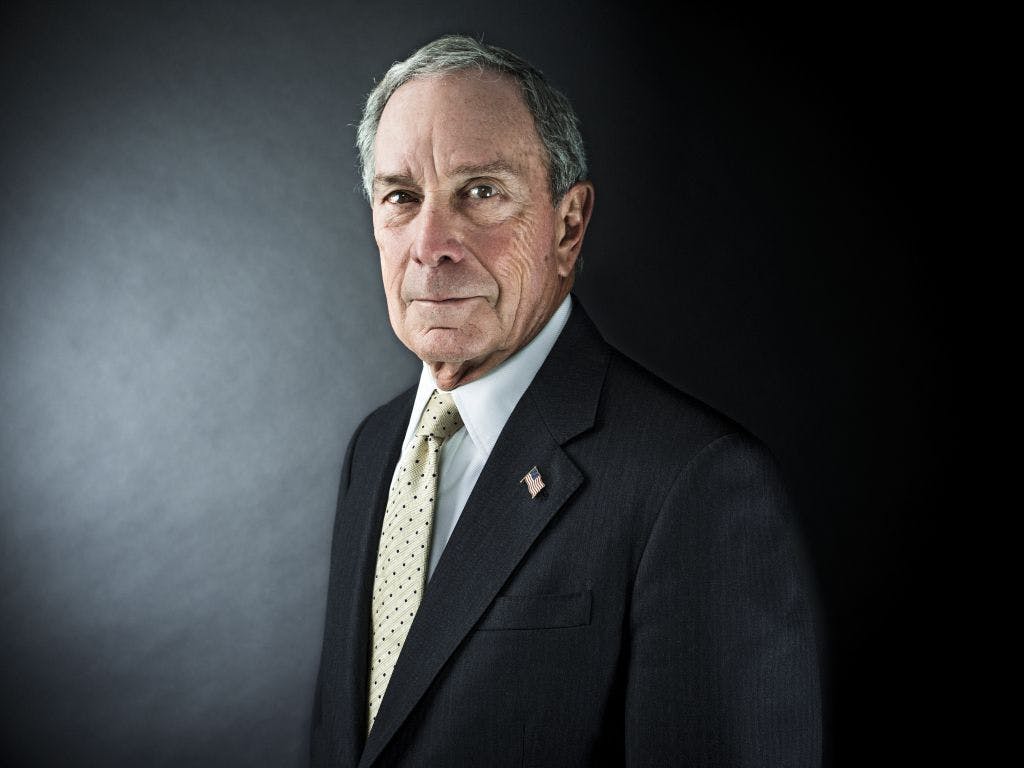
- Mike Bloomberg: billionaire founder of Bloomberg LP and former mayor of New York City.
Technology
- Eric Schmidt: former CEO of Google and executive chairman of Alphabet Inc.
- Brook H. Byers: senior partner at Kleiner Perkins and early biotech investor.
- Tim Draper: founding partner of Draper Fisher Jurvetson and prominent cryptocurrency investor.
- David Gifford Arscott: veteran Silicon Valley venture capitalist and investment firm founder.
>
Meet Mike
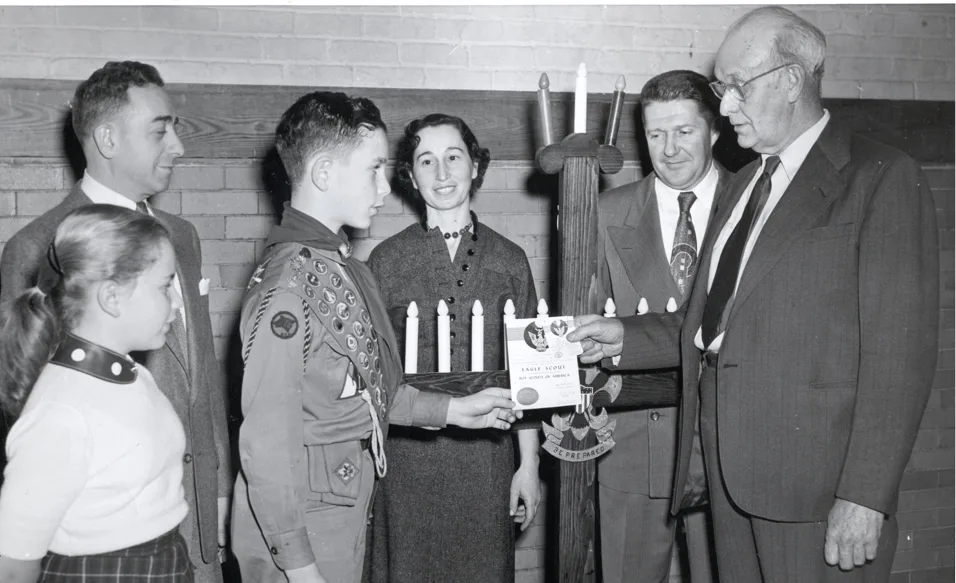
Born in Boston on February 14, 1942, Mike Bloomberg grew up in a middle-class home in Medford, Massachusetts, and graduated from Medford High School. His drive to succeed, love of work, and passion for service began at a young age. When he was 12 years old he became one of the youngest Eagle Scouts in history. To help pay his way through Johns Hopkins University, he worked in a parking lot and took out government loans. After college, he attended Harvard Business School and in 1966 was hired by a financial services firm, Salomon Brothers, for an entry-level job.
Bloomberg quickly rose through the ranks at Salomon, overseeing equity trading and sales before heading up the firm’s information systems. When Salomon was acquired in 1981, he was let go. It turned out to be a moment that would define the rest of his life. The next day, with the idea for a technology company that would bring greater transparency and fairness to the financial system, he launched a small startup in a one-room office. Today, Bloomberg LP is a global company that employs some 25,000 people in 120 countries.
Lifting New York City
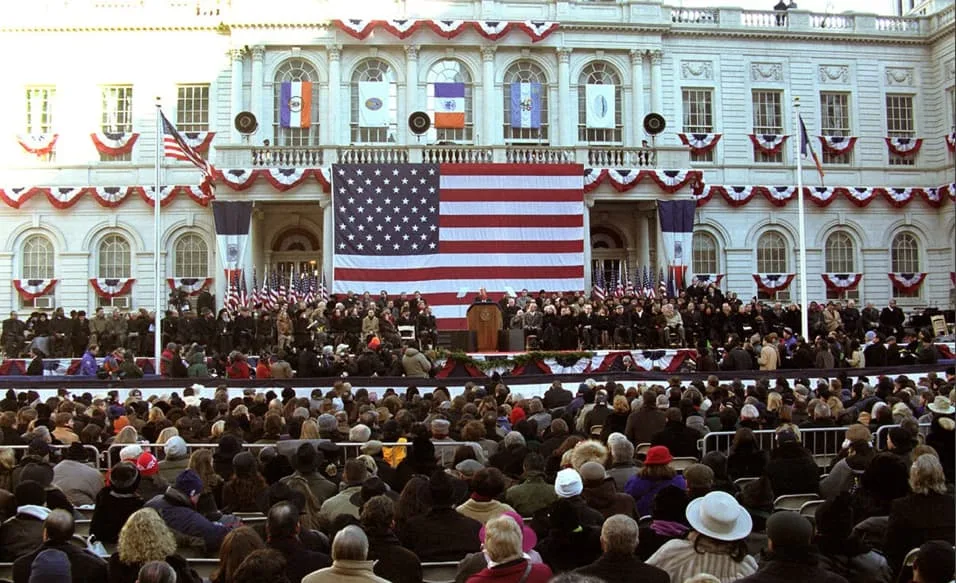
In 2001, just weeks after the terrorist attacks of 9/11, Bloomberg was elected mayor of New York City. He and his team rallied New Yorkers and led the city’s resurgence, writing one of the great comeback stories in American history. He turned around a broken public school system by raising standards and making new investments in schools. He spurred economic growth and record levels of job creation by revitalizing old industrial areas, helping small business open and expand, and connecting New Yorkers to new skills and jobs. Thanks to policies he put in place, the city recovered from the global recession far faster and stronger than the country overall.
A life of influence and impact
Upon leaving City Hall, Bloomberg returned to the company he founded while also devoting more time to philanthropy, which has been a top priority for him throughout his career. Today, Bloomberg Philanthropies employs a unique data-driven approach to global change that grows out of his experiences as an entrepreneur and mayor. Bloomberg has pledged to give away nearly all his money during his lifetime and has so far donated $25.4 billion to a wide variety of causes and organizations.
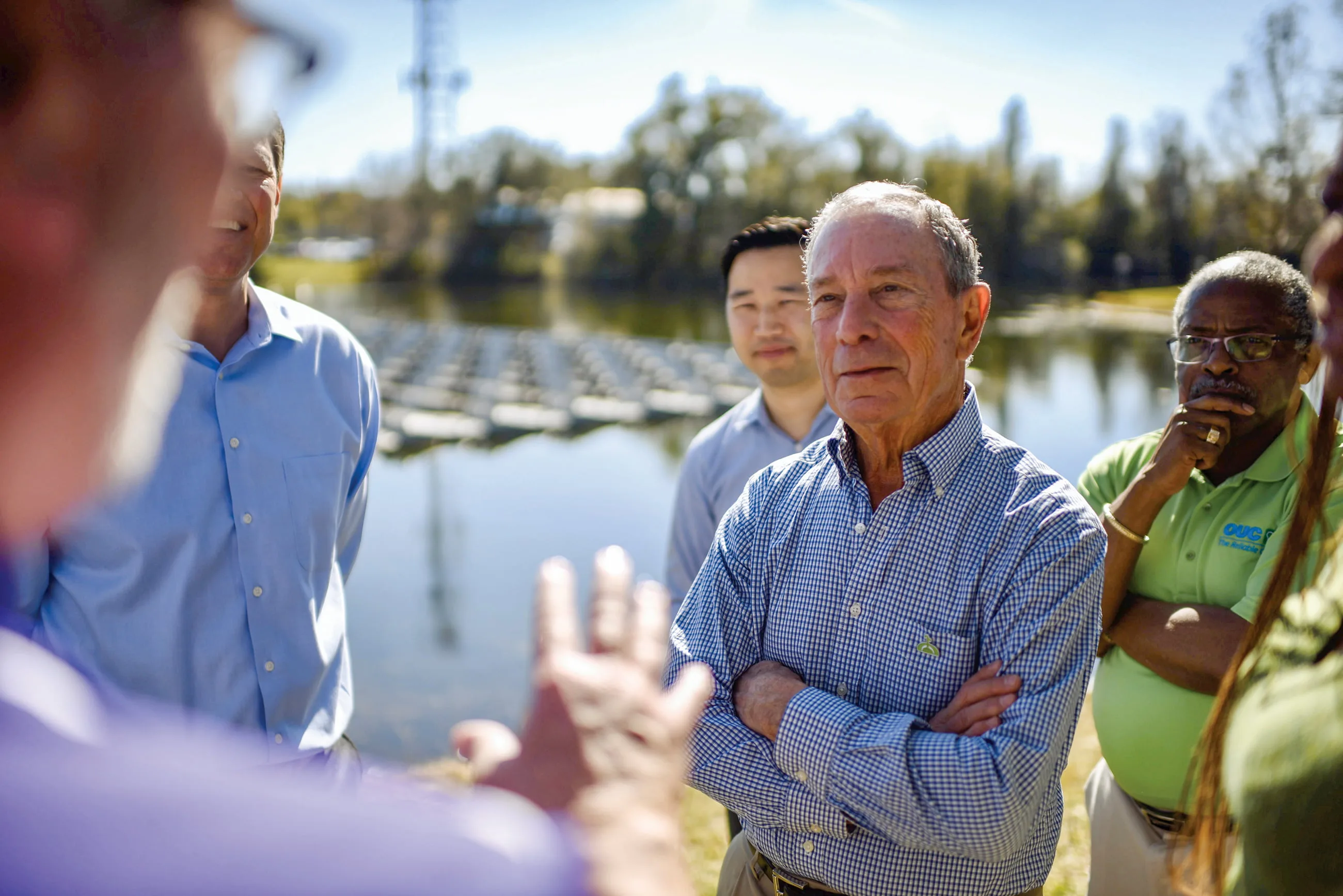
Bloomberg is one of America’s most fearless and effective voices on urgent issues, including climate change, gun violence, and public health. He serves as the UN Secretary-General’s Special Envoy on Climate Ambition and Solutions and is also the WHO Ambassador for Noncommunicable Diseases and Injuries. In 2020, he launched a series of efforts to help fight the coronavirus pandemic in the U.S. and around the world, including committing $40 million to help low- and middle-income countries prevent the spread of the disease. The gun safety group he helped found, Everytown for Gun Safety, now has 10 million supporters and is the largest coalition of Americans fighting for common-sense gun laws. His partnership with the Sierra Club has helped retire outdated power plants and replaced many of them with cleaner energy, saving lives and creating new jobs. Since he began working with partners in Europe, over half of all polluting plants have closed there, too, and he has extended his support for clean air and clean energy to more regions around the world.
Bloomberg served as chair of the U.S. Department of Defense’s Defense Innovation Board, which provided strategic insights and recommendations on technology and innovation that helped address national security priorities.
Meet Tedros
Dr Tedros: “Our vision is not health for some. It’s not health for most. It’s health for all: rich and poor, able and disabled, old and young, urban and rural, citizen and refugee. Everyone, everywhere.”
Profile
Dr Tedros Adhanom Ghebreyesus was elected WHO Director-General for a five-year term by WHO Member States at the Seventieth World Health Assembly in May 2017. In doing so, he was the first WHO Director-General elected from among multiple candidates by the World Health Assembly, and was the first person from the WHO African Region to head the world’s leading public health agency.
Born in the Eritrean city of Asmara, Dr Tedros graduated from the University of Asmara with a Bachelor of Biology, before earning a Master of Science (MSc) in Immunology of Infectious Diseases from the University of London, a Doctorate of Philosophy (PhD) in Community Health from the University of Nottingham and an Honorary Fellowship from the London School of Hygiene and Tropical Medicine.
Following his studies, Dr Tedros returned to Ethiopia to support the delivery of health services, first working as a field-level malariologist, before heading a regional health service and later serving in Ethiopia’s federal government for over a decade as Minister of Health and Minister of Foreign Affairs.
As Minister of Health from 2005 to 2012, he led a comprehensive reform of the country’s health system, built on the foundation of universal health coverage and provision of services to all people, even in the most remote areas.
Under his leadership, Ethiopia expanded its health infrastructure, developed innovative health financing mechanisms, and expanded its health workforce. A major component of reforms he drove was the creation of a primary health care extension programme that deployed 40 000 female health workers throughout the country. A significant result was an approximate 60% reduction in child and maternal mortality compared to 2000 levels.
As Minister of Foreign Affairs from 2012 to 2016, he elevated health as a political issue nationally, regionally and globally. In this role, he led efforts to negotiate the Addis Ababa Action Agenda, in which 193 countries committed to the financing necessary to achieve the Sustainable Development Goals.
Prior to his election as Director-General of WHO, Dr Tedros held many leadership positions in global health, including as Chair of the Global Fund to Fight AIDS, Tuberculosis, and Malaria, Chair of the Roll Back Malaria Partnership, and Co-chair of the Partnership for Maternal, Newborn and Child Health Board.
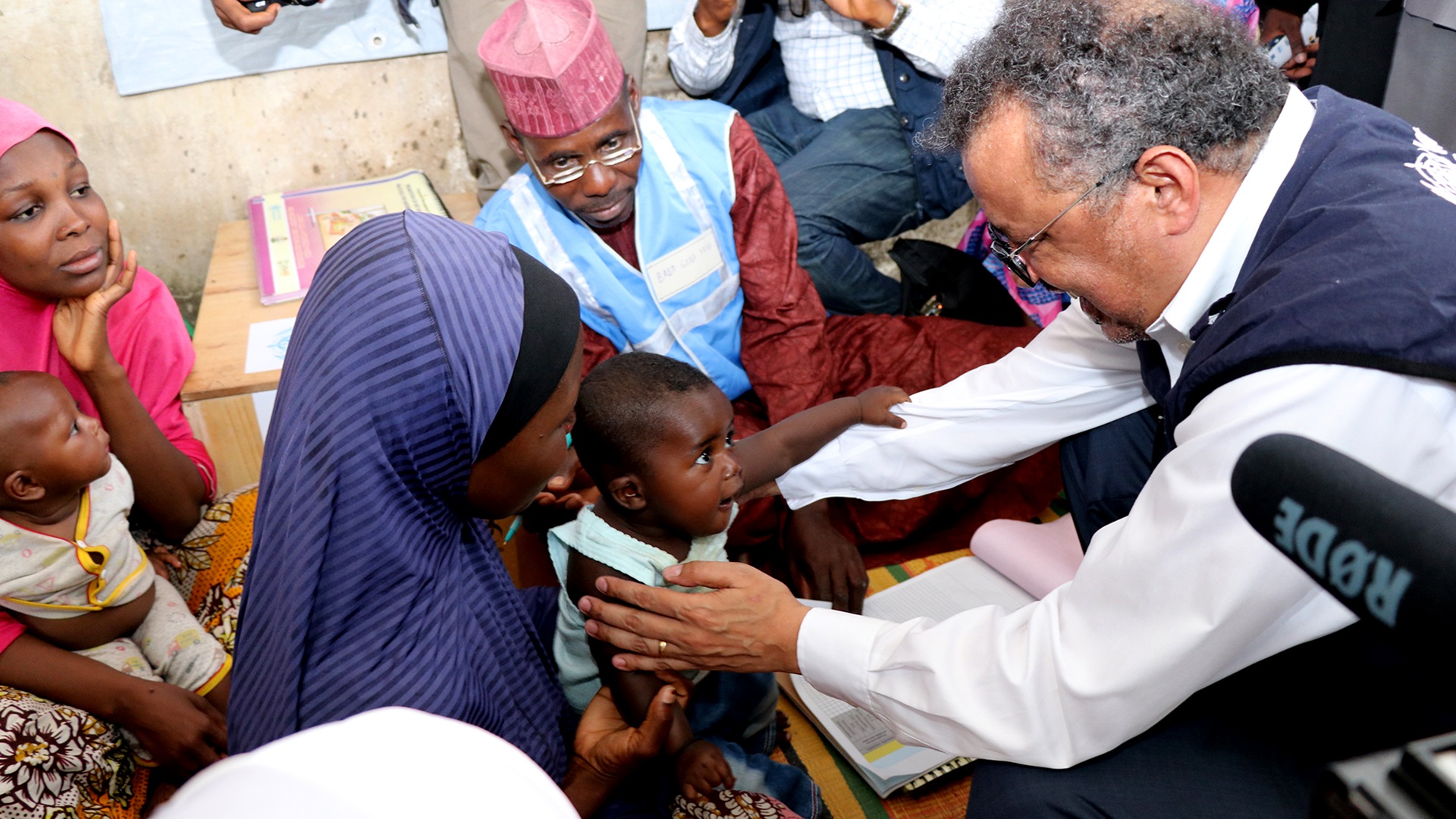
After taking office as WHO Director-General on 1 July 2017, Dr Tedros initiated the most significant transformation in the Organization’s history, which has generated a wide range of achievements.


New strategy
One year after Dr Tedros’s election, at the World Health Assembly in 2018, WHO Member States adopted the 13th General Programme of Work (GPW13), a 5-year-strategic plan with an emphasis on delivering a measurable impact in countries, to support countries in attaining the health-related targets in the Sustainable Development Goals.
WHO’s work was built on a new mission statement, to “Promote health, keep the world safe and serve the vulnerable”, and the ambitious “triple billion” targets: 1 billion more people benefiting from universal health coverage; 1 billion more people better protected from health emergencies; and 1 billion more people enjoying better health and well-being.
Transformed WHO
To enable WHO to support countries to deliver on these targets, and in close consultation with WHO’s Regional Directors, Dr Tedros led the development of a new operating model, aligning the Organization’s new structures and ways of working, and across the three levels of the Organization (Headquarters, Regional Offices and Country Offices).
To support the new operating model, several new divisions were established, including the Division of Science, the Division of Data and Delivery for Impact and the Division of Emergency Preparedness.
New processes
To make WHO more effective and efficient, 13 core processes were overhauled or initiated, in three areas:
Processes relating to technical work like data, norms and standards and policy dialogue;
External relations processes such as resource mobilization and communications;
And processes relating to management and administration, including planning and budgeting, supply chain, recruitment and performance management.
New culture
Strategies, operating models and processes will be ineffective without a talented and motivated workforce to implement them.
These values drive everything WHO does, from recruiting new talent to evaluating performance, to training leaders and managers, and considering staff for promotion.
Under Dr Tedros’s leadership, WHO achieved gender parity in its senior leadership for the first time, and initiated a new programme to pay interns a stipend.
Training and equipping health workers worldwide has been a priority area of work. Work is ongoing to launch the first WHO Academy, which aims to offer new and more effective methods of training, in multiple languages, across many areas of heath to working people.
Under Dr Tedros’s leadership, WHO has also engaged staff in defining a new Values Charter, which identifies the five key values that are at the heart of who we are: public service; technical excellence; integrity; collaboration; and compassion.
New approach to innovative partnerships
To achieve the ambitious targets in GPW13, a new approach to partnerships is essential.
Under Dr Tedros’s leadership, WHO has strengthened its relationship with traditional multilateral partners through the Global Action Plan for Healthy Lives and Well-Being for All, and expanding its engagement with civil society.
WHO has also sought to complement its technical work with increased political advocacy to high-level political commitment at international and national levels – for example through the G20 and G7.
Recognizing health for all requires partnership at all levels, and between all sectors of society, Dr Tedros has worked to engage stakeholders from a broad range sectors, from civil society and government, to the private sector and beyond.
This approach to diversifying partnerships has brought up new ways of working, resulting in tangible gains. Processed food manufacturers have committed to eliminate industrial trans-fats from their products to protect people from associated noncommunicable diseases. WHO has worked closely with digital and social media giants to more actively promote evidence-based health advice from the value of vaccines to preventing and controlling infectious diseases. Manufacturers of medical supplies joined with WHO to scale up access to personal protective equipment for health workers on the frontlines of the COVID-19 pandemic. Multilateral and health partners joined with WHO to develop and drive equitable access to vaccines, diagnostics and treatments through the Access to COVID-19 Tools (ACT) Accelerator initiative.
To address the constraints facing WHO to generate increased flexible resources for supporting the delivery of critical health services around the world, WHO has launched a series of strategic actions. These include the Organization’s first investment case laying out the impacts on global health and development that WHO could achieve if fully financed; the inaugural WHO Partners Forum in 2019; and the launch of the independent WHO Foundation to open opportunities for increased partnership in funding public health activities.
WHO has also branched out into innovative partnerships to reach audiences it hasn’t before, for example with FIFA and Google Fit.

Recognitions
Dr Tedros is globally recognized as a health scholar, advocate and diplomat with first-hand experience in research, operations, and leadership in emergency responses.
He has published numerous articles in prominent scientific journals and received awards and recognitions from across the globe. These include receiving Honorary Fellowships from the London School of Hygiene and Tropical Medicine (2012) and the Royal College of Surgeons of Ireland’s Faculty of Nursing and Midwifes (2020); and Honorary Doctorates of Medicine from the Faculty of Medicine at Umeå University, Sweden (2018) and the University of Nottingham and Newcastle University (both 2019).
Dr Tedros has also received multiple national and institutional recognitions, including becoming the first non-American to be awarded the Jimmy and Rosalynn Carter Humanitarian Award in 2011 in recognition of his contributions to public health; the Decoration of the Order of Serbian Flag in 2016; the Danida Alumni Prize of Denmark’s Danida Fellowship Centre in 2017; being made a Grande Officier of the National Order of Benin (l’Ordre National de Benin) in 2018; the L’Ordre national du Lion of Senegal in 2018; the Oswaldo Cruz Medal of Merit, in 2018, in recognition of his services to public health in Brazil; the Grand Cross of the Equestrian Order of Saint Agatha from San Marino in 2019; the Bridge Maker Award of the 14th August Committee of Norway in 2020; 2020 Human Rights Award of the Spanish Law Bar (Consejo General de la Abogacía Español); one of Time magazine’s 100 most influential people of 2020; the African of the Year Award for 2020 of the African Leadership Magazine; and Global Health Leader Award presented by Amref Health Africa in 2021.