Παρασκευή 14 Απριλίου 2023
O ανιψιός και γιος δύο δολοφονημένων Προέδρων των ΗΠΑ είναι υποψήφιος για τον Λευκό Οίκο σε μία συγκυρία που βρωμάει επανάληψη της Ιστορίας καθώς είναι πλέον διάχυτη η αίσθηση ότι υπάρχουν κάποιοι Χίτλερ στον πλανήτη ενώ η “θεωρία συνωμοσίας” που ήθελε τη CIA να βρίσκεται πίσω από τη δολοφονία του Kennedy είναι σήμερα η μοναδική πειστική εκδοχή για τη δολοφονία των Kennedy.
By Τhe Wrong Man
Η απάντηση στο γιατί η CIA οργάνωσε τη δολοφονία του Kennedy σύμφωνα με “θεωρητικούς συνωμοσίας” βρίσκεται στο διάταγμα 11110-δείτε στη συνέχεια.
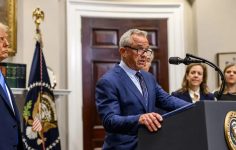
Tα τελευταία τρία χρόνια, ο Robert F. Kennedy, Jr. ήταν μια από τις ισχυρότερες φωνές της Αμερικής στην υπεράσπιση της Συνταγματικής Δημοκρατίας από τους αξιωματούχους δημόσιας υγείας και πολιτικούς που κατέχουν εξουσία έκτακτης ανάγκης.
Σε μια σειρά συγκλονιστικών ομιλιών που θυμίζουν τη διάσημη ομιλία του πατέρα του στο Πανεπιστήμιο του Κέιπταουν το 1966, ο RFK, Jr. έχει διατυπώσει γιατί δεν πρέπει ποτέ να επιτρέψουμε να παραβιαστεί το Σύνταγμα των ΗΠΑ από ανθρώπους που μας υπόσχονται να μας κρατήσουν ασφαλείς.
Στις 5 Απριλίου 2023, υπέβαλε αίτηση στην Ομοσπονδιακή Εκλογική Επιτροπή για να θέσει υποψηφιότητα για Πρόεδρος των Ηνωμένων Πολιτειών στις εκλογές του 2024.
Για δεκαετίες, εργάστηκε ως δικηγόρος για την προστασία του φυσικού κόσμου. Έχει προβληματιστεί ιδιαίτερα από τη μόλυνση των υδάτινων οδών, όπως ο ποταμός Hudson με επικίνδυνα απόβλητα, συμπεριλαμβανομένου του υδραργύρου.
Το 2005 ανησυχούσε για μια ένωση υδραργύρου που χρησιμοποιείται ως συντηρητικό σε παιδικά εμβόλια, κάτι που τον ώθησε να διεξαγάγει μια ενδελεχή έρευνα για την ασφάλεια των εμβολίων γενικά. Βρήκε ιδιαίτερα ανησυχητικό το γεγονός ότι ο Εθνικός νόμος περί τραυματισμών από το παιδικό εμβόλιο του 1986 παρείχε στους κατασκευαστές εμβολίων ασυλία από κάθε αστική και ποινική ευθύνη για τραυματισμούς ή θανάτους που προκλήθηκαν από τα προϊόντα τους.
Ελλείψει νομικής ευθύνης, συνειδητοποίησε ότι το μόνο πράγμα που μπορεί να ρυθμίσει τη συμπεριφορά τους είναι ο έλεγχος από ένα δημόσιο πρόσωπο, και επειδή κανένα άλλο δημόσιο πρόσωπο δεν ανέλαβε να το κάνει, ανέλαβε ο ίδιος την ευθύνη. Καμία καλή πράξη δεν μένει ατιμώρητη, όπως λέει και η παροιμία. Ο κριτικός έλεγχος του κ. Kennedy για τους κατασκευαστές εμβολίων (που φέρουν μηδενική ευθύνη προϊόντος) δεν αντιμετωπίστηκε με συζητήσεις, αλλά με βιτριολικές, ad hominem επιθέσεις και κατηγορίες ότι είναι θεωρητικός συνωμοσίας. Σε αυτές τις επιθέσεις υπονοείται ότι κανείς δεν πρέπει να τολμήσει να αμφισβητήσει την ασφάλεια των εμβολίων.

Το 2021, δημοσίευσε το βιβλίο του, The Real Anthony Fauci, καταγράφοντας σχολαστικά τη διαφθορά, τη φιλαρέσκεια και την κατάχρηση εξουσίας που είναι αχαλίνωτη στο Βιο-Φαρμακευτικό Σύμπλεγμα στο οποίο ο Δρ Fauci έπαιξε βασικό ρόλο. Κάθε δήλωση στο βιβλίο του κ. Kennedy τεκμηριώνεται με παραπομπή πρωτογενών πηγών, συμπεριλαμβανομένων εγγράφων ομοσπονδιακών υπηρεσιών, ιατρικής βιβλιογραφίας με αξιολόγηση από ομοτίμους και δημόσιων αρχείων. Οποιοσδήποτε αναγνώστης μπορεί εύκολα να αξιολογήσει αυτές τις πηγές. Η έκδοση Kindle διαθέτει υπερσυνδέσμους προς τα έγγραφα.
Ο εξήντα εννιάχρονος Kennedy σπούδασε στο Harvard College και στο London School of Economics, αποφοιτώντας από το Harvard το 1976 με πτυχίο Τεχνών στην Αμερικανική Ιστορία και Λογοτεχνία. Έλαβε πτυχίο Juris Doctor από το Πανεπιστήμιο της Βιρτζίνια και Master of Laws από το Πανεπιστήμιο Pace.
Ο κ. Kennedy έχει επανειλημμένα επιδείξει την αφοσίωσή του στη διατήρηση του Συντάγματος των ΗΠΑ και του αμερικανικού τρόπου ζωής που υποστηρίζει. Περισσότερο από οποιοδήποτε δημόσιο πρόσωπο με προεδρικές φιλοδοξίες, έχει αγωνιστεί για να προστατεύσει μεμονωμένους Αμερικανούς πολίτες από ομοσπονδιακές εντολές και άλλες πράξεις υπερβολής του κράτους.
Real men aren’t afraid to talk about the intelligence agencies, even when multiple family members have been assassinated by them. https://t.co/sRKER7Td5D
— There is No State of Emergency (@Kathysadr1967) April 13, 2023
Παρασκευή 16 Δεκεμβρίου 2022. H CIA βρίσκεται πίσω από τη δολοφονία του JFK.
Λίγο αφότου ο Jack Ruby πυροβόλησε τον Lee Harvey Oswald μπροστά στη κάμερα στο υπόγειο του αρχηγείου της αστυνομίας του Dallas, πολλοί Αμερικανοί άρχισαν να έχουν κάποιες ερωτήσεις σχετικά με τη δολοφονία του Kennedy. Ήταν, θα έπρεπε να παραδεχτείτε, μια αρκετά ασυνήθιστη αλληλουχία γεγονότων. Ένας μοναχικός ένοπλος δολοφονεί τον πρόεδρο των Ηνωμένων Πολιτειών. Και τότε, λιγότερο από 48 ώρες αργότερα, αυτός ο μοναχικός ένοπλος δολοφονείται ο ίδιος από έναν άλλο μοναχικό ένοπλο.
By Tucker Carlson/Foxnews
Ποιες είναι οι πιθανότητες για αυτό; Είναι ένα πράγμα σαν να σε χτυπήσει κεραυνός – σπάνιο αλλά πιθανό. Αλλά αν κάθε μέλος της οικογένειάς σας χτυπηθεί επίσης από κεραυνό, όλα σε διαφορετικές ημέρες, μπορεί να αρχίσετε να υποψιάζεστε ότι αυτά δεν είναι εντελώς φυσικά γεγονότα. Αλλά- ω του θαύματος-, απάντησε η κυβέρνηση των ΗΠΑ και ισχυρίστηκε ότι αυτά ήταν φυσικά πράγματα. Αυτή η παράξενη αλυσίδα δολοφονιών ήταν εντελώς φυσική».
Έτσι, λιγότερο από ένα χρόνο μετά τη δολοφονία του JFK, ο Λευκός Οίκος επί Johnson κυκλοφόρησε κάτι που ονομάζεται Έκθεση της Επιτροπής Warren. Και η έκθεση κατέληξε στο συμπέρασμα ότι ενώ τα κίνητρά τους παρέμεναν ασαφή, τόσο ο Lee Oswald όσο και ο Jack Ruby είχαν ενεργήσει μόνοι τους. Κανείς δεν τους βοήθησε. Δεν υπήρχε συνωμοσία κανενός είδους. Έκλεισε η υπόθεση. Ωρα να προχωρήσεις.
Και πολλοί Αμερικανοί προχώρησαν. Εκείνη την εποχή, δεν είχαν ιδέα πόσο κακή και διεφθαρμένη ήταν η Επιτροπή Warren. Θα περνούσαν σχεδόν 50 χρόνια πριν η CIA παραδεχτεί υπό την πίεση ότι στην πραγματικότητα, είχε αποκρύψει πληροφορίες από τους ερευνητές σχετικά με τη σχέση της με τον Lee Harvey Oswald.
Αλλά ακόμη και τότε, εκείνη την εποχή, πριν γίνει αυτό γνωστό, η εξήγηση της κυβέρνησης δεν φαινόταν απολύτως εύλογη. Και κάποιοι άρχισαν να κάνουν προφανείς ερωτήσεις σχετικά με αυτό. Σε εκείνο το σημείο, καθώς οι Αμερικανοί άρχισαν να αμφιβάλλουν για την επίσημη ιστορία, ο όρος «θεωρία συνωμοσίας» μπήκε στο λεξικό μας. Όπως επισημαίνει ο καθηγητής Lance DeHaven-Smith στο βιβλίο του για το θέμα, «Ο όρος θεωρία συνωμοσίας δεν υπήρχε ως φράση στην καθημερινή αμερικανική συνομιλία πριν από το 1964. Το 1964, τη χρονιά που η Επιτροπή Warren εξέδωσε την έκθεσή της, οι New York Times δημοσίευσαν πέντε ιστορίες στις οποίες εμφανίστηκε η «θεωρία συνωμοσίας».
Τώρα, σήμερα, φυσικά, ο όρος «θεωρία συνωμοσίας» εμφανίζεται σχεδόν σε κάθε ιστορία των New York Times για την αμερικανική πολιτική. Χρησιμοποιείται, τώρα όπως και τότε, ως όπλο ενάντια σε όποιον κάνει ερωτήσεις στην κυβέρνηση δεν θέλει να απαντήσει-όπως ακιρβώς συμβαίνει με την προέλευση του ιου COVID-19. Όμως, παρά τα 60 χρόνια ονοματολογίας, αυτά τα ερωτήματα δεν έχουν εξαφανιστεί. Μάλιστα έχουν πολλαπλασιαστεί με τον χρόνο.
Και εδώ είναι ένα από αυτά. Τον Απρίλιο του 1964, ένας ψυχίατρος ονόματι Louis Joylon West επισκέφτηκε τον Jack Ruby στο κελί της απομόνωσής του σε μια φυλακή του Dallas. Σύμφωνα με τη γραπτή εκτίμηση του West, διαπίστωσε ότι ο Jack Ruby ήταν «τεχνικά παράφρων» και χρειαζόταν άμεση ψυχιατρική νοσηλεία. Αυτά είναι συμπεράσματα στα οποία παραδόξως κανένας που είχε μιλήσει με τον Jack Ruby στο παρελθόν δεν είχε καταλήξει. Ο Ruby είχε φανεί απόλυτα υγιής στους ανθρώπους που τον γνώριζαν. Ο Louis Jolyon West τον είπε τρελό.
Αυτό όμως που δεν είπε ο West ήταν ότι εκείνη την εποχή εργαζόταν για τη CIA. Ο Louis Jolyon West ήταν συμβασιούχος ψυχίατρος για την υπηρεσία κατασκοπείας. Ήταν επίσης ειδικός στον έλεγχο του μυαλού και εξέχων παίκτης στο διαβόητο πλέον πρόγραμμα MKUltra στο οποίο η CIA έδινε ισχυρά ψυχιατρικά φάρμακα σε Αμερικανούς χωρίς να το γνωρίζουν.
Λοιπόν, από όλους τους ψυχιάτρους στον κόσμο, τι στο καλό έκανε αυτός ο τύπος στο κελί της φυλακής του Jack Ruby; Τα μέσα ενημέρωσης δεν φάνηκαν να ενδιαφέρονται να μάθουν. Στην πραγματικότητα, οι New York Times, σε ένα εκτενές μοιρολόγι του West το 1999, δεν ανέφεραν ποτέ το γεγονός ότι είχε εργαστεί για τη CIA, όπως επίσης πόσο χρόνο παρέμεινε στο κελί του Jack Ruby κάτι που φαίνεται σχετικό. Έτσι μπορείτε να δείτε γιατί οι μη τρελοί θα αναρωτιούνταν για το τι πραγματικά συνέβη. Και φυσικά, πολλοί αναρωτήθηκαν.
Το 1976, ξεχασμένο εδώ και καιρό, η Βουλή των Αντιπροσώπων οδήγησε μια ειδική επιτροπή για να διερευνήσει εκ νέου τη δολοφονία του JFK. Το δικομματικό τους συμπέρασμα; Ο John Kennedy δολοφονήθηκε σχεδόν σίγουρα ως αποτέλεσμα συνωμοσίας. Αλλά το ερώτημα είναι μια συνωμοσία από ποιον; Λοιπόν, ο προφανής ύποπτος θα ήταν η CIA. Γιατί αλλιώς η υπηρεσία θα αποκρύψει κρίσιμα στοιχεία από τους ερευνητές; Υπάρχει καλοήθης εξήγηση για αυτό, για τη διατήρηση αυτού του επιπέδου μυστικότητας για τόσα χρόνια; Όχι ότι το γνωρίζουμε. Και είναι παράνομο.
Tucker Carlson: Yes, the CIA killed President Kennedy. Your government is a lie.
Happy Thursday! pic.twitter.com/S0vXgpQGcH
— Benny Johnson (@bennyjohnson) December 16, 2022
Το 1992, το Κογκρέσο ψήφισε τον President John F. Kennedy Assassination Records Collection Act. Αυτή η πράξη επέβαλλε την πλήρη αποκάλυψη όλων των εγγράφων μέχρι το 2017, 54 χρόνια μετά τη δολοφονία του JFK. Η τελευταία κυβέρνηση υποσχέθηκε να συμμορφωθεί πλήρως με αυτόν τον νόμο. Όμως, υπό την έντονη πίεση του διευθυντή της CIA, Mike Pompeo, απέκρυψε, τελικά, χιλιάδες σελίδες εγγράφων της CIA.
Σήμερα, σήμερα το απόγευμα, η κυβέρνηση Biden έκανε ακριβώς το ίδιο. Αυτό θα ήταν χιλιάδες σελίδες εγγράφων μετά από σχεδόν 60 χρόνια, μετά τον θάνατο κάθε εμπλεκόμενου ατόμου. Αλλά ακόμα δεν μπορούμε να τα δούμε. Σαφώς, δεν είναι για να προστατέψεις κανένα άτομο. Είναι όλοι νεκροί. Είναι η προστασία ενός ιδρύματος. Μα γιατί;
Λοιπόν, σήμερα αποφασίσαμε να μάθουμε. Μιλήσαμε με κάποιον που είχε πρόσβαση σε αυτά τα ακόμα κρυμμένα έγγραφα της CIA, ένα άτομο που ήταν βαθιά εξοικειωμένο με αυτό που περιείχαν. Ρωτήσαμε αυτό το άτομο ευθέως: “Η CIA είχε ρόλο στη δολοφονία του John F. Kennedy, ενός Αμερικανού Προέδρου; Και εδώ είναι η απάντηση που λάβαμε κατά λέξη. Παραθέτουμε, “Η απάντηση είναι ναι. Πιστεύω ότι συμμετείχαν. Είναι μια εντελώς διαφορετική χώρα από αυτό που νομίζαμε. Είναι όλα ψεύτικα».
Είναι δύσκολο να φανταστεί κανείς μια πιο τρομακτική απάντηση από αυτό. Και πάλι, δεν πρόκειται για “συνωμοσιολόγο” με τον οποίο μιλήσαμε. Δεν είναι καν κοντά. Αυτός είναι κάποιος με άμεση γνώση των πληροφοριών που για άλλη μια φορά αποκρύπτονται από το αμερικανικό κοινό. Και η απάντηση που λάβαμε ήταν κατηγορηματική. Ναι, η CIA συμμετείχε στη δολοφονία του προέδρου. Τώρα, κάποιοι δεν θα εκπλαγούν όταν ακούσουν ότι το υποψιάζονταν από τότε. Αλλά ανεξάρτητα από το πώς αισθάνεστε για αυτό ή τι σκεφτόσασταν για τη δολοφονία του Kennedy, σταματήστε για να σκεφτείτε τι σημαίνει αυτό.

Σημαίνει ότι μέσα στην κυβέρνηση των ΗΠΑ, υπάρχουν δυνάμεις εντελώς πέρα από τον δημοκρατικό έλεγχο. Αυτές οι δυνάμεις είναι πιο ισχυρές από τους αιρετούς που υποτίθεται ότι τις επιβλέπουν. Αυτές οι δυνάμεις μπορούν να επηρεάσουν τα εκλογικά αποτελέσματα. Μπορούν ακόμη και να κρύψουν τη συνενοχή τους στη δολοφονία ενός Αμερικανού προέδρου. Με άλλα λόγια, μπορούν να κάνουν σχεδόν ό,τι θέλουν. Αποτελούν μια κυβέρνηση μέσα σε μια κυβέρνηση που χλευάζει, από την ίδια τους την ύπαρξη, την ιδέα της δημοκρατίας. Όσο κυνικοί κι αν γίναμε μετά από 30 χρόνια παρακολούθησης κυβερνητικών αξιωματούχων να αγνοούν τους ψηφοφόρους που τους απασχολούν, συγκλονιστήκαμε όταν το μάθαμε. Δεν είναι αποδεκτό.

Οι Αμερικανοί εμπιστεύονται λιγότερο την κυβέρνησή τους κάθε χρόνο που περνά από τη δολοφονία του John F. Kennedy. Ίσως γι’ αυτό. Και ο κόσμος το γνωρίζει αυτό εδώ και πολύ καιρό. Οι άνθρωποι που ήξεραν θα περιλάμβαναν κάθε διευθυντή της CIA από τον Νοέμβριο του 1963. Και αυτή η λίστα θα περιελάμβανε τον διευθυντή της CIA του Obama, John Brennan, μια από τις πιο απαίσιες και ανέντιμες φιγούρες στην αμερικανική ζωή.
Αυτή η λίστα θα περιλαμβάνει επίσης, δυστυχώς, τον φίλο μας Mike Pompeo, ο οποίος διηύθυνε τη CIA στην τελευταία κυβέρνηση. Ο Mike Pompeo το ήξερε αυτό. Ζητήσαμε από τον Pompeo να έρθει μαζί μας απόψε, και παρόλο που σπάνια αρνείται μια τηλεοπτική συνέντευξη, αρνήθηκε να έρθει. Ελπίζουμε ότι θα το ξανασκεφτεί.
Τη σημερινή ημέρα της ιστορίας, 22 Νοεμβρίου 1963, δολοφονείται ο John F. Kennedy, 35ος πρόεδρος των ΗΠΑ μία από τις πλέον ιστορικές ατάκες του οποίου θα ήταν>
-«Και, λοιπόν, Αμερικανοί συμπατριώτες μου, μην ρωτάτε τι μπορεί να κάνει η χώρα σας για εσάς, ρωτήστε τι μπορείτε κάντε για τη χώρα σας. Συμπολίτες μου του κόσμου, μη ρωτήστε τι θα κάνει η Αμερική για εσάς, αλλά τι μπορούμε να κάνουμε εμείς για την ελευθερία του ανθρώπου-And so my fellow Americans, ask not what your country can do for you; ask what you can do for your country. My fellow citizens of the world, ask not what America will do for you, but what we can do for the freedom of man.»
Ο JFK επέβαινε σε μια ανοιχτή αυτοκινητοπομπή, με τη γυναίκα του δίπλα του, στο Dallas.
Την ημέρα αυτή στην ιστορία, 22 Νοεμβρίου 1963, ο Πρόεδρος John F. Kennedy — ο 35ος πρόεδρος των Ηνωμένων Πολιτειών — δολοφονήθηκε ενώ επέβαινε σε μια αυτοκινητοπομπή ανοιχτού αυτοκινήτου στο κέντρο του Dallas στο Τέξας.
Το συγκλονιστικό γεγονός συνέβη πριν από 59 χρόνια κοντά στο τέλος του τρίτου έτους του JFK ως πρόεδρος.
Στο ίδιο αυτοκίνητο με τον Kennedy και την πρώτη κυρία Jacqueline Kennedy ήταν ο κυβερνήτης του Τέξας John B. Connally, καθώς και η σύζυγος του Connally, Nellie Connally.
Την ίδια μέρα συνελήφθη ο ύποπτος για τον πυροβολισμό, ο Lee Harvey Oswald. Ο Αντιπρόεδρος Lyndon B. Johnson ορκίστηκε πρόεδρος εκείνη την ημέρα, καθώς και το έκπληκτο έθνος απορρόφησε το πλήγμα της τόσο ξαφνικής και βίαιης απώλειας του εκλεγμένου προέδρου του.
Πλήθη ενθουσιασμένων ανθρώπων παρατάχθηκαν στους δρόμους του Dallas και χαιρετούσαν με το χέρι τους Kennedy εκείνη την ημέρα, όπως σημειώνει ο ιστότοπος της βιβλιοθήκης JFK για την εκστρατεία του προέδρου στο Τέξας.
“Το αυτοκίνητο ξεκίνησε από την κεντρική οδό στο Dealey Plaza γύρω στις 12:30 μ.μ. Καθώς περνούσε από τοTexas School Book Depository, αντήχησαν ξαφνικά πυρά στην πλατεία”, αναφέρει επίσης ο ιστότοπος.
«Σφαίρες χτύπησαν τον λαιμό και το κεφάλι του προέδρου και σωριάστηκε προς την κυρία Kennedy. Ο κυβερνήτης πυροβολήθηκε στην πλάτη του».
«Λίγα θα μπορούσαν να γίνουν για τον πρόεδρο».
Αμέσως μετά τον πυροβολισμό, «το αυτοκίνητο έφυγε με ταχύτητα προς το Parkland Memorial Hospital λίγα μόλις λεπτά μακριά», σημειώνει επίσης ο ιστότοπος της βιβλιοθήκης JFK.
“Αλλά λίγα πράγματα μπορούσαν να γίνουν για τον πρόεδρο. Ένας καθολικός ιερέας κλήθηκε να κάνει τις τελευταίες ιεροτελεστίες και στη 1:00 μ.μ. ο John F. Kennedy κηρύχθηκε νεκρός.”
Ο κυβερνήτης Connally είχε τραυματιστεί σοβαρά αλλά αργότερα ανάρρωσε.
«Το σώμα του προέδρου μεταφέρθηκε στο Love Field και τοποθετήθηκε στο Air Force One», σημειώνει επίσης η ιστοσελίδα.
«Πριν απογειωθεί το αεροπλάνο o Lyndon B. Johnson θα ορκίζονταν Πρόεδρος των ΗΠΑ.
Ένας άλλος αυτόπτης μάρτυρας, ο Hugh Aynesworth, πρώην δημοσιογράφος για το Dallas Morning News, είπε: «Τότε άκουσα αυτό που νόμιζα ότι αρχικά ότι ήταν ο θόρυβος από την εξάτμιση μιας μοτοσικλέτας, αλλά δεν ήταν-ήταν ο πρώτος πυροβολισμός και μετά σε λίγα δευτερόλεπτα ένας άλλος πυροβολισμός και ένα τρίτος», επίσης σύμφωνα με το Reuters.
Tην ίδια μέρα μία ώρα μερά τον επίσημο θάνατου του Προέδρου η αστυνομία συνέλαβε τον Lee Harvey Oswald, «έναν πρόσφατα προσληφθέντα υπάλληλο στο Texas School Book Depository», αναφέρει ο ιστότοπος της βιβλιοθήκης JFK.

Στη συνέχεια, το πρωί της Κυριακής, 24 Νοεμβρίου, “Ο Oswald είχε προγραμματιστεί να μεταφερθεί από το αρχηγείο της αστυνομίας στη φυλακή της κομητείας. Οι θεατές σε όλη την Αμερική που παρακολουθούσαν τη ζωντανή τηλεοπτική κάλυψη είδαν ξαφνικά έναν άνδρα να τον σημαδεύει με ένα πιστόλι και να τον πυροβολεί σε απόσταση αναπνοής.”


“Ο δράστης αναγνωρίστηκε ως ο Jack Ruby, ιδιοκτήτης νυχτερινού κέντρου. Ο Oswald πέθανε δύο ώρες αργότερα στο νοσοκομείο Parkland.
Πολλά αναπάντητα ερωτήματα παραμένουν μέχρι σήμερα σχετικά με τη δολοφονία του Kennedy
In the decades since, conspiracy theories and speculation of all kinds have surfaced and continue to be debated and discussed
22 November 1963. 12:30 PM. Jackie Kennedy jumps out of her seat, just seconds after the fatal shot hit her husband. She later said she was not trying to escape, but was trying to pick up fragments of JFK’s brain. pic.twitter.com/Dmb7li9jRa
— Prof. Frank McDonough (@FXMC1957) November 22, 2022
22 Νοεμβρίου 1963. 12:30 μ.μ. Η Τζάκι Κένεντι πετάει από τη θέση της, λίγα δευτερόλεπτα αφότου ο μοιραίος πυροβολισμός χτύπησε τον σύζυγό της. Αργότερα είπε ότι δεν προσπαθούσε να δραπετεύσει, αλλά προσπαθούσε να μαζέψει θραύσματα του εγκεφάλου του JFK.
>
Life of John F. Kennedy_Growing Up in the Kennedy Family [jfklibrary.org]

Rose Fitzgerald Kennedy, who was a very disciplined and organized woman, made the following entry on a notecard, when her second child was born:
John Fitzgerald Kennedy
Born Brookline, Mass. (83 Beals Street) May 29, 1917

In all, Rose Fitzgerald Kennedy would have nine children, four boys and five girls. She kept notecards for each of them in a small wooden file box and made a point of writing down everything from a doctor’s visit to the shoe size they had at a particular age. John Fitzgerald Kennedy was named in honor of Rose’s father, John Francis Fitzgerald, the Boston Mayor popularly known as Honey Fitz. Before long, family and friends called this small blue-eyed baby, Jack. Jack was not a very healthy baby, and Rose recorded on his notecard the childhood diseases from which he suffered, such as: “whooping cough, measles, chicken pox.”
On February 20, 1920 when Jack was not yet three years old, he became sick with scarlet fever, a highly contagious and then potentially life-threatening disease. His father, Joseph Patrick Kennedy, was terrified that little Jack would die. Mr. Kennedy went to the hospital every day to be by his son’s side, and about a month later Jack took a turn for the better and recovered. But Jack was never very healthy, and because he was always suffering from one ailment or another his family used to joke about the great risk a mosquito took in biting him – with some of his blood the mosquito was almost sure to die!
When Jack was three, the Kennedys moved to a new home a few blocks away from their old house in Brookline, a neighborhood just outside of Boston. It was a lovely house with twelve rooms, turreted windows, and a big porch. Full of energy and ambition, Jack’s father worked very hard at becoming a successful businessman. When he was a student at Harvard College and having a difficult time fitting in as an Irish Catholic, he swore to himself he would make a million dollars by the age of 35. There was a lot of prejudice against Irish Catholics in Boston at that time, but Joseph Kennedy was determined to succeed. Jack’s great-grandparents had come from Ireland and managed to provide for their families, despite many hardships. Jack’s grandfathers did even better for themselves, both becoming prominent Boston politicians. Jack, because of all his family had done, could enjoy a very comfortable life. The Kennedys had everything they needed and more.
By the time Jack was eight there were seven children altogether. Jack had an older brother, Joe; four sisters, Rosemary, Kathleen, Eunice, and Patricia; and a younger brother, Robert. Jean and Teddy hadn’t been born yet. Nannies and housekeepers helped Rose run the household.

At the end of the school year, the Kennedy children would go to their summer home in Hyannis Port on Cape Cod where they enjoyed swimming, sailing, and playing touch football. The Kennedy children played hard, and they enjoyed competing with one another. Joseph Sr. encouraged this competition, especially among the boys.
He was a father with very high expectations and wanted the boys to win at sports and everything they tried. As he often said, “When the going gets tough, the tough get going.” But sometimes these competitions went too far. One time when Joe suggested that he and Jack race on their bicycles, they collided head-on. Joe emerged unscathed while Jack had to have twenty-eight stitches. Because Joe was two years older and stronger than Jack, whenever they fought, Jack would usually get the worst of it. Jack was the only sibling who posed any real threat to Joe’s dominant position as the oldest child.
Jack was very popular and had many friends at Choate, a boarding school for adolescent boys in Connecticut. He played tennis, basketball, football, and golf and also enjoyed reading. His friend Lem Billings remembers how unusual it was that Jack had a daily subscription to the New York Times. Jack had a “clever, individualist mind,” his Head Master once noted, though he was not the best student. He did not always work as hard as he could, except in history and English, which were his favorite subjects.
“Now Jack,” his father wrote in a letter one day, “I don’t want to give the impression that I am a nagger, for goodness knows I think that is the worse thing any parent can be, and I also feel that you know if I didn’t really feel you had the goods I would be most charitable in my attitude toward your failings. After long experience in sizing up people I definitely know you have the goods and you can go a long way…It is very difficult to make up fundamentals that you have neglected when you were very young, and that is why I am urging you to do the best you can. I am not expecting too much, and I will not be disappointed if you don’t turn out to be a real genius, but I think you can be a really worthwhile citizen with good judgment and understanding.”
Jack graduated from Choate and entered Harvard in 1936, where Joe was already a student. Like his brother Joe, Jack played football. He was not as good an athlete as Joe but he had a lot of determination and perseverance. Unfortunately, one day while playing he ruptured a disk in his spine. Jack never really recovered from this accident and his back continued to bother him for the rest of his life.
The two eldest boys were attractive, agreeable, and intelligent young men and Mr. Kennedy had high hopes for them both. However, it was Joe who had announced to everyone when he was a young boy that he would be the first Catholic to become President. No one doubted him for a moment. Jack, on the other hand, seemed somewhat less ambitious. He was active in student groups and sports and he worked hard in his history and government classes, though his grades remained only average.
Late in 1937, Mr. Kennedy was appointed United States Ambassador to England and moved there with his whole family, with the exception of Joe and Jack who were at Harvard. Because of his father’s job, Jack became very interested in European politics and world affairs. After a summer visit to England and other countries in Europe, Jack returned to Harvard more eager to learn about history and government and to keep up with current events.
Joe and Jack frequently received letters from their father in England, who informed them of the latest news regarding the conflicts and tensions that everyone feared would soon blow up into a full-scale war. Adolph Hitler ruled Germany and Benito Mussolini ruled Italy. They both had strong armies and wanted to take land from other countries. On September 1, 1939, Germany invaded Poland and World War II began.
By this time, Jack was a senior at Harvard and decided to write his thesis on why Great Britain was unprepared for war with Germany. It was later published as a book called Why England Slept. In June 1940, Jack graduated from Harvard. His father sent him a cablegram from London: “TWO THINGS I ALWAYS KNEW ABOUT YOU ONE THAT YOU ARE SMART TWO THAT YOU ARE A SWELL GUY LOVE DAD.”
World War II and a Future in Politics
Soon after graduating, both Joe and Jack joined the Navy. Joe was a flyer and sent to Europe, while Jack was made Lieutenant (Lt.) and assigned to the South Pacific as commander of a patrol torpedo boat, the PT-109.
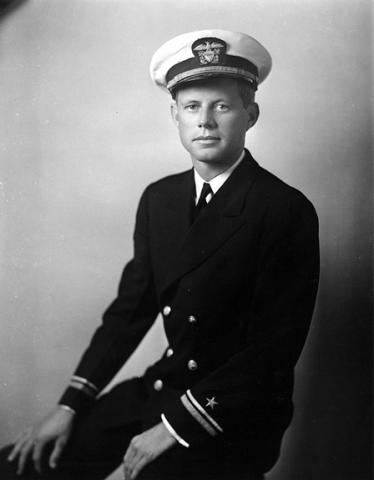
Lt. Kennedy had a crew of twelve men whose mission was to stop Japanese ships from delivering supplies to their soldiers. On the night of August 2, 1943, Lt. Kennedy’s crew patrolled the waters looking for enemy ships to sink. A Japanese destroyer suddenly became visible. But it was traveling at full speed and headed straight at them. Holding the wheel, Lt. Kennedy tried to swerve out of the way, but to no avail. The much larger Japanese warship rammed the PT-109, splitting it in half and killing two of Lt. Kennedy’s men. The others managed to jump off as their boat went up in flames. Lt. Kennedy was slammed hard against the cockpit, once again injuring his weak back. Patrick McMahon, one of his crew members, had horrible burns on his face and hands and was ready to give up. In the darkness, Lt. Kennedy managed to find McMahon and haul him back to where the other survivors were clinging to a piece of the boat that was still afloat. At sunrise, Lt. Kennedy led his men toward a small island several miles away. Despite his own injuries, Lt. Kennedy was able to tow Patrick McMahon ashore, a strap from McMahon’s life jacket clenched between his teeth. Six days later two native islanders found them and went for help, delivering a message Jack had carved into a piece of coconut shell. The next day, the PT-109 crew was rescued. Jack’s brother Joe was not so lucky. He died a year later when his plane blew up during a dangerous mission in Europe.
When he returned home, Jack was awarded the Navy and Marine Corps Medal for his leadership and courage. With the war finally coming to an end, it was time to choose the kind of work he wanted to do. Jack had considered becoming a teacher or a writer, but with Joe’s tragic death suddenly everything changed. After serious discussions with Jack about his future, Joseph Kennedy convinced him that he should run for Congress in Massachusetts’ eleventh congressional district, where he won in 1946. This was the beginning of Jack’s political career. As the years went on, John F. Kennedy, a Democrat, served three terms (six years) in the House of Representatives, and in 1952 he was elected to the US Senate.
Soon after being elected senator, John F. Kennedy, at 36 years of age, married 24 year-old Jacqueline Bouvier, a writer with the Washington Times-Herald. Unfortunately, early on in their marriage, Senator Kennedy’s back started to hurt again and he had two serious operations. While recovering from surgery, he wrote a book about several US Senators who had risked their careers to fight for the things in which they believed. The book, called Profiles in Courage, was awarded the Pulitzer Prize for biography in 1957. That same year, the Kennedys’ first child, Caroline, was born.
John F. Kennedy was becoming a popular politician. In 1956 he was almost picked to run for vice president. Kennedy nonetheless decided that he would run for president in the next election.
He began working very long hours and traveling all around the United States on weekends. On July 13, 1960 the Democratic party nominated him as its candidate for president. Kennedy asked Lyndon B. Johnson, a senator from Texas, to run with him as vice president. In the general election on November 8, 1960, Kennedy defeated the Republican Vice President Richard M. Nixon in a very close race. At the age of 43, Kennedy was the youngest man elected president and the first Catholic. Before his inauguration, his second child, John Jr., was born. His father liked to call him John-John.
John F. Kennedy Becomes The 35th President of the United States
John F. Kennedy was sworn in as the 35th president on January 20, 1961. In his inaugural speech he spoke of the need for all Americans to be active citizens. “Ask not what your country can do for you, ask what you can do for your country,” he said. He also asked the nations of the world to join together to fight what he called the “common enemies of man: tyranny, poverty, disease, and war itself.” President Kennedy, together with his wife and two children, brought a new, youthful spirit to the White House. The Kennedys believed that the White House should be a place to celebrate American history, culture, and achievement. They invited artists, writers, scientists, poets, musicians, actors, and athletes to visit them. Jacqueline Kennedy also shared her husband’s interest in American history. Gathering some of the finest art and furniture the United States had produced, she restored all the rooms in the White House to make it a place that truly reflected America’s history and artistic creativity. Everyone was impressed and appreciated her hard work.
The White House also seemed like a fun place because of the Kennedys’ two young children, Caroline and John-John. There was a pre-school, a swimming pool, and a tree-house outside on the White House lawn. President Kennedy was probably the busiest man in the country, but he still found time to laugh and play with his children.
However, the president also had many worries. One of the things he worried about most was the possibility of nuclear war between the United States and the Soviet Union. He knew that if there was a war, millions of people would die. Since World War II, there had been a lot of anger and suspicion between the two countries but never any shooting between Soviet and American troops. This ‘Cold War’, which was unlike any other war the world had seen, was really a struggle between the Soviet Union’s communist system of government and the United States’ democratic system. Because they distrusted each other, both countries spent enormous amounts of money building nuclear weapons. There were many times when the struggle between the Soviet Union and the United States could have ended in nuclear war, such as in Cuba during the 1962 missile crisis or over the divided city of Berlin.
President Kennedy worked long hours, getting up at seven and not going to bed until eleven or twelve at night, or later. He read six newspapers while he ate breakfast, had meetings with important people throughout the day, and read reports from his advisers. He wanted to make sure that he made the best decisions for his country. “I am asking each of you to be new pioneers in that New Frontier,” he said. The New Frontier was not a place but a way of thinking and acting. President Kennedy wanted the United States to move forward into the future with new discoveries in science and improvements in education, employment and other fields. He wanted democracy and freedom for the whole world.
One of the first things President Kennedy did was to create the Peace Corps. Through this program, which still exists today, Americans can volunteer to work anywhere in the world where assistance is needed. They can help in areas such as education, farming, health care, and construction. Many young men and women have served as Peace Corps volunteers and have won the respect of people throughout the world.
President Kennedy was also eager for the United States to lead the way in exploring space. The Soviet Union was ahead of the United States in its space program and President Kennedy was determined to catch up. He said, “No nation which expects to be the leader of other nations can expect to stay behind in this race for space.” Kennedy was the first president to ask Congress to approve more than 22 billion dollars for Project Apollo, which had the goal of landing an American man on the moon before the end of the decade.
President Kennedy had to deal with many serious problems here in the United States. The biggest problem of all was racial discrimination. The US Supreme Court had ruled in 1954 that segregation in public schools would no longer be permitted. Black and white children, the decision mandated, should go to school together. This was now the law of the land. However, there were many schools, especially in southern states, that did not obey this law. There was also racial segregation on buses, in restaurants, movie theaters, and other public places.
Thousands of Americans joined together, people of all races and backgrounds, to protest peacefully this injustice.
Martin Luther King Jr. was one of the famous leaders of the movement for civil rights. Many civil rights leaders didn’t think President Kennedy was supportive enough of their efforts. The President believed that holding public protests would only anger many white people and make it even more difficult to convince the members of Congress who didn’t agree with him to pass civil rights laws. By June 11, 1963, however, President Kennedy decided that the time had come to take stronger action to help the civil rights struggle. He proposed a new Civil Rights bill to the Congress, and he went on television asking Americans to end racism. “One hundred years of delay have passed since President Lincoln freed the slaves, yet their heirs, their grandsons, are not fully free,” he said. “This Nation was founded by men of many nations and backgrounds…[and] on the principle that all men are created equal.” President Kennedy made it clear that all Americans, regardless of their skin color, should enjoy a good and happy life in the United States.
The President is Shot
On November 21, 1963, President Kennedy flew to Texas to give several political speeches. The next day, as his car drove slowly past cheering crowds in Dallas, shots rang out. Kennedy was seriously wounded and died a short time later. Within a few hours of the shooting, police arrested Lee Harvey Oswald and charged him with the murder. On November 24, another man, Jack Ruby, shot and killed Oswald, thus silencing the only person who could have offered more information about this tragic event. The Warren Commission was organized to investigate the assassination and to clarify the many questions which remained.
The Legacy of John F. Kennedy
President Kennedy’s death caused enormous sadness and grief among all Americans. Most people still remember exactly where they were and what they were doing when they heard the news. Hundreds of thousands of people gathered in Washington for the President’s funeral, and millions throughout the world watched it on television.
As the years have gone by and other presidents have written their chapters in history, John Kennedy’s brief time in office stands out in people’s memories for his leadership, personality, and accomplishments. Many respect his coolness when faced with difficult decisions–like what to do about Soviet missiles in Cuba in 1962. Others admire his ability to inspire people with his eloquent speeches. Still others think his compassion and his willingness to fight for new government programs to help the poor, the elderly and the ill were most important. Like all leaders, John Kennedy made mistakes, but he was always optimistic about the future. He believed that people could solve their common problems if they put their country’s interests first and worked together.
Executive Order 11110

On June 4, 1963, a virtually unknown Presidential decree, Executive Order 11110, was signed by President John Fitzgerald Kennedy with the intention to strip the Federal Reserve Bank of its power to loan money to the United States Federal Government at interest. With the stroke of a pen, President Kennedy declared that the privately owned Federal Reserve Bank would soon be out of business.
From: Catherick@aol.com/foundationfortruthinlaw.org
This matter has been exhaustively researched by the Christian Common Law Institute through the Federal Register and Library of Congress, and the Institute has conclude that President Kennedy’s Executive Order has never been repealed, amended, or superceded by any subsequent Executive Order. In simple terms, it is still valid.
When John Fitzgerald Kennedy, author of Profiles in Courage, signed this Order, it returned to the federal government, specifically to the Treasury Department, the Constitutional power to create and issue currency — money — without going through the privately owned Federal Reserve Bank.
President Kennedy’s Executive Order 11110 gave the Treasury Department the explicit authority: “to issue silver certificates against any silver bullion, silver, or standard silver dollars in the Treasury” [the full text is displayed below]. This means that for every ounce of silver in the U.S. Treasury’s vault, the government could introduce new money into circulation based on the silver bullion physically held therein. As a result, more than $4 billion in United States Notes were brought into circulation in $2 and $5 denominations. Although $10 and $20 United States Notes were never circulated, they were being printed by the Treasury Department when Kennedy was assassinated.
Certainly it’s obvious that President Kennedy knew that the Federal Reserve Notes being circulated as “legal currency” were contrary to the Constitution of the United States, which calls for issuance of “United States Notes” as interest-free and debt-free currency backed by silver reserves in the U.S. Treasury. Comparing a “Federal Reserve Note” issued from the private central bank of the United States (i.e., the Federal Reserve Bank a/k/a Federal Reserve System), with a “United States Note” from the U.S. Treasury (as issued by President Kennedy’s Executive Order), the two almost look alike, except one says “Federal Reserve Note” on the top while the other says “United States Note”. In addition, the Federal Reserve Note has a green seal and serial number while the United States Note has a red seal and serial number. Following President Kennedy’s assassination on November 22, 1963, the United States Notes he had issued were immediately taken out of circulation, and Federal Reserve Notes continued to serve as the “legal currency” of the nation.
Kennedy knew that if the silver-backed United States Notes were widely circulated, they would eliminated the demand for Federal Reserve Notes. This is a simple matter of economics. USNs were backed by silver and FRNs were (still are) backed by nothing of intrinsic value. As a result of Executive Order 11110, the national debt would have prevented from reaching its current level (almost all of the $9 trillion in federal debt has been created since 1963). Executive Order 11110 also granted the U.S. Government the power to repay past debt without further borrowing from the privately owned Federal Reserve which charged both principle and interest and all new “money” it “created.” Finally, Executive Order 11110 gave the U.S.A. the ability to create its own money backed by silver, again giving money real value.
Perhaps President Kennedy’s assassination was a warning to future presidents not to interfere with the private Federal Reserve’s control over the creation of money. For, with true courage, JFK had boldly challenged the two most successful vehicles that have ever been used to drive up debt: 1) war (i.e., the Vietnam war); and, 2) the creation of money by a privately owned central bank. His efforts to have all U.S. troops out of Vietnam by 1965 combined with Executive Order 11110 would have destroyed the profits and control of the private Federal Reserve Bank.
Executive Order 11110, the AMENDMENT of EXECUTIVE ORDER No. 10289, as amended RELATING to the PERFORMANCE of CERTAIN FUNCTIONS AFFECTING the DEPARTMENT of the TREASURY:
By virtue of the authority vested in me by section 301 of Title 3 of the United States Code, it is ordered as follows:
SECTION 1. Executive Order No. 10289 of September 19, 1951, as amended, is hereby further amended (a) By adding at the end of paragraph 1 thereof the following subparagraph (j): “(j) The authority vested in the President by paragraph (b) of section 43 of the Act of May 12, 1933, as amended (31 U.S.C. 821 (b)), to issue silver certificates against any silver bullion, silver, or standard silver dollars in the Treasury not then held for redemption of any outstanding silver certificates, to prescribe the denominations of such silver certificates, and to coin standard silver dollars and subsidiary silver currency for their redemption,” and (b) By revoking subparagraphs (b) and (c) of paragraph 2 thereof.
SECTION 2. The amendment made by this Order shall not affect any act done, or any right accruing or accrued or any suit or proceeding had or commenced in any civil or criminal cause prior to the date of this Order but all such liabilities shall continue and may be enforced as if said amendments had not been made.
JOHN F. KENNEDY
THE WHITE HOUSE,
June 4, 1963
As said, Executive Order 11110 is still valid. According to Title 3, United States Code, Section 301 dated January 26, 1998: Executive Order (EO) 10289 dated Sept. 17, 1951, 16 F.R. 9499, was as amended by:
EO 10583, dated December 18, 1954, 19 F.R. 8725;
EO 10882 dated July 18, 1960, 25 F.R. 6869;
EO 11110 dated June 4, 1963, 28 F.R. 5605;
EO 11825 dated December 31, 1974, 40 F.R. 1003;
EO 12608 dated September 9, 1987, 52 F.R. 34617
The 1974 and 1987 amendments, added after Kennedy’s 1963 amendment, did not change or alter any part of Kennedy’s EO 11110. A search of Clinton’s 1998 and 1999 EO’s and Presidential Directives has shown no reference to any alterations, suspensions, or changes to EO 11110.
The Federal Reserve Bank, a.k.a Federal Reserve System, is a Private Corporation. Black’s Law Dictionary defines the “Federal Reserve System” as: “Network of twelve central banks to which most national banks belong and to which state chartered banks may belong. Membership rules require investment of stock and minimum reserves.” privately owned banks own the stock of the FED. This was explained in more detail in the case of Lewis v. United States, Federal Reporter, 2nd Series, Vol. 680, Pages 1239, 1241 (1982), where the court said: “Each Federal Reserve Bank is a separate corporation owned by commercial banks in its region. The stockholding commercial banks elect two-thirds of each Bank’s nine member board of directors.” In short, Federal Reserve Banks are locally controlled by their member banks.
Also, according to Black’s Law Dictionary, these privately owned banks are “allowed” to issue money: “The Federal Reserve Act, created Federal Reserve banks which act as agents in maintaining money reserves, issuing money in the form of bank notes, lending money to banks, and supervising banks as administered by Federal Reserve Board (q.v.).” Thus the privately owned Federal Reserve (FED) banks are allowed to actually issue (create) the “money” we use.
The devil is sparking anger with his digital ID’s 👿👿👿https://t.co/zfvT5VNufh pic.twitter.com/GYqILLE5gr
— neil by mouth (@nbreavington) February 22, 2023
In 1964, the House Committee on Banking and Currency, Subcommittee on Domestic Finance, at the second session of the 88th Congress, put out a study entitled Money Facts which contains a good description of what the FED is: “The Federal Reserve is a total moneymaking machine. It can issue money or checks. And it never has a problem of making its checks good because it can obtain the $5 and $10 bills necessary to cover its check simply by asking the Treasury Department’s Bureau of Engraving to print them.” Any one person or any closely knit group that has a lot of money has a lot of power. Imagine a group of people with the power to create money. Imagine the power these people would have. This is exactly what the privately owned FED is!
No man did more to expose the power of the FED than Louis T. McFadden, who was the Chairman of the House Banking Committee back in the 1930s. In describing the FED, he remarked in the Congressional Record, House pages 1295 and 1296 on June 10, 1932:
Mr. Chairman, we have in this country one of the most corrupt institutions the world has ever known. I refer to the Federal Reserve Board and the Federal reserve banks. The Federal Reserve Board, a Government Board, has cheated the Government of the United States and he people of the United States out of enough money to pay the national debt. The depredations and the iniquities of the Federal Reserve Board and the Federal reserve banks acting together have cost this country enough money to pay the national debt several times over. This evil institution has impoverished and ruined the people of the United States; has bankrupted itself, and has practically bankrupted our Government. It has done this through the maladministration of that law by which the Federal Reserve Board, and through the corrupt practices of the moneyed vultures who control it.
Some people think the Federal Reserve Banks are United States Government institutions. They are not Government institutions, departments, or agencies. They are private credit monopolies, which prey upon the people of the United States for the benefit of themselves and their foreign customers. Those 12 private credit monopolies were deceitfully placed upon this country by bankers who came here from Europe and who repaid us for our hospitality by undermining our American institutions.
The FED basically works like this: The government granted its power to create money to the FED banks. They create money, then loan it back to the government charging interest. The government levies income taxes to pay the interest on the debt. On this point, it’s interesting to note that the Federal Reserve Act and the sixteenth amendment, which gave congress the power to collect income taxes, were both passed in 1913. The incredible power of the FED over the economy is universally admitted. Some people, especially in the banking and academic communities, support it. On the other hand, there are those like President John F. Kennedy, that have spoken out against it. His efforts were lauded about in Jim Marrs’ 1990 book Crossfire:
Another overlooked aspect of Kennedy’s attempt to reform American society involves money. Kennedy apparently reasoned that by returning to the constitution, which states that only Congress shall coin and regulate money, the soaring national debt could be reduced by not paying interest to the bankers of the Federal Reserve System, who print paper money then loan it to the government at interest. He moved in this area on June 4, 1963, by signing Executive Order 11110 which called for the issuance of $4,292,893,815 in United States Notes through the U.S. Treasury rather than the traditional Federal Reserve System. That same day, Kennedy signed a bill changing the backing of one and two dollar bills from silver to gold, adding strength to the weakened U.S. currency.
Kennedy’s comptroller of the currency, James J. Saxon, had been at odds with the powerful Federal Reserve Board for some time, encouraging broader investment and lending powers for banks that were not part of the Federal Reserve system. Saxon also had decided that non-Reserve banks could underwrite general obligation bonds, again weakening the dominant Federal Reserve banks.”
In a speech made to Columbia University on Nov. 12, 1963, ten days before his assassination, President John Fitzgerald Kennedy said: “The high office of the President has been used to foment a plot to destroy the American’s freedom and before I leave office, I must inform the citizen of this plight.”
In this matter, John Fitzgerald Kennedy appears to be the subject of his own book… a true Profile of Courage. According to the Constitution of the United States, (Article 1 Section 8), only Congress has the authority to coin Money, regulate the Value thereof, and of foreign Coin, and fix the Standard of Weights and Measures. However, since 1913 this Article has been ignored by creation and existence of the Federal Reserve Act, which has given a private owned corporation the power and authority to “create” and coin the money of United States. The Federal Reserve is comprised of 12 private credit monopolies who have been given the authority to control the supply of the “Federal Reserve Notes,” interest rates and all the other monetary and banking phenomena.
The way the Federal Reserve works is this: 12 private credit monopolies “create”, (print), Federal Reserve Notes that are then “lent” to the American government. This is a circular affair in that the government grants the FED power to create the money, which the FED then loans back to the government, charging interests. The government levies income taxes to pay the interest on the debt. It is interesting to note that the Federal Reserve Act and the sixteenth amendment which gave congress the power to collect income taxes, were both passed in 1913. The Federal Reserve Notes are not backed by anything of “intrinsic” value. (i.e., gold or silver).
On June 4, 1963, President, John Fitzgerald Kennedy signed a Presidential decree, Executive Order 11110, which stripped the Federal Reserve Banking System of its power to loan money to the United States Federal Government at interest. This decree meant that for every ounce of silver in the U.S. Treasury’s vault, the U.S. government could introduce new money into circulation based on the silver bullion physically held therein. As a result, more than $4 trillion in United States Notes were brought into circulation in $2 and $5 denominations. $10 and $20 United States Notes were never circulated but were being printed by the Treasury Department when Kennedy was assassinated. Kennedy knew that if the silver backed United States Notes were widely circulated, they would have eliminated the demand for Federal Reserve Notes. By giving the U.S. Treasury the Constitutional authority to coin U.S. money once again, EO 11110 would thus prevent the national debt from rising due to “usury” that the American people are charged for “borrowing” (i.e., using) FRN’s.
Kennedy knew that, if Congress coined and regulated money, as the Constitution states, the national debt would be reduced by not paying interest to the 12 credit monopolies. This in itself would have allowed the American people freedom to freely use all the money they have earned, enabling the economy to grow. Now, Executive Order 11110 is still in effect, even though no U.S. President has had the courage to follow it. As Americans, it is our duty to question the Federal Reserve System and the power that we have given it by electing presidents that lack the courage of John Fitzgerald Kennedy.
More on JFK’s Executive Order 11110: http://www.rense.com/general44/exec.htm