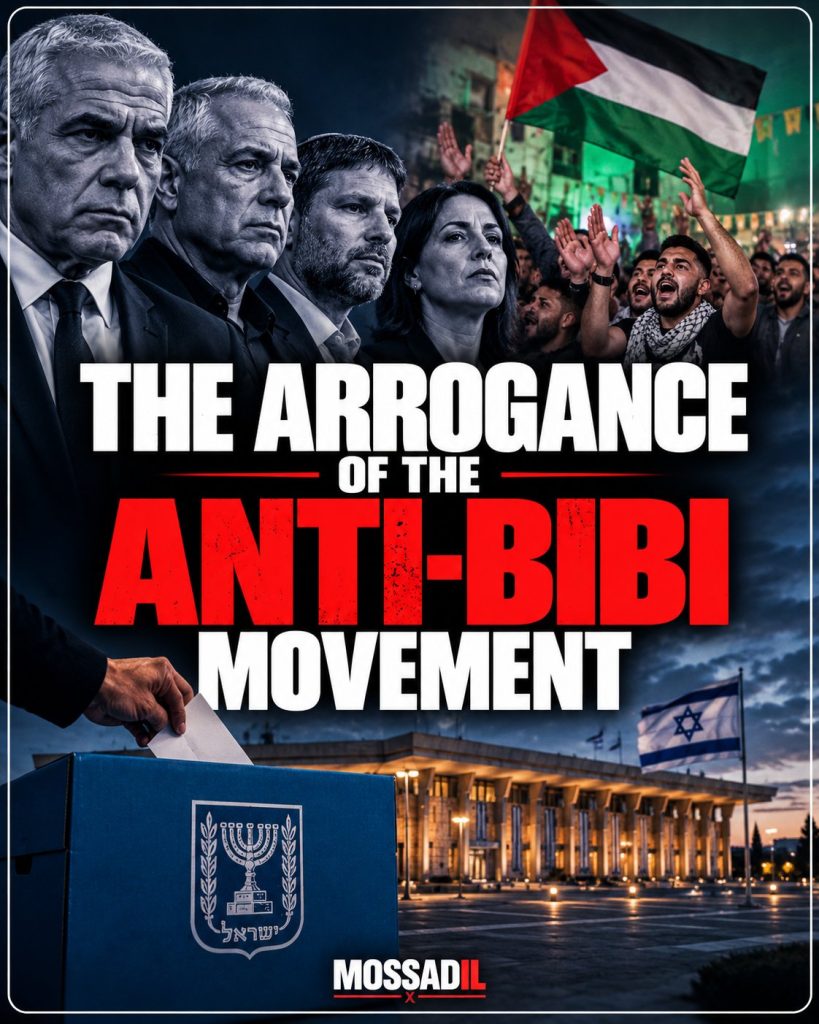
Υπάρχει ένα δίδαγμα από αυτές τις εκλογές που ξεπερνά κατά πολύ το πρόσωπο του Benjamin Netanyahu.
Επί χρόνια, ένα μεγάλο μέρος της ισραηλινής αντιπολίτευσης οικοδόμησε την πολιτική του ταυτότητα γύρω από έναν κεντρικό στόχο: ο Bibi πρέπει να φύγει.
Αυτό μπορεί να αποτελεί ένα αποτελεσματικό σύνθημα. Δεν αποτελεί όμως φιλοσοφία διακυβέρνησης.
Δεν μπορείς να χτίσεις ένα ολόκληρο πολιτικό κίνημα πάνω στην αντίθεση προς ένα και μόνο πρόσωπο, να περάσεις μια προεκλογική περίοδο λέγοντας στους ψηφοφόρους κυρίως ποιους πρέπει να απορρίψουν, και στη συνέχεια να εκπλήσσεσαι όταν εκατομμύρια Ισραηλινοί θέτουν ένα πολύ βασικό ερώτημα:
Τι ακριβώς προτείνετε ως εναλλακτική;
Εδώ ακριβώς, κατά τη γνώμη μου, η αλαζονεία του κινήματος κατά του Netanyahu μετατράπηκε στη μεγαλύτερη πολιτική του αδυναμία.
Λειτούργησε με τη λογική ότι η αντίθεση στον Netanyahu αρκούσε από μόνη της για τη δημιουργία πλειοψηφίας. Σαν οι ανησυχίες της κοινής γνώμης για την ασφάλεια, την εβραϊκή ταυτότητα, το Ιράν, την Ιουδαία και τη Σαμάρεια, τους Παλαιστινίους και τον μελλοντικό χαρακτήρα του κράτους να ήταν δευτερεύουσας σημασίας μπροστά στο ζήτημα της προσωπικότητας του Netanyahu.
Όμως, οι εκλογές έχουν τον τρόπο να αποκαλύπτουν τις πολιτικές «φούσκες» (echo chambers) στις οποίες εγκλωβίζονται ορισμένοι.
Η καταμέτρηση βρίσκεται ακόμη σε εξέλιξη και η τελική εικόνα για τον σχηματισμό κυβερνητικού συνασπισμού παραμένει αβέβαιη. Τα πρώτα αποτελέσματα και τα exit polls δείχνουν ότι κανένα από τα δύο μεγάλα μπλοκ δεν εξασφαλίζει με άνεση τις 61 έδρες που απαιτούνται για αυτοδύναμη διακυβέρνηση.
Όποιοι κι αν είναι οι τελικοί αριθμοί, οι πολιτικές επιλογές που θα γίνουν μετά από αυτές τις εκλογές ενδέχεται να έχουν σχεδόν την ίδια βαρύτητα με τα ίδια τα εκλογικά αποτελέσματα.
Διότι οι αντίπαλοι του Netanyahu καλούνται τώρα να λάβουν μια απόφαση που οι ψηφοφόροι θα θυμούνται.
Θα επιχειρήσουν να σχηματίσουν μια ευρεία σιωνιστική κυβέρνηση με ανθρώπους με τους οποίους διαφωνούν ριζικά σε πολιτικό επίπεδο;
Ή μήπως η απομάκρυνση του Netanyahu παραμένει τόσο κυρίαρχος στόχος, ώστε να προτιμήσουν να εξαρτηθούν από κόμματα που βρίσκονται εκτός του σιωνιστικού πολιτικού συναινετικού πλαισίου;
Αυτό το ερώτημα κατέστη αδύνατο να αγνοηθεί χθες το βράδυ.
Στα κεντρικά γραφεία της Joint List, καταγράφηκαν υποστηρικτές να τραγουδούν το «Biladi, Biladi», τον παλαιστινιακό εθνικό ύμνο.
Οι άνθρωποι μπορούν να ερμηνεύσουν αυτή τη σκηνή όπως θέλουν. Αλλά πολιτικά, οι ηγέτες της αντιπολίτευσης θα πρέπει να κατανοήσουν ακριβώς πώς θα την αντιληφθεί ένα πολύ μεγάλο μέρος του ισραηλινού κοινού.
Αυτοί είναι Ισραηλινοί που υπηρετούν στις Ισραηλινές Ένοπλες Δυνάμεις, στέλνουν τα παιδιά τους σε εφεδρεία, θάβουν φίλους και συγγενείς, ζουν μέσα από πυραύλους και πολέμους και μπορεί να διαφωνούν έντονα με τον Netanyahu.
Πολλοί από αυτούς δεν είναι ιδεολογικοί ψηφοφόροι του Likud.
Μερικοί είναι κεντρώοι. Μερικοί είναι παραδοσιακοί ψηφοφόροι των Εργατικών. Κάποιοι θέλουν απεγνωσμένα νέα ηγεσία.
Αλλά το να ζητάμε από αυτούς τους ψηφοφόρους να αποδεχτούν μια κυβέρνηση της οποίας η επιβίωση εξαρτάται από κόμματα των οποίων οι υποστηρικτές γιορτάζουν το αποτέλεσμα των εκλογών τραγουδώντας τον παλαιστινιακό εθνικό ύμνο δεν είναι μια ασήμαντη πολιτική λεπτομέρεια.
Και τώρα, ένα ακόμη ζήτημα σκιάζει την εκλογική διαδικασία.
Η αστυνομία συνέλαβε τρεις υπόπτους στην περιοχή Negev, ως ύποπτους για απόπειρα δωροδοκίας ψηφοφόρων προκειμένου να στηρίξουν το κόμμα Ra’am. Σύμφωνα με τους ερευνητές, βρέθηκαν φάκελοι που περιείχαν δεκάδες χιλιάδες shekels σε μετρητά, καθώς και ψηφοδέλτια του Ra’am.
Αυτό δεν αποδεικνύει ότι η συμμετοχή των Αράβων ήταν προϊόν νοθείας. Δεν αποδεικνύει κάποια συνωμοσία σε εθνικό επίπεδο. Και σίγουρα δεν δικαιολογεί τον ισχυρισμό ότι οι εκλογές «κλάπηκαν», προτού οι ερευνητές εξακριβώσουν τα πραγματικά περιστατικά.
Είναι, ωστόσο, ένα σοβαρό ζήτημα.
Κάθε βάσιμη καταγγελία οφείλει να διερευνηθεί εξαντλητικά, ανεξάρτητα από το πού μπορεί να οδηγήσει.
Ως εκ τούτου, οι κινήσεις των ηγετών της αντιπολίτευσης θα παρακολουθούνται πλέον με εξαιρετική προσοχή.
Εδώ ακριβώς είναι που μετράει η πολιτική σύνεση.
Υπάρχουν τεράστιες διαφωνίες στο εσωτερικό της σιωνιστικής πλειοψηφίας του Ισραήλ. Υπάρχουν άνθρωποι στον κεντρώο, τον δεξιό και τον αριστερό χώρο που διαφωνούν για τον Netanyahu, τη δικαστική μεταρρύθμιση, τους οικισμούς, τις σχέσεις θρησκείας και κράτους, τον πόλεμο, καθώς και για σχεδόν όλα τα υπόλοιπα ζητήματα.
Ωστόσο, μοιράζονται και κάτι θεμελιώδες: θεωρούν τη συνέχιση της ύπαρξης και την ασφάλεια ενός εβραϊκού και δημοκρατικού Κράτους του Ισραήλ ως το σημείο εκκίνησης του πολιτικού διαλόγου.
Ένα υπεύθυνο πολιτικό σύστημα θα πρέπει να είναι σε θέση να βρει πεδία συνεργασίας κάπου μέσα σε αυτό το ευρύτατο φάσμα.
Αν οι αρχηγοί των κομμάτων κρίνουν ότι δεν μπορούν να συνεργαστούν με άλλους Σιωνιστές —λόγω πολιτικών μνησικακιών, προσωπικών συγκρούσεων ή παλαιότερων δεσμεύσεων— αλλά, την ίδια στιγμή, είναι πρόθυμοι να εξαρτηθούν από πολιτικές δυνάμεις που βρίσκονται εκτός αυτής της συναίνεσης, απλώς και μόνο για να εμποδίσουν τον Netanyahu να κυβερνήσει, τότε οι ψηφοφόροι θα αντιληφθούν αυτή την αντίφαση.
Και γι’ αυτό πιστεύω ότι οι συγκεκριμένες εκλογές θα βρεθούν στο επίκεντρο της επόμενης εκλογικής αναμέτρησης.
Όχι απλώς ο αριθμός των εδρών.
Αλλά η στάση που τηρήθηκε στη συνέχεια.
Κάθε διαπραγμάτευση για τον σχηματισμό κυβέρνησης.
Κάθε «κόκκινη γραμμή».
Κάθε άρνηση για συμβιβασμό.
Κάθε απόφαση σχετικά με το ποιοι είναι εκείνοι με τους οποίους ένα κόμμα δέχεται να συνεργαστεί — και ποιοι είναι εκείνοι με τους οποίους αρνείται ακόμη και να συνομιλήσει. Μπορεί να θέσει ένα ερώτημα πολύ πιο άβολο:
Όταν το Ισραήλ ήταν πολιτικά διχασμένο, ποιοι ήταν πρόθυμοι να συνεργαστούν με άλλους Σιωνιστές — και ποιοι αποφάσισαν ότι η ήττα ενός συγκεκριμένου ανθρώπου είχε μεγαλύτερη σημασία από τον σχηματισμό κυβέρνησης μαζί τους;
Αυτός είναι ο κίνδυνος του να επιτρέψουμε στο «anti-Bibi» να μετατραπεί σε ιδεολογία.
Κάποια στιγμή, το κοινό αρχίζει να αναρωτιέται τι έρχεται μετά το «αντι-».
Και αν δεν υπάρχει πειστική απάντηση, το κίνημα κινδυνεύει όχι μόνο να χάσει μια εκλογική αναμέτρηση.
Κινδυνεύει να χάσει την αξιοπιστία του για την επόμενη.
>
MOSSADIL COMMENTARY> THE ARROGANCE OF THE ANTI-BIBI MOVEMENT
There is a lesson from this election that goes far beyond Benjamin Netanyahu.
For years, a large part of Israel’s opposition has built its political identity around one central objective: Bibi must go.
That may be an effective slogan. It is not a governing philosophy.
You cannot build an entire political movement around opposition to one man, spend an election telling voters primarily who they should reject, and then be surprised when millions of Israelis ask a very basic question:
What exactly are you offering instead?
That is where I believe the arrogance of the anti-Bibi movement became its greatest political weakness.
It operated as though opposition to Netanyahu was itself enough to create a majority. As though the public’s concerns about security, Jewish identity, Iran, Judea & Samaria, the Palestinians and the future character of the state were secondary to the question of Netanyahu’s personality.
But elections have a way of exposing political echo chambers.
The counting is still underway, and the final coalition picture remains unresolved. Early results and exit polls have shown neither major bloc comfortably reaching the 61 seats required to govern on its own.
Whatever the final numbers are, the political choices made after this election may matter almost as much as the results themselves.
Because Netanyahu’s opponents now face a decision that voters will remember.
Do they attempt to build a broad Zionist government with people they profoundly disagree with politically?
Or does removing Netanyahu remain such an overriding objective that they would rather depend on parties outside the Zionist political consensus?
That question became impossible to ignore last night.
At Joint List headquarters, supporters were filmed singing “Biladi, Biladi,” the Palestinian national anthem.
People can interpret that scene however they choose. But politically, opposition leaders should understand exactly how it will be viewed by a very large portion of the Israeli public.
These are Israelis who serve in the IDF, send their children to reserve duty, bury friends and relatives, live through rockets and wars, and may disagree fiercely with Netanyahu.
Many of them are not ideological Likud voters.
Some are centrists. Some are traditional Labor voters. Some desperately want new leadership.
But asking those voters to accept a government whose survival depends on parties whose supporters celebrate an election result by singing the Palestinian national anthem is not a minor political detail.
It is a decision that will have to be defended.
And there is now another issue hanging over the election.
Police arrested three suspects in the Negev on suspicion of attempting to bribe voters to support Ra’am. Investigators say they discovered envelopes containing tens of thousands of shekels in cash and Ra’am ballot slips.
That does not prove that Arab turnout was fraudulent. It does not prove a nationwide conspiracy. It certainly does not justify declaring the election stolen before investigators establish the facts.
But it is serious.
And every credible allegation should be investigated completely, wherever it leads.
What opposition leaders do now will therefore be watched extremely closely.
This is where political wisdom matters.
There are enormous disagreements inside Israel’s Zionist majority. There are people on the center, right and left who disagree about Netanyahu, judicial reform, settlements, religion and state, the war and almost everything else.
But they also share something fundamental: they see the continued existence and security of a Jewish and democratic State of Israel as the starting point of the political conversation.
A responsible political system should be capable of finding cooperation somewhere inside that enormous spectrum.
If party leaders decide that they cannot sit with other Zionists because of political grudges, personality conflicts or old promises — yet are prepared to depend on factions far outside that consensus simply to prevent Netanyahu from governing — voters will notice the contradiction.
And that is why I believe this election will be front and center in the next election.
Not merely the seat totals.
The behavior afterward.
Every coalition negotiation.
Every red line.
Every refusal to compromise.
Every decision about whom a party is willing to sit with — and whom it refuses even to speak with.
Those decisions will become campaign advertisements.
They will become debate questions.
They will become videos played repeatedly on social media.
The next campaign may not simply ask voters, “Do you want Netanyahu?”
It may ask something much more uncomfortable:
When Israel was politically divided, who was willing to work with fellow Zionists — and who decided that defeating one man mattered more than building a government with them?
That is the danger of allowing “anti-Bibi” to become an ideology.
Eventually the public begins asking what comes after the “anti.”
And if there is no convincing answer, the movement risks not only losing an election.
It risks losing its credibility for the next one.
💡MOSSADIL COMMENTARY:
THE ARROGANCE OF THE ANTI-BIBI MOVEMENTThere is a lesson from this election that goes far beyond Benjamin Netanyahu.
For years, a large part of Israel’s opposition has built its political identity around one central objective: Bibi must go.
That may be an effective slogan. It is not a governing philosophy.
You cannot build an entire political movement around opposition to one man, spend an election telling voters primarily who they should reject, and then be surprised when millions of Israelis ask a very basic question:
What exactly are you offering instead?
That is where I believe the arrogance of the anti-Bibi movement became its greatest political weakness.
It operated as though opposition to Netanyahu was itself enough to create a majority. As though the public’s concerns about security, Jewish identity, Iran, Judea & Samaria, the Palestinians and the future character of the state were secondary to the question of Netanyahu’s personality.
But elections have a way of exposing political echo chambers.
The counting is still underway, and the final coalition picture remains unresolved. Early results and exit polls have shown neither major bloc comfortably reaching the 61 seats required to govern on its own.
Whatever the final numbers are, the political choices made after this election may matter almost as much as the results themselves.
Because Netanyahu’s opponents now face a decision that voters will remember.
Do they attempt to build a broad Zionist government with people they profoundly disagree with politically?
Or does removing Netanyahu remain such an overriding objective that they would rather depend on parties outside the Zionist political consensus?
That question became impossible to ignore last night.
At Joint List headquarters, supporters were filmed singing “Biladi, Biladi,” the Palestinian national anthem.
People can interpret that scene however they choose. But politically, opposition leaders should understand exactly how it will be viewed by a very large portion of the Israeli public.
These are Israelis who serve in the IDF, send their children to reserve duty, bury friends and relatives, live through rockets and wars, and may disagree fiercely with Netanyahu.
Many of them are not ideological Likud voters.
Some are centrists. Some are traditional Labor voters. Some desperately want new leadership.
But asking those voters to accept a government whose survival depends on parties whose supporters celebrate an election result by singing the Palestinian national anthem is not a minor political detail.
It is a decision that will have to be defended.
And there is now another issue hanging over the election.
Police arrested three suspects in the Negev on suspicion of attempting to bribe voters to support Ra’am. Investigators say they discovered envelopes containing tens of thousands of shekels in cash and Ra’am ballot slips.
That does not prove that Arab turnout was fraudulent. It does not prove a nationwide conspiracy. It certainly does not justify declaring the election stolen before investigators establish the facts.
But it is serious.
And every credible allegation should be investigated completely, wherever it leads.
What opposition leaders do now will therefore be watched extremely closely.
This is where political wisdom matters.
There are enormous disagreements inside Israel’s Zionist majority. There are people on the center, right and left who disagree about Netanyahu, judicial reform, settlements, religion and state, the war and almost everything else.
But they also share something fundamental: they see the continued existence and security of a Jewish and democratic State of Israel as the starting point of the political conversation.
A responsible political system should be capable of finding cooperation somewhere inside that enormous spectrum.
— Mossadil Commentary (@MOSSADil) October 28, 2026