kourdistoportocali.comThe Ones Who DoSayer Ji> The Epstein Files Illuminate a 20-Year Architecture Behind Pandemics as a Business Model—With Bill Gates at the Center of the Network
Breaking News
Sayer Ji> The Epstein Files Illuminate a 20-Year Architecture Behind Pandemics as a Business Model—With Bill Gates at the Center of the Network
Donor-Advised Funds, Vaccine Finance, and the Architecture of Pre-Positioned Profit
Inside the JPMorgan–Gates–Epstein Pipeline: Donor-Advised Funds, Vaccine Finance, and the Architecture of Pre-Positioned Profit
The latest DOJ batch of Epstein files reveal that by the time the world encountered COVID-19, the financial, philanthropic, and institutional machinery to manage—and profit from—a pandemic was already firmly in place.
While the Epstein files have reignited scrutiny around specific relationships, their deeper significance lies in how they intersect with a much longer and largely unexamined timeline. Public records, institutional initiatives, and financial instruments indicate that the conceptual foundations of pandemic preparedness as a managed financial and security category began to take shape in the late 1990s and early 2000s, as philanthropic capital, global health governance, and risk finance increasingly converged. Following the 2008 financial crisis, this framework rapidly accelerated—expanding through reinsurance markets, parametric triggers, donor-advised funding structures, and global simulations—years before COVID-19 made the architecture visible to the public.
What This Investigation Examines—and What It Does Not
This investigation is not concerned with the origins of COVID-19 itself. Rather, it examines what was already in place before it arrived. Drawing on internal emails, financial agreements, text messages, and planning documents—particularly from the 2011–2019 period, when many of these systems moved from conceptual to operational—the record shows that pandemics and vaccines were already being treated as standing financial and strategic categories. Investment vehicles, donor-advised fund structures, simulation programs, and reinsurance products were not improvised in response to crisis; they were refined and expanded within an architecture whose foundations predate the COVID-19 era by more than a decade. Exercises such as Event 201 make clear that coronavirus pandemics were not hypothetical abstractions, but explicitly modeled scenarios—integrated into financial, philanthropic, and policy planning well before COVID-19 emerged.
Executive Summary
Vaccines as capital strategy: Internal JPMorgan emails from 2011 show Jeffrey Epstein advising the bank’s most senior executives on how to pitch a Gates-anchored donor-advised fund, insisting the presentation include the phrase “additional money for vaccines” and directing the creation of an “offshore arm — especially for vaccines.”
Pandemics as a funding vertical: A 2017 email thread between Epstein, Gates, and Boris Nikolic names “pandemic” as a “key area” for donor-advised fund structures—three years before COVID-19.
Pandemic simulation as career currency: A January 2017 iMessage thread from Epstein’s phone shows an associate listing “pandemics (just did pandemic simulation)” as a professional credential—while simultaneously discussing career placement into Gates’ private office, Boris Nikolic’s Biomatics Capital, Merck’s vaccine team, and Swiss Re’s pandemic reinsurance products.
Crisis as investable asset: A Gates Foundation briefing describes the Global Health Investment Fund as an “impact investment” vehicle targeting five-to-seven percent returns on drugs and vaccines, backed by a sixty percent principal guarantee.
Simulation as technical deliverable: A 2017 internal scope document from bgC3, Gates’ private office, lists “strain pandemic simulation” alongside neurotechnology and national defense applications.
The pandemic preparedness network: A 2015 Gates Foundation letter confirms pandemic preparedness coordination with the International Peace Institute—led by Terje Rød-Larsen, a documented Epstein dinner guest—while Epstein separately feeds Rød-Larsen Gates’s public pandemic messaging.
Prologue: The Architecture You Weren’t Meant to Notice
Nobody builds a fire station after the fire. That would be reactive. What the documents below reveal is something different—something closer to a fire station built beside a factory that stores accelerants, owned by the same people who wrote the building code.
The emails, agreements, text messages, investment briefings, and scope memos examined in this report do not prove that COVID-19 was manufactured or deliberately released. That is a separate evidentiary question. What they do show—in the participants’ own words—is that pandemics and vaccines were treated as standing financial and strategic categories years before any declared pandemic, complete with capital vehicles, legal frameworks, communications strategies, patent portfolios, simulation programs, reinsurance products, and rehearsal events.
The people building those structures were not public health officials reacting to emerging threats. They were financiers, private-office strategists, pharmaceutical executives, and convicted intermediaries working inside boardrooms at JPMorgan, drafting scope documents at Gates’ private office, coordinating across offshore jurisdictions, and brokering career placements into vaccine teams and pandemic reinsurance units.
That distinction matters. Preparedness is a public good. Pre-alignment of profit, power, and narrative control around a predicted crisis category is not—and the documents that follow show how easily such alignment drifts from public service into systemic exploitation.
The Questionnaire: JPMorgan Comes to Epstein
Before the phrases that would later define this story—“money for vaccines,” “offshore arm,” “strain pandemic simulation”—there was a questionnaire. And the questionnaire tells you who was running things.
On February 17, 2011, Juliet Pullis, a JPMorgan executive working under Jes Staley, emailed Jeffrey Epstein with a structured list of questions. She explained that Staley had asked her to pass them along. The questions came from “the JPM team that is putting together some ideas for Gates.”
Source: Email thread titled “Re: from Jes” dated February 17–18, 2011. (EFTA00904739–40)
The questions were precise and operational: What are the sponsors’ objectives? Is anonymity important? Is JPMorgan expected to advise or implement? Who directs the investments—the principal or the individual donors? Who directs the grants? What technology platform is expected?
This is not a cold pitch. This is a major Wall Street bank asking a convicted sex offender to define the architecture of a Gates-linked charitable fund. JPMorgan wasn’t offering Epstein a seat at the table. They were asking him to design the table.
Epstein’s reply, sent the same evening, is remarkably fluent. He describes a JPMorgan donor-advised fund with a “stellar board, broken down into investment committee and distribution.” He references the Giving Pledge—the Gates-Buffett program in which billionaires commit to giving away more than half their net worth—and notes that more than sixty billion dollars had already been pledged. Then he identifies the opening:
“The next step is unknown. They all have a tax advisor, but have no real clue on how to give it away.”
He describes the fund’s relationship to the bank in language that goes well beyond advisory: “JPM would be an integral part. Not advisor… operator, compliance.” He envisions the bank not as a consultant recommending options, but as the operational backbone of the vehicle—handling compliance, administration, and investment execution.
Jes Staley’s response to all of this was two words: “We need to talk.”
The Sentence That Should Stop You Cold
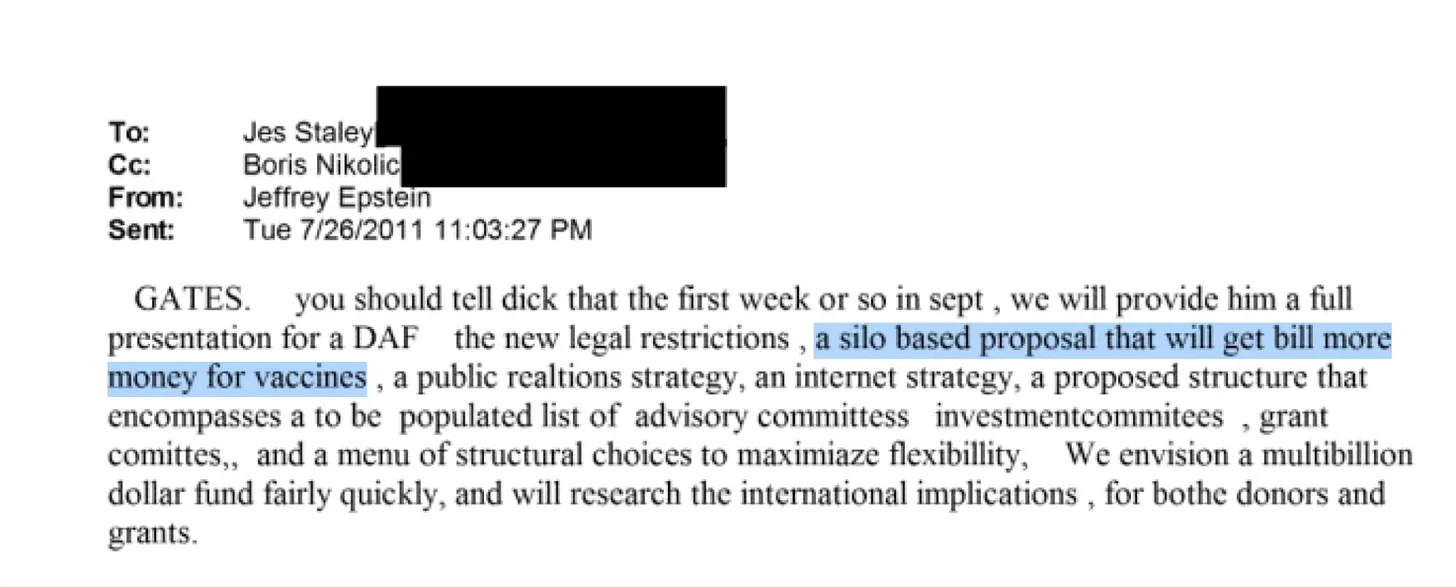
Five months later—in July 2011—Epstein sent an internal email to Jes Staley, with Boris Nikolic, Bill Gates’ chief science and technology advisor, now copied. The email describes the proposed donor-advised fund in more developed terms. Buried in the operational language is a phrase worth reading twice:
“A silo based proposal that will get Bill more money for vaccines.”
Source: Email titled “GATES…” dated July 26, 2011 (EFTA01860211.pdf)
Not “more research.” Not “emergency capacity.” Not “public health resilience.” Money. For vaccines. That is the language of capital formation, not charity.
The CEO’s Questions, the Convict’s Answers
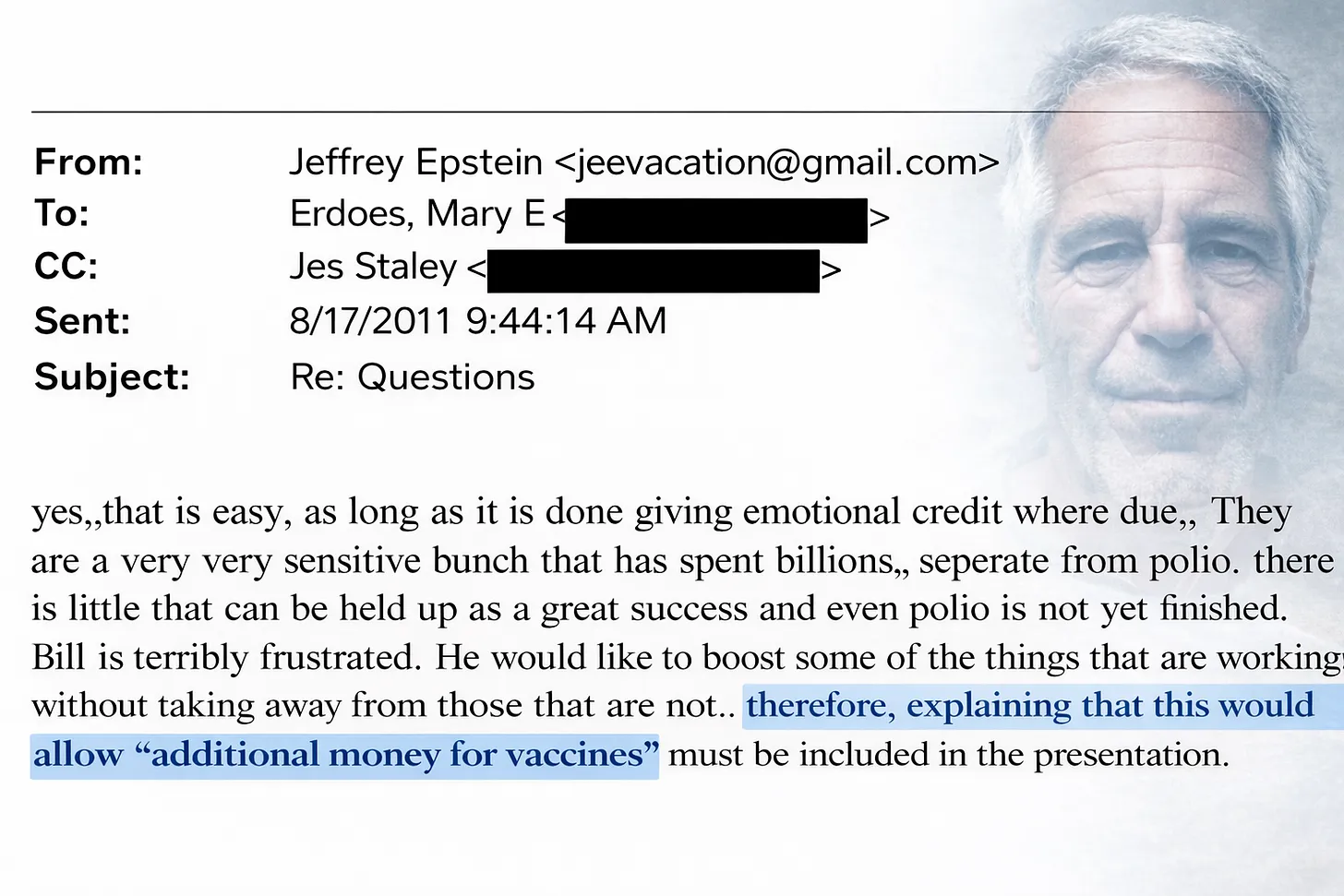
Three weeks later, on August 17, 2011, Mary Erdoes—CEO of JPMorgan Asset and Wealth Management—emailed Epstein directly with a second set of structured questions in advance of an upcoming meeting. She was writing from Maroon Bells, Colorado—on vacation—and cc’d Jes Staley.
Her questions were precise: What role will the Gates Foundation play vis-à-vis other donors? What is the profile of potential donors, including tax status? How important is anonymity? Is pooling of investments a core feature? What is the potential funding amount? What is the timeline for launch?
Source: Email titled “Re: Questions” dated August 17, 2011. (EFTA01256269)
Epstein’s reply, sent within minutes, is sweeping. No foundation input on investments. Donors choose from custom portfolios or predefined silos—a mutual fund concept. The fund would be “mostly initially American” but, he adds:
“However we should be ready with an offshore arm — especially for vaccines.”
He projects “billions of dollars” in the first two years and “tens of billions by year 4.” The timeline, he says, “depends only on JPM ability to organize, legal, structure, internet presence, staffing.” The bottleneck is not Gates. It is not the donors. It is the bank’s capacity to build what Epstein has already designed.
The fund would exist in perpetuity, with succession controls. Not a thematic spend-down. Not a time-limited initiative. A permanent vehicle—designed to outlive its creators.
And he adds that the fund would have “access to the current Foundation’s pools of targets” while also “looking for both new opportunities with metrics for success.” In a single email, Epstein has sketched a vehicle with global reach, offshore flexibility, perpetual duration, and direct access to the Gates Foundation’s pipeline.
The CEO of JPMorgan’s $2 trillion asset management division did not ask compliance to review this. She did not flag the source. She asked for answers before the 31st—and she got them the same night, from a man whose email signature read: “It is the property of Jeffrey Epstein.”
Sayer Ji’s Substack is a reader-supported publication. To receive new posts and support my work, consider becoming a free or paid subscriber.
The Tension: Making Money from a Charitable Organization
Eleven days later, on August 28, 2011, Epstein sent a follow-up email to Staley and Erdoes outlining the donor-advised fund concept in even greater detail. The structure he describes is not a typical charitable vehicle. It is a financial platform:
The fund would be tied “initially just to the Gates program.” Minimum gift: one hundred million dollars. Projected scale: one hundred billion dollars within two years. The structure would include advisory boards, investment committees, grant committees, administration mirroring a mutual fund, valuation services for illiquid or “funky assets,” and investment management farmed out to Highbridge—a JPMorgan-affiliated hedge fund.
Then comes the line that acknowledges the contradiction at the center of the entire apparatus:
“The tension is making money from a Charitable Org. Therefore the money making parts need to be arms length.”
The architect of this structure—a man convicted of sex crimes against minors—is explicitly acknowledging that the vehicle is designed to generate profit under the legal cover of charity. His proposed solution is not to eliminate the profit motive but to obscure it through “arm’s length” separation.
“Bill Is Terribly Frustrated”
The same August 2011 email chain contains another revealing passage. Epstein, writing to Erdoes, describes Gates’ emotional state regarding the pace of the project:
“Bill is terribly frustrated. He would like to boost some of the things that are working without taking away from those that are not… therefore, explaining that this would allow ‘additional money for vaccines’ must be included in the presentation.”
Source: Email titled “Re: Questions” dated August 17, 2011. (EFTA01301108)
This sentence tells us four things at once. First, Epstein is speaking with direct knowledge of Gates’ internal emotional state. Second, he is shaping JPMorgan’s presentation strategy. Third, vaccine funding is the hook—the narrative justification for the financial structure. And fourth, Epstein is the one dictating what “must be included” to close the deal.
In the same correspondence, Epstein describes the Gates Foundation as “a very very sensitive bunch that has spent billions… there is little that can be held up as a great success and even polio is not yet finished.” This is not philanthropy analysis. It is client management. Epstein is coaching a Wall Street executive on how to handle a billionaire’s insecurities.
Why Donor-Advised Funds Matter
A brief clarification for readers unfamiliar with the financial architecture at the center of this story.
Donor-advised funds are not illegal or inherently abusive. They are widely used charitable vehicles that allow donors to receive an immediate tax deduction while retaining advisory influence over how their contribution is invested and eventually distributed as grants. Fidelity, Schwab, and Vanguard all operate DAFs. They are mainstream.
What makes them relevant here is scale, opacity, and timing. When DAFs are designed for perpetual duration, offshore flexibility, hundred-million-dollar minimums, and investment-first logic—when their stated purpose is not merely charitable giving but the generation of returns through vehicles like hedge funds and structured products—they blur the line between philanthropy and financial engineering in ways public oversight rarely penetrates.
The tax benefit is immediate. The charitable distribution can be deferred indefinitely. And the investment returns generated in the interim accrue inside a tax-exempt structure. When Epstein writes that “the tension is making money from a charitable org” and proposes “arm’s length” separation as the solution, he is describing not an abuse of the system but the system working exactly as designed—at a scale most regulators never anticipated.
Impact Investing: When Crisis Becomes an Asset Class
If the 2011 emails show the pitch, a separate Gates Foundation briefing document reveals the philosophy in its mature form.
A confidential 15-page briefing prepared for a JPMorgan-hosted panel on September 23, 2013, describes the Global Health Investment Fund as “the first investment fund focused on global health drug and vaccine development.” The fund explicitly targets financial returns in the range of five to seven percent, while returning all investor capital.
Source: Briefing titled “JPM Panel – Launch of the Global Health Investment Fund.” (0EFTA01103797)
The mechanism for de-risking private investment is critical: the Gates Foundation and other partners provide a sixty percent guarantee of principal, meaning investors could participate in vaccine and drug development with the majority of their downside absorbed by philanthropic and sovereign capital.
This is the structural logic of pandemic finance laid bare: public risk, philanthropic backstop, private upside. Vaccines and global health tools are reframed not as public goods to be funded and forgotten, but as investable assets whose risk profiles are deliberately engineered for capital participation.
The Pandemic Preparedness Network: Gates, Epstein, and the International Peace Institute
The article’s previous sections follow the money. This one follows the meeting invitations—and they lead to the same places.
On March 9, 2015, Amy K. Carter, Deputy Director of Family Interest Grants at the Bill & Melinda Gates Foundation, wrote to Dr. Terje Rød-Larsen, President of the International Peace Institute, regarding IPI’s proposal for “a convening of experts to discuss how we can most effectively address and prevent pandemics.”
Source: Gates Foundation letter to IPI. March 9, 2015. (EFTA02713880 / EFTA_R1_02137620)
The Foundation declined to fund the convening but confirmed that many of the groups in IPI’s proposal were “already in discussions with Gates Foundation staff about pandemic preparedness and response” in the lead-up to the World Health Assembly and G7. The letter noted these would be “key topics” at both forums.
Now recall: Rød-Larsen is the same man who attended the September 2013 dinner at Epstein’s residence alongside both Bill and Melinda Gates and Thorbjørn Jagland, then Secretary-General of the Council of Europe. This is not a tangential connection. Rød-Larsen’s institution is proposing pandemic convenings to Gates—and his private social life runs through Epstein’s dining room.
Three months later, on June 2, 2015, Epstein forwarded Rød-Larsen a Vox article about Bill Gates and flu pandemic preparedness—without comment, just the link. The URL: vox.com/2015/5/27/8660249/gates-flu-pandemic.
Source: Email from Jeffrey Epstein to Terje Rød-Larsen. June 2, 2015. (EFTA02499005)
The pattern is precise: Gates’s Foundation declines to fund Rød-Larsen’s pandemic convening in March. Epstein sends Rød-Larsen Gates’s public pandemic messaging in June. The institutional channel says no. The Epstein channel keeps the line open. This is the function of an intermediary: maintaining relationships that formal institutions cannot—or will not—maintain themselves.
From Proposal to Power: The May 2015 Geneva Pandemic Preparedness Convening
The proposal did not remain theoretical. In May 2015, the International Peace Institute convened a closed-door, high-level meeting in Geneva titled “Preparing for Pandemics: Lessons Learned for More Effective Responses.” The agenda reveals a convergence of institutional power rarely assembled outside moments of declared crisis: the Director-General of the World Health Organization, the President of the World Bank, the President of the International Committee of the Red Cross, the International President of Médecins Sans Frontières, and senior UN and global health officials.
Notably, the agenda for this Geneva convening circulated privately in advance, referenced explicitly in a March, 20th 2015 Epstein email from International Peace Institute leadership and forwarded through diplomatic channels weeks before the meeting convened—underscoring that this convergence was planned, coordinated, and deliberate rather than emergent.
The framing of the meeting is itself revealing. Rather than focusing narrowly on epidemiology or retrospective analysis, the agenda is structured around forward-looking governance questions: how pandemics should be anticipated, how authority should be exercised, how multiple stakeholders should be coordinated, and—critically—what legal, institutional, and financial mechanisms must be put in place in advance to enable rapid, centralized response. One full session is dedicated to identifying legal and managerial gaps, institutional bottlenecks, and pressure points that had constrained prior responses, followed by another focused explicitly on implementation: who should be responsible, how policies should be operationalized, and how international follow-through should occur.
In this context, pandemic preparedness is not treated as contingency planning for rare events, but as a standing domain of global governance—one requiring pre-aligned authority, pre-established chains of responsibility, and ready financial instruments. The presence of the World Bank alongside humanitarian and health institutions underscores that pandemics were already being conceptualized not only as public health crises, but as systemic shocks demanding coordinated financial and policy response. This architecture was being assembled years before COVID-19, and long before the public would be invited into any meaningful debate about its scope, legitimacy, or consequences.
Source: International Peace Institute. “Preparing for Pandemics: Lessons Learned for More Effective Responses” (Agenda). Geneva, May 2015. (EFTA_R1_01347204)
Pandemic as a Category—Not an Event
In May 2017, an email thread involving Epstein, Gates, and Boris Nikolic returns to the donor-advised fund concept. Epstein frames DAFs as a “counter balance” to anticipated cuts in public science funding. Nikolic responds with a line that deserves to be read slowly:
“It might be a great path forward for some key areas such as Energy, pandemic etc.”
Source: Email thread dated May 24, 2017. (EFTA00697005)
Pandemic is listed as a standing category—equivalent to energy—suitable for long-term private capital mobilization. This is not the language of emergency response. It is the language of portfolio strategy.
By 2017, three years before COVID-19, the people closest to Gates were already treating pandemics as a durable funding vertical—a domain that would persist regardless of whether a specific outbreak materialized.
The Rolodex: Pandemic Simulation as Career Currency
The most startling document in this batch is not an email to a bank executive or a foundation letter. It is a text message thread—an iMessage conversation from Epstein’s phone, dated January 20–23, 2017—between Epstein (using the handle jeeitunes@gmail.com) and an unidentified associate.
Source: iMessage thread, January 20–23, 2017. (EFTA01617419–27)
The conversation begins with a birthday greeting. The associate is flying in from Zurich. They arrange a brief meeting. Then the conversation shifts into something extraordinary: a career-planning session in which the associate maps out their professional options—and nearly every path runs through Epstein’s network.
The associate’s self-description is remarkable in its specificity. They describe themselves as a physician with experience at the UN, WHO, Gates Foundation, and World Bank. And then:
“Also my expertise is public health security. Pandemics (just did pandemic simulation) and threats to US health. That could be big platform.”
Pandemic simulation is being treated as a career credential—a professional asset to be leveraged for placement. Not a public safety exercise. Not an academic undertaking. A “platform” for career advancement, mentioned in the same breath as political access and institutional power.
The career options the associate then lists read like a map of the pandemic-preparedness industrial complex:
“Board partner at Biomatics Capital (Boris) but would mean I have to help him raise funds from BG.”
Biomatics Capital is Boris Nikolic’s venture fund. Nikolic—Gates’ chief science advisor, the same man cc’d on the 2011 vaccine emails, the same man who would later list “pandemic” as a DAF category—is here receiving personnel brokered through Epstein.
“BG office (for 6 months max) working on a series of messy agendas but as his senior science advisor.”
Gates’ private office—bgC3, the same entity that produced the “strain pandemic simulation” deliverable—is listed as a landing spot. Epstein’s role as gatekeeper is explicit. He later instructs: “Put together your resume… for my submission.”
“Join Merck team for 6–12 months in their vaccine team (big push for gardasil vaccine/HPV) would have to base in Rwanda.”
Merck’s vaccine team. Gardasil. A direct pipeline from Epstein’s phone to pharmaceutical vaccine operations.
“Join Swiss Re (reinsurance) team developing health products. Did one for pandemics, helped develop parametric trigger.”
This is perhaps the most structurally significant entry on the list. Swiss Re is one of the world’s largest reinsurance companies. A “parametric trigger” is an automated financial mechanism that pays out when a predefined threshold is crossed—in this case, a pandemic declaration. The associate is describing having helped develop a financial product that automatically generates payouts when a pandemic is declared. And Epstein’s network is the career placement vehicle.
The associate also mentions:
“Join the World Economic Forum as chief science advisor to Klaus Schwab.”
And:
“Join Martin Sorrell team and help develop media tech to understand and counteract international Gov’t fragility.”
The full list spans Gates’ office, Nikolic’s fund, Merck’s vaccine team, Swiss Re’s pandemic products, the World Economic Forum, the Rockefeller Foundation, the World Bank, Goldman Sachs, Alibaba, MasterCard, and TPG Capital. Every major node in the pandemic-preparedness-to-profit pipeline appears on a single career menu—brokered through Jeffrey Epstein’s text messages.
And then the associate reveals how Gates himself fits into the calculus:
“BG… He hates mental health but he’s crazy about vaccines and autism stuff. That could be start to a more broad conversation.”
Gates’s interest in vaccines is described not as a philanthropic commitment but as a psychological lever for access. The associate frames vaccines and autism as the entry point—the hook—that will open the door to “a more broad conversation.” This is the same strategic logic Epstein used in 2011 when he insisted “additional money for vaccines must be included” in the JPMorgan presentation. Vaccines are not the mission. They are the key.
Epstein’s response to this sprawling career inventory? “BG.” Then: “No too broad.” Then: “Bg.” He steers his associate toward Gates. The associate acquiesces. Epstein instructs: “Put together your resume… for my submission.”
One further line from this thread demands attention. The day before, Epstein had texted: “Feel free to ask Bill if he would like a private meeting with Bannon, Thiel, or Barrack.” This was January 21, 2017—the day after Donald Trump’s inauguration. Epstein is offering to broker private meetings between Bill Gates and the incoming administration’s power center. The man who designed the donor-advised fund, who directed JPMorgan’s presentation strategy, who placed personnel into Gates’ office and Nikolic’s fund, is now offering to connect Gates to the White House.
Strain Pandemic Simulation: A Technical Deliverable
Two months later—March 2017—a separate email titled “bgc3 Deliverables and Scope” outlines proposed work for bgC3, Bill Gates’ private strategic office. The document lists deliverables across several domains: domestic health, personal health data infrastructure, neurotechnology, brain science, and—listed without any special emphasis—
“Follow-up recommendations and/or technical specifications for strain pandemic simulation.”
Grouped alongside this are neurotechnologies as weapons in national intelligence and defense.
This is not a public tabletop exercise or a policy white paper. It is an internal scope document treating pandemic simulation as a technical discipline—one that sits within the same planning universe as health surveillance, data systems, and defense applications.
The email was forwarded to Jeffrey Epstein. Whatever his specific role, his continued visibility into Gates’ strategic planning as late as 2017 is documented—not inferred.
Combined with the January 2017 iMessage thread—in which an Epstein associate casually references having “just did pandemic simulation”—the picture becomes clear: pandemic simulation was not an occasional exercise. It was a standing capability, a career credential, and a technical deliverable within the Gates-Epstein orbit, all in the same quarter of the same year.
Between the March 2017 scope document and the October 2019 simulation, the architecture did not pause. It accelerated—through public channels now visible to anyone willing to look.
In January 2017—the same month as the iMessage career-planning thread and the same quarter as the bgC3 scope document—the Coalition for Epidemic Preparedness Innovations was formally launched at the World Economic Forum in Davos with $460 million in initial funding from the Gates Foundation, the Wellcome Trust, and the governments of Norway, Japan, and Germany. CEPI’s explicit mission: to reduce vaccine development timelines from ten years to under twelve months, with initial targets including MERS coronavirus. Gates described the initiative at Davos as building vaccine infrastructure “in peace time” so it would be ready when a pandemic arrived.
Six months later, in June 2017, the World Bank issued the first-ever pandemic catastrophe bonds—$320 million in securities sold to private investors through its Pandemic Emergency Financing Facility. The bonds were structured by Swiss Re and Munich Re, with parametric triggers that would automatically release capital when predetermined pandemic thresholds were crossed. Coronavirus was explicitly listed as a covered peril. Investors received coupon rates above eleven percent on the higher-risk tranche—returns that would continue as long as no qualifying pandemic occurred. When COVID-19 eventually triggered the bonds in April 2020, investors lost their principal and $195.84 million was disbursed. But for the preceding three years, the product had functioned exactly as the iMessage associate described: a pandemic reinsurance instrument with a parametric trigger, generating returns until the declared event arrived.
Meanwhile, in December 2019—weeks before the WHO was notified of the Wuhan pneumonia cluster—NIAID and Moderna executed a material transfer agreement sending mRNA coronavirus vaccine candidates to Ralph Baric’s laboratory at UNC Chapel Hill.
By the time Event 201 convened, the architecture documented in the preceding sections was no longer conceptual. It had been funded, structured, bonded, insured, staffed, and legally papered. What remained was the rehearsal.
Event 201: The Dress Rehearsal
On October 18, 2019—six weeks before the first publicly acknowledged cases of COVID-19—the Johns Hopkins Center for Health Security, the World Economic Forum, and the Bill & Melinda Gates Foundation co-hosted Event 201, a high-level pandemic simulation exercise featuring a novel coronavirus.
The exercise focused on government coordination, pharmaceutical supply chains, media management, social media censorship strategies, public compliance, and international governance alignment. Participants included representatives from global financial institutions, pharmaceutical companies, intelligence agencies, and media organizations.
Event 201 did not cause COVID-19. That is not the claim.
The claim is this: when a coronavirus pandemic is simulated weeks before a real coronavirus pandemic emerges, and when that simulation aligns with years of prior financial structuring, patent development, internal simulation work, reinsurance product development, personnel placement into vaccine teams, and capital vehicles already designed around pandemic-category returns—coincidence alone is an insufficient explanation for the convergence.
It does not prove conspiracy. It proves that the institutional infrastructure to capitalize on exactly this kind of crisis was already built, tested, staffed, and insured.
The Patent Foresight Problem
A note on evidentiary scope: the preceding sections of this investigation draw exclusively on internal emails, financial agreements, text messages, and planning documents from the Epstein files—primary source evidence in the participants’ own words. The patent record that follows is drawn from a different evidentiary category: publicly available filings with the United States Patent and Trademark Office and peer-reviewed scientific literature. No direct documentary link between the patent holders below and the Epstein-Gates-JPMorgan correspondence has been established in the released files. What the patent record does establish is the broader industrial context in which the financial architecture documented above was built—and the timeline that made rapid monetization structurally possible.
Long before COVID-19 was named, coronavirus-related technologies were being patented. The specifics are a matter of public record.
Moderna’s foundational mRNA patents claim priority to applications filed between 2010 and 2016. In 2015, NIAID and Moderna entered a cooperative research and development agreement focused on mRNA vaccine development. By December 12, 2019—weeks before the WHO was notified of a pneumonia cluster in Wuhan—a material transfer agreement between NIAID, Moderna, and Ralph Baric’s laboratory at the University of North Carolina at Chapel Hill transferred “mRNA coronavirus vaccine candidates developed and jointly owned by NIAID and Moderna” for animal testing. That agreement was specific to MERS-CoV, not SARS-CoV-2, and was amended in February 2020 after the new virus was sequenced. But the platform was already built.
The patent trail at UNC is older still. Ralph Baric filed his first patent on methods for producing recombinant coronavirus in April 2002 (US Patent No. 7,279,327). In March 2015, Baric and colleagues filed an international patent application for chimeric coronavirus spike proteins (PCT/US2015/021773), granted as US Patent No. 9,884,895 in February 2018—funded under NIH Grant No. U54AI057157. Baric’s decades of NIH-funded coronavirus research, including gain-of-function work on spike protein constructs, produced capabilities that were extensively documented in peer-reviewed literature and patent filings years before 2020.
These patents do not prove intent to release a pathogen. That is not the claim. They prove anticipation of utility—and they enabled rapid monetization when the anticipated conditions materialized, a dynamic recognized in intellectual property law as patent foresight. (See The Patent Foresight Problem: https://www.lexology.com/library/detail.aspx?g=1a4573cc-01b7-4da3-b5e9-739c60d0c9ee)
The structural point is this: the financial architecture documented in the preceding sections—the DAFs, the impact investment vehicles, the reinsurance triggers, the simulation programs—was not built in a vacuum. It was built alongside, and in some cases directly adjacent to, a patent and technology development pipeline that ensured whoever controlled the platform would be positioned to move first when a coronavirus pandemic materialized. The documents examined in this investigation do not prove that these two tracks were coordinated. They prove that they were concurrent, that they involved overlapping institutions, and that both were fully operational before COVID-19 arrived.
When patents, simulations, capital vehicles, rehearsal events, reinsurance triggers, and internal scope documents all exist before a crisis, what you are looking at is not a conspiracy theory. It is structural readiness for profit—the kind of readiness that rewards speed, centralizes control, and marginalizes alternative approaches.
Patents associated with Moderna for coronavirus vaccine platforms existed years before the pandemic. Research conducted by Ralph Baric and colleagues at the University of North Carolina, in collaboration with NIH-funded laboratories, produced coronavirus spike protein research and gain-of-function capabilities that were documented in peer-reviewed literature and patent filings well before 2020.
Patents do not prove intent to release a pathogen. They prove anticipation of utility—and they enable rapid monetization when the anticipated conditions materialize, a dynamic recognized in intellectual property law as patent foresight.
(See The Patent Foresight Problem: https://www.lexology.com/library/detail.aspx?g=1a4573cc-01b7-4da3-b5e9-739c60d0c9ee)
Epstein as Intermediary: Governance Risk, Not Gossip
Among the most consequential documents in this archive is an agreement letter dated August 8, 2013, addressed to William H. Gates.
The letter states that Gates “specifically requested” that Jeffrey Epstein “personally serve as the representative” of Boris Nikolic in certain financial and logistical negotiations. It acknowledges that Epstein had an “existing collegial relationship” with Gates, in which Epstein had already received “confidential and/or proprietary information.” Gates waives conflicts of interest and provides broad indemnification.
Source: Agreement letter dated August 8, 2013. (EFTA01106142)
This agreement was executed five years after Epstein’s conviction for soliciting a minor for prostitution. Gates had the resources to work with anyone on earth. He chose a registered sex offender—and put it in writing.
Additional scheduling records from 2010 through 2014 document repeated private meetings, dinners, private jet travel, late-night appointments, and a September 2013 dinner at Epstein’s residence attended by both Bill and Melinda Gates, alongside Terje Rød-Larsen and Thorbjørn Jagland—the same Rød-Larsen whose International Peace Institute was coordinating pandemic convenings with the Gates Foundation, and who received Epstein’s pandemic-related media forwards.
And as the January 2017 iMessage thread demonstrates, Epstein’s intermediary function extended well beyond Gates personally. He was placing personnel into Gates’ private office, Nikolic’s Biomatics Capital, Merck’s vaccine team, Swiss Re’s pandemic reinsurance unit, and the World Economic Forum. He was brokering meetings with the incoming Trump administration. He was directing presentation strategy at JPMorgan. He was, in short, the human router through which pandemic-adjacent finance, science, policy, and political access all flowed.
Intermediaries matter because they shape outcomes without accountability. When a figure with Epstein’s record sits at the center of this web, public trust is not an externality—it is a casualty.
The issue is not merely that Epstein was involved, but that institutions with unlimited resources repeatedly chose him as an intermediary—despite his conviction—when other options were abundant. JPMorgan had thousands of wealth advisors. The Gates Foundation had a staff of over 1,500. Boris Nikolic could have retained any law firm in the country. They chose Epstein—and they kept choosing him, year after year, from 2011 through at least 2017. That pattern reflects a governance failure, not a coincidence.
Here is what these documents, taken together, reveal—not as accusation, but as pattern:
JPMorgan treated a convicted sex offender as the operational architect of a Gates-linked charitable fund—soliciting his input on structure, compliance, and strategy as early as February 2011.
Vaccines were positioned as a capital-raising narrative inside financial structures designed for scale, offshore flexibility, and arm’s-length profit generation—years before any pandemic.
Pandemic was treated as a standing strategic category—not a hypothetical emergency—by the people designing donor-advised funds and impact-investment vehicles.
Pandemic simulation was simultaneously a technical deliverable, a career credential, and a career-placement pathway—all within the Gates-Epstein orbit, all documented in early 2017.
Pandemic reinsurance products with parametric triggers—financial instruments that automatically pay out upon a pandemic declaration—were being developed by professionals in Epstein’s career-placement network.
The pandemic preparedness network ran through Epstein: from the Gates Foundation’s institutional correspondence with the International Peace Institute to Epstein’s private channel to its president.
Rehearsal events modeled not merely disease spread, but narrative control, government coordination, and public compliance—weeks before the real thing.
Financial structures guaranteed that private investors bore minimal risk while retaining upside—a design that creates systemic incentives to identify, maintain, and even prefer the conditions under which those investments pay off.
None of this requires criminal intent to be dangerous. The structural incentive alone—where preparedness, capital, power, and narrative converge before a crisis—creates a gravitational pull toward outcomes that serve the prepared.
Institutional Facilitation and the Cost of Looking Away
The consequences of institutional deference to powerful clients are no longer theoretical. In November 2023, a U.S. federal judge approved a $290 million settlement between JPMorgan Chase and more than 100 women who accused Jeffrey Epstein of sexual abuse, following disclosures that the bank ignored internal warnings and overlooked clear red flags for years because Epstein was a valuable client. In approving the settlement, Judge Jed Rakoff emphasized that the case sent a message to financial institutions about their responsibility to recognize and act on the risks they facilitate. JPMorgan did not admit wrongdoing, but the court’s findings underscored how systemic incentives can override ethical and legal judgment until external accountability intervenes.
Defenders of these arrangements will argue that pandemic preparedness, simulation exercises, vaccine investment, and reinsurance products are simply prudent responses to known global risks. Pandemics have always been a matter of when, not if. Responsible institutions plan for them.
That argument deserves to be taken seriously—and at its strongest, not its weakest.
Donor-advised funds are not exotic. Fidelity Charitable is the largest grantmaker in the United States. DAF structures at the hundred-million-dollar scale are standard instruments for ultra-high-net-worth philanthropists, and the Gates Foundation is hardly the only organization to use them. The existence of a DAF, even a large and complex one, does not by itself indicate anything improper.
Nor was pandemic preparedness a fringe concern. Between 2000 and 2019, governments, multilateral institutions, academic centers, and private foundations across the world invested heavily in pandemic readiness. The WHO, the CDC, BARDA, the Wellcome Trust, the Coalition for Epidemic Preparedness Innovations, and dozens of universities ran simulations, funded vaccine platforms, and developed financing mechanisms—most with no connection to Jeffrey Epstein whatsoever. Pandemic preparedness was mainstream institutional activity, and many of the people engaged in it were acting in straightforward good faith.
All of this is true. And none of it answers the questions these documents raise.
The question is not whether DAFs exist or whether pandemic preparedness is legitimate. The question is why the specific architecture documented here—offshore arms earmarked for vaccines, perpetual-duration vehicles with arm’s-length profit separation, parametric triggers that automate payouts on pandemic declarations—was designed, refined, and operationalized through a channel that ran repeatedly through a convicted sex offender. The mainstream existence of these tools makes the routing more puzzling, not less. Gates had access to every law firm, every bank, every advisory structure on earth. JPMorgan had thousands of wealth advisors. Boris Nikolic could have retained any consultancy in the country. The abundance of legitimate alternatives is precisely what makes the exposed channel so difficult to explain away.
Nor does the breadth of legitimate pandemic preparedness explain the concentration documented here. Hundreds of institutions worked on preparedness. But the documents in this report do not describe hundreds of institutions. They describe a single network in which the same small group of individuals simultaneously designed the financial vehicles, directed the presentation strategy, placed personnel into vaccine teams and reinsurance units, funded the simulations, held the patents, and brokered political access—with one man serving as the connective tissue across all of these functions. The issue is not that preparedness happened. It is that so many of its financial, strategic, and personnel dimensions converged through a single, compromised intermediary.
Preparedness can be public. It can be transparent. It can be subject to democratic oversight. What these douments show is preparedness that was privatized, financialized, and insulated from accountability. The distinction between public-interest planning and private-interest pre-positioning is not semantic. It is the difference between a fire department and an arson investigator who also sells fire insurance.
The benign reading requires you to believe that every structural feature of this system—the offshore arms, the perpetual duration, the parametric triggers, the arm’s-length separation, the convicted intermediary—was simply good planning. The documents invite a different question: good planning for whom?
The Question No One Is Supposed to Ask
If systems are built to profit from crisis—if the same people who design the financial vehicles also fund the simulations, hold the patents, develop the reinsurance triggers, place the personnel, shape the policy, and manage the narrative—then the question is not whether they would act in their own interest.
The question is: what structural safeguard exists to ensure they don’t?
And if the answer is “trust”—trust in the same institutions that platformed a convicted sex offender as a financial intermediary, that structured charitable vehicles with acknowledged “tension” around profit, that simulated a coronavirus pandemic weeks before one arrived, that built reinsurance triggers designed to pay out on pandemic declarations—then trust alone is not enough.
Transparency is not cynicism. Accountability is not conspiracy theory. And asking who profits from catastrophe is the oldest and most necessary question in public life.
Sunlight remains the most effective public health intervention ever devised. It costs nothing. It requires no patent. And it has no side effects—except for those who prefer to operate in the dark.
1/🚨 The DOJ just released thousands of pages of Epstein files. And buried inside them may be one of the biggest bombshells no one is talking about: The blueprint for a 20-year financial architecture designed to turn pandemics into a profit center. Offshore vaccine funds.
8. Bill & Melinda Gates Foundation (Amy K. Carter) to Dr. Terje Rød-Larsen, International Peace Institute. Letter re: pandemic preparedness convening. March 9, 2015. (EFTA02713880 / EFTA_R1_02137620)
9. Jeffrey Epstein to Terje Rød-Larsen. Forwarded Vox article on Gates and flu pandemic preparedness. June 2, 2015. (EFTA02499005 / EFTA_R1_01624983)
10. iMessage thread from Epstein’s phone (jeeitunes@gmail.com). Career planning, pandemic simulation, Gates access, vaccine/pharma placement. January 20–23, 2017. (EFTA01617419–27)
11. Email titled “bgc3 Deliverables and Scope.” March 3, 2017. Forwarded to Jeffrey Epstein.
12. Jeffrey Epstein, Bill Gates, and Boris Nikolic. Email thread re: DAF as counter-balance. May 24, 2017. (EFTA00697005)
13. Bill Gates to Jeffrey Epstein. Forwarded calendar invitation. “Billg Meeting w/Jeffrey Epstein (Boris)” at BMGF campus. July 2011.
14. Boris Nikolic to Jeffrey Epstein. “FW: Bio.” February 5, 2014.
15. Johns Hopkins Center for Health Security, World Economic Forum, and Bill & Melinda Gates Foundation. “Event 201 Pandemic Exercise.” October 18, 2019.
16. Moderna, Inc. Coronavirus vaccine platform patent filings prior to 2020. United States Patent and Trademark Office.
Buried in the Epstein files is a 14-page JPMorgan proposal called Project Molecule—a formal partnership with the Bill & Melinda Gates Foundation to transform pandemic preparedness into a permanently governed, privately controlled, transnational system of vaccine procurement, surveillance, and global health finance—developed within the same institutional ecosystem in which a convicted sex offender operated as a connective broker between Wall Street, global health, and political power.
In Part I, I documented the emails, text messages, financial agreements, and planning documents that revealed pandemics and vaccines being treated as standing financial and strategic categories years before COVID-19. Offshore arms “especially for vaccines.” Pandemic as a donor-advised fund vertical. Strain pandemic simulation as a technical deliverable. Career placement into vaccine teams and pandemic reinsurance units — brokered through a convicted sex offender’s phone.
I described a fire station built beside a factory that stores accelerants, owned by the same people who wrote the building code.
What the newly released DOJ materials now make clear is that the fire station had blueprints. They were fourteen pages long. And they had a name.
Project Molecule.
Executive Summary
The architecture had a name: A 14-page JPMorgan client proposal — Version 13, dated August 31, 2011 — reveals a transnational charitable-investment vehicle called “The Gates & J.P. Morgan Charitable Giving Fund,” linking the Bill & Melinda Gates Foundation, ultra-high-net-worth global donors, donor-advised funds, offshore charitable structures, and concrete biological interventions.
The structure was designed to be permanent: The deck’s stated objectives include “perpetual operation and governance succession” — not a time-limited campaign but a self-governing institution designed to outlive its founders, with no sunset clause and no mandatory payout requirements.
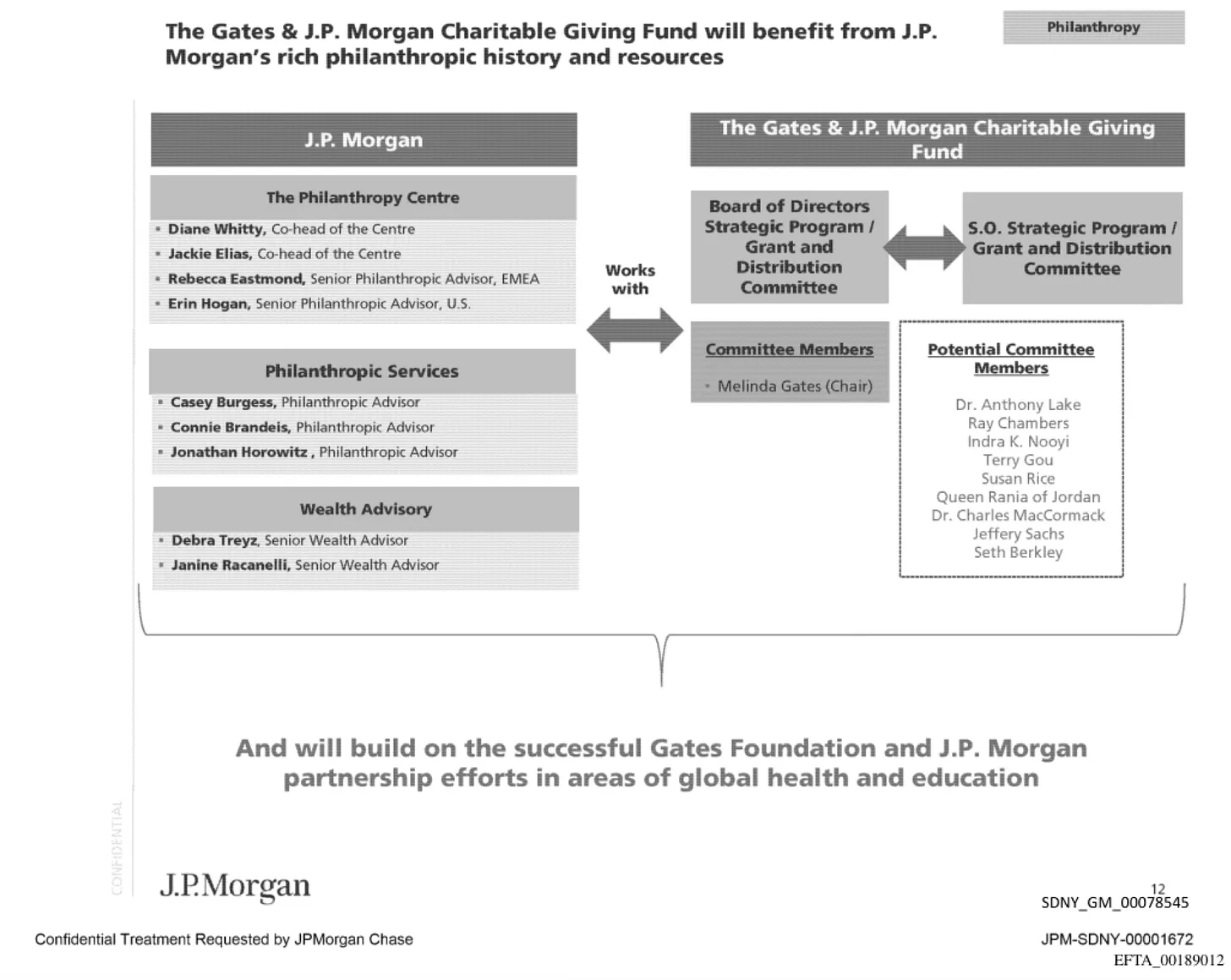
The governance was private: Five layers of committees — Board, Investment, Grant Distribution, Management, and Audit — populated by Warren Buffett, George Kaiser, Mary Erdoes, Melinda Gates (chair), Susan Rice, Seth Berkley (Gavi), Jeffrey Sachs, and Queen Rania of Jordan. No elected officials. No treaty obligations. No public accountability beyond what the entity’s own audit committee determined.
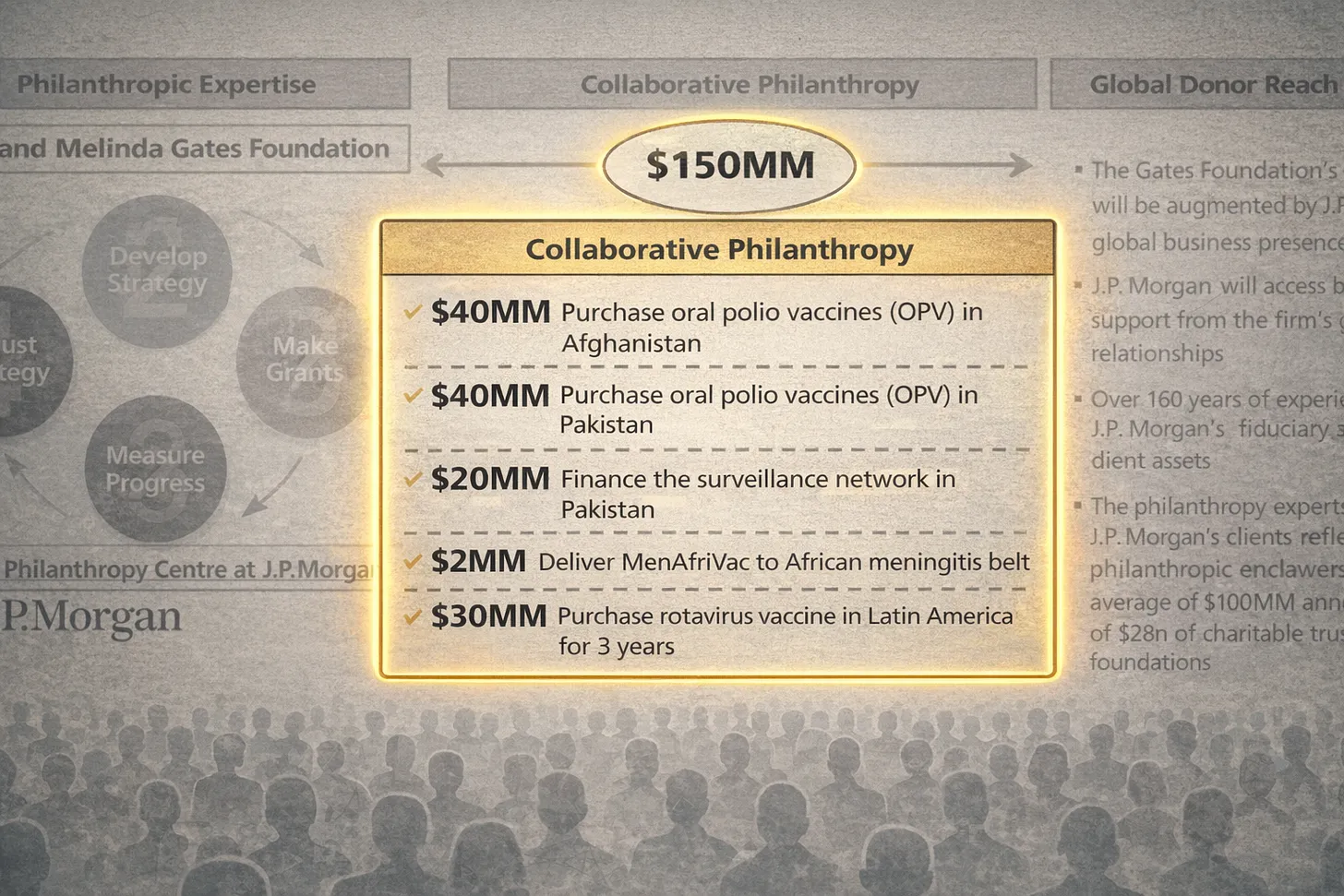
The money was operational: A single slide allocates $150 million in specific biological interventions — $40M for polio vaccines in Afghanistan, $40M in Pakistan, $20M to “finance the surveillance network in Pakistan,” $20M for MenAfriVac in Africa, and $30M for rotavirus vaccines in Latin America.
The offshore arm Epstein described was being built: Project Molecule’s three-entity structure — a U.S. public organization, a foreign foundation in a “tax neutral jurisdiction,” and country-specific conduits — is the institutional architecture for the “offshore arm — especially for vaccines” that Epstein outlined to Mary Erdoes in the same month this deck was drafted.
Epstein’s fingerprints are on the architecture: The deck was produced by the same JPMorgan private wealth division run by Jes Staley. Erdoes — the same executive who received Epstein’s “offshore arm” email — appears as a non-voting Investment Committee member. The parallel channels converge on the same structural endpoint.
When “Project Molecule” Turns Out to Be Literal
Throughout Part I, I used the term “architecture” to describe a pattern: the gradual transformation of global health and pandemic preparedness into an investable, governable system — built before crisis and activated during it.
That word was more precise than I knew.
Project Molecule is not a metaphor. It is a JPMorgan client proposal — Version 13, dated August 31, 2011 — explicitly designed to create a transnational charitable-investment vehicle linking the Bill & Melinda Gates Foundation, ultra-high-net-worth global donors, donor-advised funds, offshore charitable structures, and concrete biological interventions: vaccines, surveillance networks, and disease eradication campaigns.
The cover page is unambiguous:
PROJECT MOLECULE — CLIENT DRAFT Wednesday, August 31, 2011 J.P. Morgan
This document was produced in the Southern District of New York litigation and entered the federal record with Bates stamps from both the JPMorgan production (JPM-SDNY) and the Epstein Files Task Act production (EFTA). It was not leaked. It was not alleged. It was disclosed under legal process.
Version 13. Think about what that means. This was not a first draft. This was a document that had been revised, reviewed, debated, and refined at least twelve times before this version was sent. Whatever Project Molecule was, it was deliberate.
Two Channels, One Architecture
To understand what Project Molecule is, you have to read it alongside the emails documented in Part I. Because when you do, something emerges that is more unsettling than either set of documents alone: point by point, line by line, the informal channel and the formal channel describe the same system.
Start with duration.
On August 17, 2011, Epstein emailed Mary Erdoes — CEO of JPMorgan Asset and Wealth Management, writing from vacation in Maroon Bells, Colorado — and described a fund that would “exist in perpetuity, with succession controls.” Not a thematic spend-down. Not a time-limited initiative. A permanent vehicle designed to outlive its creators (EFTA01256269).
Fourteen days later, the Project Molecule deck landed. Page 3, Executive Summary. Among its stated objectives: “Allow for perpetual operation and governance succession.”
The same word. The same concept. The same month. One in an email from a convicted sex offender to a bank CEO. The other in a polished client presentation stamped Version 13.
Now consider structure.
Epstein’s email describes a fund that would be “mostly initially American” but adds: “However we should be ready with an offshore arm — especially for vaccines” (EFTA01256269). He envisions custom investment portfolios, predefined “silos,” and donor anonymity.
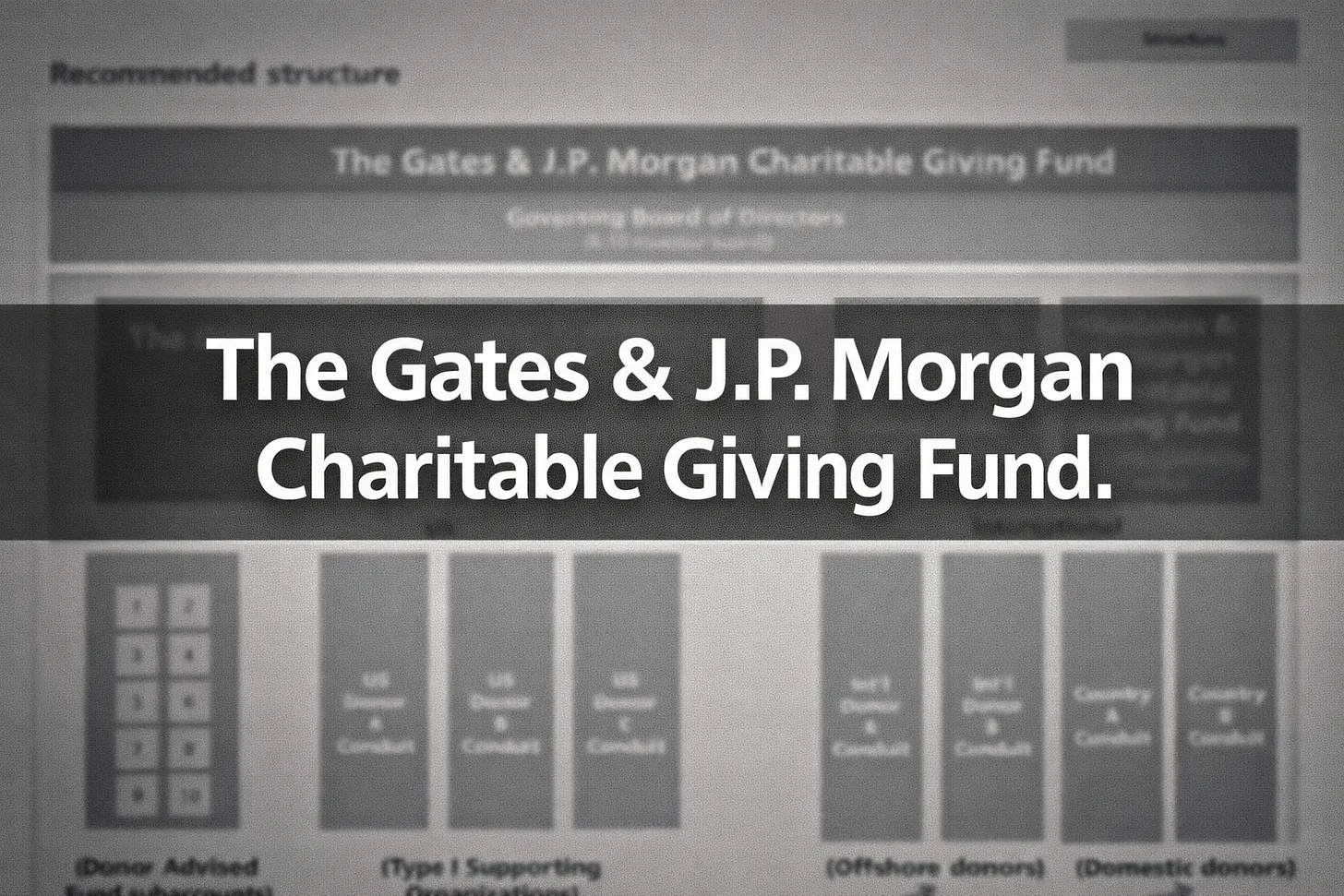
The deck, page 4, proposes three parallel entities under a unified board:
A U.S. sponsoring public organization (with Donor Advised Fund subaccounts and Type I Supporting Organizations for donors contributing $100 million or more)
A foreign private charitable foundation in a “tax neutral jurisdiction”
A domestic qualifying entity for country-specific donor conduit
(Source: SDNY_GM_00078537; EFTA_00189004 / EFTA01301118, p. 4.)
The “offshore arm” Epstein described is entity number two — a foreign foundation in a tax-neutral jurisdiction. The deck notes this structure would provide “maximum flexibility for appropriate donors” and “permit donor anonymity”
“Offshore arm” → “foreign private charitable foundation in a tax neutral jurisdiction.” “Donor anonymity” → “permit donor anonymity.” This is not a coincidence of language. It is a convergence of design. The email sketches the architecture in shorthand. The deck renders it in corporate detail. They were produced in the same month, by the same division, for the same client.
Now consider purpose.
On August 28, 2011, Epstein sent Staley and Erdoes a follow-up email explaining that “Bill is terribly frustrated” and insisting that the presentation include the phrase “additional money for vaccines” (EFTA01301108).
Vaccines were the hook — the narrative justification for the financial structure. Eleven days earlier, he had described the fund as “a silo based proposal that will get Bill more money for vaccines”(EFTA01860211).
The deck, page 9, translates that narrative into a budget. Under the heading “Collaborative Philanthropy,” it allocates $150 million across specific biological interventions — including $80 million in polio vaccines for Afghanistan and Pakistan, $20 million for a surveillance network in Pakistan, and $30 million for rotavirus vaccines in Latin America.
“Additional money for vaccines” is not a phrase anymore. It is a line item.
And finally, consider scale.
Epstein projected “billions of dollars” in the first two years and “tens of billions by year 4.” He described the bottleneck as JPMorgan’s capacity to build what he had already designed: “depends only on JPM ability to organize, legal, structure, internet presence, staffing” (EFTA01256269).
The deck’s objectives include leveraging “J.P. Morgan’s global reach, infrastructure investment management, and individual wealth structuring capabilities” and creating structures to “accept, manage, and liquidate unique and/or illiquid assets.” The minimum gift threshold: $100 million. The entity name: “The Gates & J.P. Morgan Charitable Giving Fund.”
Two channels. One architecture. The only thing missing from the deck is the name of the man who helped design the table.
Committees Instead of Parliaments
The governance structure proposed in Project Molecule reveals a particular theory of authority — one in which legitimacy flows not from democratic mandate but from capital contribution.
The deck proposes five layers of governance:
A Governing Board of Directors (8–10 members) responsible for oversight, strategic planning, committee oversight, and senior management hiring
An Investment Committee (board and advisory members) overseeing investment assets, formulating policies, and monitoring portfolio compliance
A Strategic Program / Grant and Distribution Committee (board and advisory members) responsible for reviewing program initiatives, conducting due diligence, and directing funds to charitable recipients
A Management and Governance Committee reviewing governance, compensation, and personnel policies
A Finance / Audit Committee overseeing financial reporting, internal control, spending policy, budget, compliance, and officer compensation
This is a complete governance apparatus — legislative, executive, fiduciary, and audit — housed entirely within a private charitable entity. The people who fund it govern it. The people who govern it direct its interventions. And the interventions, as we will see, include purchasing vaccines for sovereign nations, financing surveillance networks, and setting eradication timelines.
Who was proposed to sit on these committees matters enormously.
Investment Committee (Voting Members):
Warren Buffett
George Kaiser
Investment Committee (Non-Voting Members):
David Rubenstein
Mary Erdoes (CEO, JPMorgan Asset and Wealth Management)
Mike Cembalest (Global Head of Investment Strategy, JPMorgan)
Ted Forstmann
Lee Cooperman
Strategic Program / Grant and Distribution Committee:
Melinda Gates (Chair)
Potential Committee Members:
Dr. Anthony Lake
Ray Chambers
Indra K. Nooyi
Terry Gou
Susan Rice
Queen Rania of Jordan
Dr. Charles MacCormack
Jeffrey Sachs
Seth Berkley (CEO, Gavi, the Vaccine Alliance)
Consider what this committee structure represents. The Investment Committee — deciding how billions of dollars would be deployed — would include the two wealthiest men in America at the time, with the CEO of JPMorgan’s asset and wealth management division and the bank’s chief investment strategist in advisory roles. The Grant and Distribution Committee — deciding which countries receive which vaccines, which surveillance networks get funded, which eradication campaigns proceed — would be chaired by Melinda Gates, with a roster drawn from the intersection of global diplomacy, corporate governance, and institutional public health.
These were not retired philanthropists lending their names to a letterhead. In August 2011, Susan Rice was U.S. Ambassador to the United Nations — in the middle of the Libya intervention, the Arab Spring, and the most consequential year of Obama’s foreign policy. Seth Berkley had taken over as CEO of Gavi, the global vaccine alliance, just months earlier and was redesigning its entire funding model. Queen Rania was navigating Jordan’s response to regional revolution. Jeffrey Sachs was running the UN Millennium Villages Project across sub-Saharan Africa while advising the Secretary-General on global development goals. Indra Nooyi was CEO of PepsiCo, one of the world’s largest food and beverage companies.
These are not advisors to a charity. They are people who, in their day jobs, already governed — nations, alliances, corporations, multilateral institutions. Project Molecule proposed to give them a second jurisdiction: biology. And unlike their official roles, this one would have no term limits, no parliamentary oversight, no electorate, and no freedom-of-information obligations.
The entity they would govern was designed to be perpetual — with built-in succession mechanisms, no mandatory payout requirements (unlike private foundations), and the ability to operate in any jurisdiction through country-specific subsidiary entities.
This is what a government looks like when it is not called a government.
So what would this government do?
Where the Money Goes — and What It Buys
The answer is on page 9 of the deck. And it is the slide that turns Project Molecule from a financial abstraction into something you can feel in your stomach.
Under the heading “Collaborative Philanthropy,” the deck presents specific planned interventions — not aspirations, not program areas, but dollar figures matched to target geographies:
$40M — Purchase oral polio vaccines (OPV) in Afghanistan
$40M — Purchase oral polio vaccines (OPV) in Pakistan
$20M — Finance the surveillance network in Pakistan
$20M — Deliver MenAfriVac in the African meningitis belt
$30M — Purchase rotavirus vaccine in Latin America for three years
This is not a wish list. It is a budget. And the budget makes explicit what the governance slides imply: Project Molecule was designed not merely to pool and invest philanthropic capital but to deploy it operationally, across sovereign borders, into specific countries, for specific biological interventions, with specific dollar commitments.
The total shown on this single slide — $150 million in pooled giving from three hypothetical donor case studies — would fund vaccine procurement in South Asia, surveillance infrastructure in Pakistan, and vaccination campaigns across Africa and Latin America.
Now read the third line item again, slowly:
“Finance the surveillance network in Pakistan.”
Not “support public health monitoring.” Not “contribute to WHO disease tracking.” Finance the surveillance network. As in: build it, fund it, own it. A surveillance network in a sovereign nation, financed by a private charitable entity governed by unelected committees in a tax-neutral offshore jurisdiction.
That is the line item that should stop you.
In Part I, I noted that Epstein used the phrase “additional money for vaccines” and described it as “the language of capital formation, not charity.” This slide is the same language translated into a budget. The word “surveillance” appears not metaphorically, not as a policy aspiration, but as a funded program with a dollar figure attached.
This is the point at which philanthropic infrastructure becomes something else entirely.
The Carpenter and the Table
Jeffrey Epstein does not appear in the Project Molecule deck. Not as a signatory. Not as a committee member. Not as a named participant.
But by now, the reader has seen the parallel channels — the emails and the deck, the shorthand and the engineering, arriving at the same structural endpoint in the same month from the same division at the same bank. “Perpetuity” and “perpetual.” “Offshore arm” and “tax neutral jurisdiction.” “Money for vaccines” and a $150 million budget slide. The convergence is not a matter of interpretation. It is a matter of reading.
The question is not whether Epstein authored Project Molecule. He almost certainly did not. The question is whether the polished deck is the institutional translation of the architecture he was sketching informally — and whether the reason his name doesn’t appear is not that he was uninvolved, but that the formal channel was designed to be the clean version of the informal one.
Remember how the relationship worked. In February 2011, JPMorgan’s Juliet Pullis sent Epstein a structured questionnaire — at Jes Staley’s direction — asking him to define the architecture of a Gates-linked fund. Epstein replied the same evening with a fully formed vision: a donor-advised fund with “a stellar board, broken down into investment committee and distribution,” tied to the Giving Pledge’s sixty billion dollars in committed capital. Staley’s response: “We need to talk.” By August, Erdoes was emailing Epstein directly — from vacation — asking for answers before the 31st. She got them the same night.
That is not a man on the periphery. That is a man at the center of the design process — coaching a bank CEO on how to handle a billionaire’s insecurities (”Bill is terribly frustrated”), dictating what “must be included” in the presentation (”additional money for vaccines”), projecting timelines and scale (”billions of dollars… tens of billions by year 4”), and insisting on offshore structures “especially for vaccines.”
Project Molecule is the table. Polished, presented to the client, stripped of the carpenter’s fingerprints. Whether that constitutes coordination or coincidence is a judgment the reader can make. But the documents are in the federal record. And they say what they say.
What $20 Million Buys in a Sovereign Nation
Every line item on that slide deserves scrutiny. But one of them demands it.
$40 million for polio vaccines in Pakistan. $20 million to “finance the surveillance network” in the same country. Sixty million dollars in biological operations — vaccine procurement and surveillance infrastructure — directed at a single sovereign nation by a private charitable entity governed from New York.
To understand what that means, you have to understand what was happening in Pakistan in 2011.
By that year, Pakistan was one of three remaining countries where polio was endemic (along with Afghanistan and Nigeria). The country’s polio status had become a matter of international reputation, trade eligibility, and diplomatic standing. The WHO had declared a Public Health Emergency of International Concern (PHEIC) related to polio spread, and countries with endemic transmission faced travel restrictions and reporting obligations.
The Epstein files themselves include correspondence showing Bill Gates meeting Pakistan’s Prime Minister at the United Nations in 2013, explicitly discussing polio eradication and the country’s National Emergency Action Plan. Publicly, this is cooperation — and it genuinely is.
But consider the layered reality that Project Molecule reveals when cross-referenced with the broader documentary record:
Pakistan’s international mobility and reputation were directly tied to disease status — specifically, to vaccination metrics defined by external actors.
Surveillance infrastructure was not financed by the Pakistani government. It was financed by foreign philanthropic capital, channeled through a private entity governed by unelected committees.
Eradication timelines were set not by Pakistan’s parliament but by the Global Polio Eradication Initiative — a partnership between the WHO, UNICEF, Rotary International, the CDC, and the Gates Foundation, with the Gates Foundation as the largest non-governmental funder.
Vaccination campaigns required military and police escorts due to local resistance — resistance that intensified after the CIA’s use of a fake hepatitis B vaccination campaign to gather intelligence in Abbottabad prior to the bin Laden raid in 2011, the same year Project Molecule was drafted.
That last point deserves emphasis. In the same year that JPMorgan proposed financing a surveillance network in Pakistan through a Gates-linked charitable vehicle, the CIA was running a fake vaccination campaign in the same country to collect DNA intelligence on Osama bin Laden’s compound. The operation was exposed, vaccination workers were subsequently murdered, and community resistance to foreign-funded health programs became a permanent feature of Pakistan’s public health landscape.
Project Molecule’s architects either knew this — in which case the surveillance line item takes on a different dimension — or they didn’t, in which case the obliviousness is itself a form of institutional arrogance. Either way, the document proposes building foreign-funded biological surveillance infrastructure in a country where foreign-funded biological programs had just been weaponized by an intelligence agency.
This is not occupation. No one is claiming it is. But it is a form of conditional governance — one in which a sovereign nation’s disease status, its access to international standing, its internal surveillance capacity, and its compliance with externally set health targets are all mediated by private capital operating through extraterritorial charitable structures.
Project Molecule did not invent this dynamic. But it proposed to institutionalize it — permanently, at scale, and under private governance.
And none of the above requires bad intent to produce structural harm. Once disease status becomes the mechanism through which a country’s international legitimacy is assessed — through travel eligibility, aid conditionality, reputational standing, and emergency declarations — what you have is not a health program. What you have is a credentialing system. The credentials are biological. The evaluators are private. And the consequences are sovereign.
Project Molecule does not merely fund vaccines. It funds the surveillance that tracks compliance. It funds the metrics that define success. It creates the governance structures that set targets. And it builds the institutional permanence that ensures the process continues regardless of political change — regardless of who wins the next election in Islamabad, or what the Pakistani parliament decides its health priorities should be.
The fire station was not merely designed. It was staffed, budgeted, and given jurisdiction over the building code.
Sayer Ji’s Substack is a reader-supported publication. To receive new posts and support my work, consider becoming a free or paid subscriber.
The Carpenter’s Fingerprints
Jeffrey Epstein does not appear in the Project Molecule deck. Not as a signatory. Not as a committee member. Not as a named participant. But the reader has now seen both channels — the emails and the deck, the shorthand and the engineering — and watched them converge on the same architecture, in the same month, from the same division, at the same bank.
Remember how this relationship worked. In February 2011, JPMorgan sent Epstein a structured questionnaire — at Jes Staley’s direction — asking him to define the architecture of a Gates-linked fund. He replied the same evening with a fully formed vision. By August, Erdoes was emailing him directly — from vacation — asking for answers before the 31st. She got them the same night, from a man whose email signature read: “It is the property of Jeffrey Epstein.”
Source: Email thread titled “Re: from Jes” dated February 17–18, 2011. (EFTA00904739–40)
That is not a man on the periphery. That is the carpenter. And Project Molecule is the table — polished, presented to the client, stripped of his fingerprints. The building code has been written to accommodate the structure exactly as designed.
The Innocent Explanation — and Its Structural Limits
Let me be explicit about what the most charitable reading of this evidence looks like, because an investigation that cannot articulate the strongest counterargument to its own thesis is not an investigation. It is advocacy.
Project Molecule was a JPMorgan business development proposal. Major banks routinely pitch ultra-high-net-worth clients on bespoke charitable vehicles. The Gates Foundation’s leadership in global health made it a natural anchor client. The Giving Pledge, launched in 2010, created a market of billionaires looking for philanthropic infrastructure. JPMorgan saw a business opportunity and designed a structure to capture it. That is what banks do.
Within mainstream Western public health discourse, several assumptions are widely held and rarely questioned: that polio is a clearly defined viral disease; that mass vaccination campaigns save lives at scale; that surveillance networks are essential for disease detection and control; and that coordinated international health initiatives are both necessary and historically responsible for the eradication or suppression of diseases that once killed millions.
Operating within this framework, the individuals named on the proposed committees — including Warren Buffett, Bill and Melinda Gates, Susan Rice, Seth Berkley, and Jeffrey Sachs — are, by most conventional accounts, sincerely committed to improving global health outcomes. Many have devoted decades of their professional lives to public health, development, and humanitarian work, and their actions are generally understood, within this paradigm, as motivated by beneficence and urgency rather than malice.
All of this can be true.
And all of this can coexist with a structural critique that is equally true:
When the same institutions design the response, fund the response, measure the response, govern the response, and benefit from the permanence of the response — the system has no external check. When biological status becomes the basis for a country’s international standing, and the metrics are defined by the funders, and the funders are governed by private committees with no democratic accountability, the result is a governance system operating under the legal cover of charity.
The benign reading requires you to believe that every structural feature of this system — the offshore arms, the perpetual duration, the surveillance budgets, the committee governance, the donor anonymity — was simply good planning. The documents invite a different question: good planning for whom?
Project Molecule is not evidence of conspiracy. It is evidence of a system designed so thoroughly that conspiracy is unnecessary. The incentives align. The structures perpetuate. And no one needs to break the law when the law has been engineered to accommodate the architecture.
What Project Molecule Forces Us to Confront
The deeper revelation of Project Molecule is not that pandemics were planned. That is a separate evidentiary question, and one this investigation does not purport to resolve.
The revelation is that biology itself was being deliberately organized into a governance system — complete with boards of directors, investment committees with voting and non-voting members, grant distribution committees chaired by the spouse of the world’s richest man, surveillance networks funded by private capital, vaccine procurement budgets allocated by geography, offshore entities in tax-neutral jurisdictions, country-specific conduits for regulatory arbitrage, perpetual operational mandates with succession planning, and unified control over both the capital and the intervention.
This architecture was not improvised in 2020. It was being sketched — by name, in a Version 13 draft — in August 2011. And it was being sketched through two parallel channels that arrived at the same destination: one informal, routed through a convicted sex offender who was coaching Wall Street executives on how to handle the world’s richest man; and one formal, stamped with Bates numbers and presented to the client without a trace of the man who helped shape it.
That convergence is the question this investigation leaves on the table. Not whether the architecture existed — it did, and it is now part of the federal record. Not whether it was designed to be permanent — the deck says “perpetual” in black and white. Not whether it crossed sovereign borders — the budget slide names the countries and the dollar amounts.
The question is: what structural safeguard existed — or exists — to prevent this system from operating in the interest of the people who built it?
Not trust. Trust is what JPMorgan extended to a convicted sex offender for a decade — until a $290 million settlement and a federal judge’s rebuke proved that trust without accountability is not a safeguard. It is a liability.
Not transparency. The structure was specifically designed to “permit donor anonymity,” to operate through offshore entities in “tax neutral jurisdictions,” and to deploy capital through country-specific conduits that insulate the governing body from the governed populations.
Not democratic oversight. The committees answer to no parliament, no electorate, no freedom-of-information regime. The entity was designed to outlive any elected government that might question it.
If the people who design the financial vehicles also fund the simulations, hold the patents, develop the reinsurance triggers, place the personnel, set the eradication timelines, finance the surveillance, and chair the committees — then the question is not whether they would act in their own interest. The question is what mechanism exists to ensure they don’t. And if the answer is that no such mechanism was built into the architecture — that the architecture was, in fact, specifically designed to operate without one — then the architecture itself is the problem.
Project Molecule is fourteen pages long. It bears three sets of Bates stamps. It was revised at least twelve times. And it proposed to govern biology — permanently, privately, and across sovereign borders — from a boardroom populated by people who were never elected and can never be recalled.
The documents are in the federal record. They say what they say. And they are waiting for the questions that should have been asked in 2011 — by regulators, by legislators, by journalists, by anyone with the authority to demand answers from the people who designed this system and the institutions that housed them.
Sunlight remains the most effective public health intervention ever devised. It costs nothing. It requires no patent. And it has no side effects — except for those who prefer to operate in the dark.
1/ 🚨 Ever wonder how a “pandemic response” worth hundreds of billions appeared fully formed in 2020 — with the vaccines, the surveillance, the financing, the governance all ready to go? Buried in the Epstein files is a 14-page JPMorgan collaborative proposal with the Gates
1:56 AM · Feb 4, 2026 · 46 Views
2 Replies · 2 Likes
Sayer Ji’s Substack is a reader-supported publication. To receive new posts and support my work, consider becoming a free or paid subscriber.
A Note on Sources
Every claim in this article is sourced to documents produced under legal process in the Southern District of New York, bearing Bates stamps from the JPMorgan production (JPM-SDNY), the SDNY Government production (SDNY_GM), and/or the Epstein Files Task Act production (EFTA). Page-level citations are provided in the text. The Project Molecule deck itself spans EFTA01301114 through EFTA01301128 (14 pages, including the cover).
No claim in this article relies on anonymous sourcing, leaked documents, or unverified allegations. The documents cited are part of the federal record.
The Switchboard: From Epstein to Mandelson to McSweeney to Ahmed — How a British Machine Became America’s Censorship Engine
How the Epstein Files Reveal the Architecture Behind Censorship, Crisis Finance, and What Happened When I Investigated It – Part 3 in a Series
Peter Mandelson — “the Prince of Darkness,” Keir Starmer’s hand-picked ambassador to Washington, the most powerful unelected figure in British politics — resigned from Parliament this week, one step ahead of legislation to eject him. The Metropolitan Police opened a criminal investigation. The Prime Minister apologized to Jeffrey Epstein’s victims for believing Mandelson’s lies.
The press is treating this as a story about a politician’s downfall. It is not. It is a story about what he was connected to — and what was built to make sure you never found out.
Key Findings:
The censorship machine that targeted American speech during COVID was built inside a Labour Party factional operation. Morgan McSweeney and Imran Ahmed created the Center for Countering Digital Hate (CCDH) from the same office, using the same staff, and the same dark-money infrastructure they used to destroy Jeremy Corbyn — then redeployed the identical playbook against U.S.-based health publishers and independent media.
CCDH’s founder and political patron is a protégé of Peter Mandelson — who was simultaneously routing classified UK and U.S. government intelligence to Jeffrey Epstein. Mandelson forwarded Treasury readouts on the Volcker Rule, Dodd-Frank, and derivatives regulation to Epstein within minutes of receiving them — intelligence worth billions to Epstein’s Wall Street clients. The same political culture of deniable backroom operations that made the Epstein network functional also produced CCDH.
Epstein’s network was not just criminal — it was architectural. Project Molecule, a $150M JPMorgan blueprint produced the same month Epstein sketched a private global health fund, reveals the institutional machinery: offshore vaccination funds, sovereign biological surveillance programs, and governance structures designed to bypass elected oversight entirely.
The enforcement layer is not theoretical — it has already been deployed against named individuals. CCDH’s “Disinformation Dozen” list led directly to platform deplatforming. In at least one documented case, CCDH-originated material was entered into foreign legal proceedings to seek an ex parte arrest warrant against a U.S.-based journalist for lawful American speech — cross-border enforcement with no due process, no extradition treaty, and no congressional oversight.
The same network is now implicated in direct electoral interference. McSweeney — Mandelson’s protégé, CCDH’s political architect, and now Starmer’s chief of staff — was named in a formal FEC complaint for dispatching approximately 100 Labour operatives to U.S. swing states during the 2024 presidential election. The censorship pipeline and the electoral interference pipeline share the same personnel, the same infrastructure, and the same assumption: that British political operatives can shape American outcomes without accountability.
There are moments when investigative work stops feeling like discovery and starts feeling like confirmation.
That is where we are now.
As the Epstein files continue to surface — emails, calendars, intermediaries, financial arrangements — the public conversation keeps circling the same question: Who knew? Who attended dinners? Who flew? Who sent letters?
But that question, while emotionally understandable, is structurally insufficient.
The more revealing question is this:
What role did Epstein play inside a system that clearly extended far beyond him — and why do the same political, financial, and narrative-control actors keep reappearing around his orbit?
[The networks described in this article spent millions ensuring that independent publishers like me couldn’t survive economically. I’m still here because of paying subscribers. Part 3 is for them. If you believe this work matters, consider becoming one. Or, if you are already subscribed, you can make a donation here]
Epstein was not merely a criminal anomaly. He was a switchboard — a routing mechanism for connections that could never be formalized.
I know this because the enforcement layer reached me personally — in the form of foreign legal proceedings, an ex parte arrest application, and the weaponization of my constitutionally protected speech in a courtroom I was never invited into.
This article traces three converging lines. The first is a political operation: how a Labour Party faction built a censorship machine in a room above a Brixton pub, then redeployed it against American speech. The second is an intelligence pipeline: how Peter Mandelson routed classified UK and U.S. government policy to Jeffrey Epstein in real time — while Epstein was simultaneously designing private global health governance with JPMorgan. The third is an enforcement case: what happened when I investigated these connections and the apparatus turned its machinery on me personally. Together, they reveal a single architecture operating across decades, borders, and domains — one that was never meant to become visible.
But before I tell you what happened to me, I need to show you where the machine was built — and what it was built to protect.
Room 216: Where the Machine Was Built
The censorship machine that silenced American voices during COVID was built in a room above a pub in Brixton.
To understand how an American journalist’s constitutionally protected speech ended up cited in a foreign arrest application, you have to go back to a hot-desking office in South London.
Room 216. China Works. Brixton.
That is where Morgan McSweeney — now Sir Keir Starmer’s chief of staff and, in the words of journalist Andrew Marr, a man holding a position “of unparalleled power in Labour Party history” — ran the operation that would eventually reshape political censorship on both sides of the Atlantic.
After Jeremy Corbyn’s unexpectedly strong showing in the 2017 general election — where Labour destroyed the Conservative majority — McSweeney saw not an opportunity but a threat. As Holden documents, McSweeney, a self-described “centrist” and long-time protégé of Peter Mandelson, took control of a small pressure group called Labour Together and transformed it from a nominal unity project into what Holden describes as “a secretive cabal devoted to the goal of bringing down Corbyn and Corbynism.”
Only three people besides McSweeney were allowed to work from Room 216. Two were junior staffers. The third was Imran Ahmed — a factional spin-doctor who had previously served as head of communications for Angela Eagle during her failed 2016 leadership challenge against Corbyn, and who had a documented history of seeding and amplifying contentious media stories depicting the Labour left as a hotbed of hate, bullying, and abuse.
Together, McSweeney and Ahmed launched a two-pronged strategy. First, they would covertly inflame the “antisemitism crisis” that was dogging Corbyn’s leadership — a crisis that, as Holden demonstrates with internal party documents, Labour Together itself was instrumental in fueling. Second, they would build an apparatus to demonetize and destroy the independent media ecosystem that supported the Labour left.
The antisemitism weapon was devastatingly effective. Starting in January or February 2018, McSweeney and Ahmed joined Corbyn-supporting Facebook groups — a sequence documented in detail by Paul Holden’s The Fraud and corroborated by Al Jazeera’s The Labour Files documentary series — and systematically trawled them for posts they could characterize as “hate.” McSweeney used Labour Together’s money to commission YouGov to poll two of the largest groups, developing a picture of members’ demographics and beliefs. He and Ahmed then fed the resulting narratives to sympathetic journalists, building case after case that Corbyn’s Labour was institutionally antisemitic.
As Holden notes, the nature of antisemitism accusations meant that “any attempt to question the extent of the ‘crisis’ was labelled as ‘denialism’ and branded as antisemitic itself” — creating an unfalsifiable feedback loop. The accusation was the evidence. The denial was confirmation. And the people engineering the entire operation were hidden behind a façade of concerned activism.
This was not a side project. It was, as Holden’s subtitle suggests, a fraud — conducted using money that Labour Together was unlawfully failing to declare to the Electoral Commission.
And the corporate vehicle for this operation’s next phase was already being prepared.
Brixton Endeavours: The Shell That Became the Machine
On October 19, 2018, a company was registered on Companies House under the name Brixton Endeavours Limited. Its sole director was Morgan McSweeney. Its address was shared with Labour Together.
Brixton Endeavours would be renamed the Center for Countering Digital Hate in September 2019.
In parallel, an entity called Stop Funding Fake News (SFFN) was launched in early 2019. SFFN presented itself to the public as an anonymous grassroots campaign by concerned citizens — inspired, it claimed, by a similar American project called Sleeping Giants. In reality, it was an astroturfing operation created and run by McSweeney and Ahmed out of the same South London office. Ahmed would later acknowledge on Twitter that he was the “founding CEO” of both CCDH and SFFN. Historical website registration data confirmed that SFFN was registered under Ahmed’s personal email address.
SFFN’s method was straightforward and brutal: identify a target website, take screenshots of corporate advertising appearing alongside content SFFN deemed objectionable, then bombard the corporation’s social media channels with those screenshots — using celebrity endorsers to demand they pull their advertising. As Ahmed himself boasted at a U.S. State Department conference on antisemitism in October 2020, the strategy exploited the fact that independent news websites are expensive to run: eliminate their ad revenue, and “within a couple of months, you can completely eviscerate the economic base of a website.”
This was the tactic refined against British left-wing outlets like The Canary — refined with such precision that Rachel Riley, the celebrity patron of CCDH, publicly celebrated The Canary being “on its last legs” due to SFFN’s lobbying.
McSweeney remained a listed director of CCDH until April 2020 — giving up the role only after Starmer won the Labour leadership election, the very outcome the entire operation had been engineered to produce. When the connection was later exposed by Matt Taibbi and Paul Thacker, Ahmed claimed McSweeney had simply “gifted him a shell company.” But as Holden observes, the idea that McSweeney played no operational role in an organization of which he was the sole director for over a year is, at minimum, odd.
In Holden’s assessment, echoed by the internal documents: “there does not appear to be any real distinction between SFFN, CCDH, and the Labour Together Project itself.”
The machine had been built to destroy Jeremy Corbyn and the independent media that supported him. Corbyn was destroyed. The machine did not shut down.
It was repackaged.
The Same Playbook, New Targets
Here is the turn that transforms a British Labour Party scandal into an American constitutional crisis.
The same organizational infrastructure. The same demonetization playbook. The same reliance on unfalsifiable moral accusations — accusations where the denial is treated as confirmation. The same exploitation of institutional trust. The same dark funding.
Only the targets changed.
Where SFFN had once gone after left-wing British outlets like The Canary and Aaron Banks’ Westmonster, CCDH now turned its attention to American citizens — health freedom advocates, independent journalists, and public commentators who questioned COVID-era policies. The rebranding was seamless: what had been “antisemitism” as the unchallengeable moral frame became “disinformation” as the unchallengeable moral frame. The structural logic was identical. The accusation was the evidence. The denial was confirmation. And the people behind the operation remained hidden.
In March 2021, CCDH published the “Disinformation Dozen” report — identifying twelve individuals, myself included, as responsible for the majority of “anti-vaccine misinformation” on social media. The report was methodologically thin. Facebook’s own internal analysis would later contradict its central claim. But precision was never the point.
The point was permission.
The Disinformation Dozen report functioned exactly as McSweeney and Ahmed’s antisemitism stories had functioned in 2018: it created a reusable classification that could migrate across platforms and institutional settings, acquiring gravity it was never designed to carry — without independent verification, contextualization, or challenge, and without opportunity for the people being classified to respond.
Within months, the label had been cited by the White House. Social media platforms accelerated deplatforming. Advertising revenue collapsed. And the individuals named — American citizens, exercising their First Amendment rights on American platforms, while physically present in the United States — found themselves subject to a foreign-origin targeting campaign whose institutional pedigree traced directly back to Room 216.
But the operation went deeper than a single report.
As I documented in my earlier investigation (Exposé: Global Elite Target GreenMedInfo/Health Sites via Institute for Strategic Dialogue, CCDH, NewsGuard, Big Tech), CCDH did not act alone. It operated within a coalition that included the Institute for Strategic Dialogue (ISD) — a UK-based think tank funded by the Bill and Melinda Gates Foundation, the Open Society Foundations, and the Omidyar Network, with original board members including a former director of N M Rothschild & Sons and a former Chief of the Defence Staff.
ISD publicly endorsed CCDH in 2019 — before the Disinformation Dozen report even existed. In May 2020, ISD published a report in collaboration with the BBC that placed GreenMedInfo.com on a list of “disinformation-hosting websites” provided to them by NewsGuard, an organization that had won a $25,000 Pentagon-State Department contract for detecting “COVID-19 misinformation” and would go on to receive an additional $750,000 contract from the Department of Defense. The ISD report characterized discussion of topics like the role of Bill Gates or George Soros in pandemic policy or the financial interests of pharmaceutical companies as “far-right extremism” — despite the fact that ISD’s own funders included the very individuals whose roles were being discussed. The operational output was concrete: a 34-website advertising blacklist, distributed to programmatic ad networks, that cut revenue to targeted publishers by as much as 90% — regardless of whether the content on those sites was factually accurate
The intelligence-adjacent framing was deliberate. ISD’s work on “Countering Narratives” was hosted on the U.S. Department of Homeland Security’s own website. Its reports treated public health debate as a species of extremism requiring the same counter-narrative techniques developed for radicalization and terrorism.
And CCDH, incubated in a Labour Party backroom to win a factional war, was now riding that institutional credibility into the heart of American tech policy.
Perhaps most chillingly, whistleblower testimony obtained by investigative journalist Kris Ruby revealed that CCDH was among the outside organizations providing censorship word lists directly to Twitter’s data science team — lists that were fed into AI-driven algorithms to identify, experiment on, target, and suppress users at scale. When asked to name outside groups that provided input, a former Twitter data scientist responded: “CDC. Academic Researchers. Center for Countering Digital Hate. FBI. Law Enforcement.”
A political weapon built in Brixton to destroy a Labour leader was now embedded in the algorithmic infrastructure that determined what hundreds of millions of Americans could see, say, and share.
This is where the investigation changes register — from domestic political warfare to international intelligence routing. Because the man who mentored McSweeney, who shaped the operational culture that produced CCDH, was not merely a political fixer. He was operating inside the Epstein network.
Mandelson: Why the Machine Had Cover
The question that persisted through all of this was not how the operation worked — that was increasingly visible. The question was why it enjoyed such extraordinary immunity.
Why could a foreign dark-money organization operate inside the American information ecosystem without meaningful scrutiny? Why could it shape White House messaging? Why did it survive public debunking and congressional inquiry? Why did it escalate instead of correcting?
The answer lies in the same lineage that produced the operation itself.
McSweeney is widely reported to be Peter Mandelson’s protégé — having worked for Mandelson on Labour’s 2001 election campaign and modeling himself on the same style of power: backroom, deniable, ruthless, insulated. Mandelson, widely known in political circles as “the Prince of Darkness” for his Machiavellian approach to power, is the man whose operational DNA runs through every node of this system. As Holden documents, McSweeney has been described repeatedly as “mini-Mandelson.” Multiple reports indicate McSweeney was “absolutely central” to Mandelson’s appointment as ambassador to Washington — and defended him throughout the scandal that followed.
For years, Mandelson’s Epstein ties were treated as an embarrassment — a personal stain on an otherwise unrelated career. The standard framing: poor judgment, regrettable association, nothing structural.
As this article goes to publication, that framing is no longer available. Because the latest DOJ release — more than 3 million pages, released on January 31, 2026 — has blown it apart.
The files show that Mandelson — referred to as “Petey,” described by himself in a handwritten birthday note as Epstein’s “best pal” — did not merely maintain a social relationship. He operated as an active node in the switchboard, routing government intelligence to a convicted sex offender who was simultaneously brokering financial architecture with JPMorgan.
How central was Mandelson to Epstein’s operation? In June 2009, Epstein told Ghislaine Maxwell that “little Petey is, for all intents and purposes, practically the acting deputy prime minister.” Not an associate. Not a contact. The acting deputy prime minister — as described by the man running the switchboard to the woman who helped run his trafficking operation. As analyst Susan Kokinda of Promethean Action has documented, the real story was never about sex and blackmail — “Epstein was the fixer. Mandelson was the inside man.”
The specifics, now part of the public record:
In December 2009, while serving as Business Secretary in Gordon Brown’s government, Mandelson told Epstein he would lobby to reduce a tax on bankers’ bonuses — and advised that JPMorgan CEO Jamie Dimon should call Chancellor Alistair Darling directly to apply pressure. When Epstein asked how Dimon should frame it, Mandelson’s response was two words: “Yes and mildly threaten.” A sitting British Cabinet minister, coaching a convicted sex offender on how JPMorgan’s CEO should pressure the Chancellor of the Exchequer. The same JPMorgan that was, in that same period, building Project Molecule — the 14-page blueprint for private biological governance — with Epstein as the informal architect. The BBC later reported that Darling had a “painful and angry” phone call with Dimon. The switchboard was routing government policy to Wall Street in real time.
The same year, Mandelson sent Epstein an internal government memo written for Prime Minister Gordon Brown — a document advocating £20 billion in asset sales to relieve Britain’s post-crisis debt burden, revealing Labour’s tax policy plans. Mandelson’s note: “Interesting note that’s gone to the PM.” Leaked government strategy, delivered to a man whose Wall Street contacts would have found this, as CNN put it, “like gold dust.”
In May 2010, an exchange between the two men referenced the imminent €500 billion European bailout — with one message reading “sources tell me 500b euro bailout, almost complete” and Mandelson confirming: “Sd be announced tonight.” The message was dated hours before European governments publicly announced the deal to shore up the single currency. Mandelson had served as European Commissioner for Trade from 2004 to 2008 — a role requiring strict confidentiality on economic governance — meaning his access to EU policy circles extended well beyond his UK cabinet position. As CNN’s analysis put it, this kind of market-sensitive information would have been “like gold dust for Epstein’s Wall Street contacts” — the very contacts who were simultaneously building the JPMorgan-Gates financial architecture documented in my earlier investigation.
That same month, Mandelson gave Epstein advance notice of Prime Minister Gordon Brown’s resignation — “the PM finally got him to go today” — before the announcement was public.
But perhaps the most extraordinary evidence — documented by tax lawyer Dan Neidle using emails found by Channel 4 News — concerns not UK intelligence alone, but American intelligence routed through a British cabinet minister.
On March 31, 2010, Mandelson’s principal private secretary sent him a note of a meeting between the Chancellor of the Exchequer and Larry Summers, US Treasury Secretary (EFTA_R1_01496514). The readout — titled “Summers/CX readout” — contained detailed intelligence on the Volcker Rule, Dodd-Frank drafting, derivatives regulation, systemic levy proposals, consumer finance regulation, and how the US should engage with European allies on financial reform. It opened: “CX was grateful for your intelligence ahead of the meeting.”
Mandelson forwarded it to Jeffrey Epstein five minutes later.
Epstein responded with specific suggestions on how hedge funds should be taxed and detailed questions about the drafting of the new US rules — specifically whether the legislative language would say “may” or “shall” — a distinction worth billions to Wall Street. The next day, Mandelson met Larry Summers himself. His private secretary sent the note of that meeting at 1:22pm. Within two minutes, Mandelson forwarded it to Epstein. As Neidle observes: “Epstein was obtaining intelligence on the US Government’s position from Peter Mandelson.” Not just UK government secrets. American financial regulatory strategy — the precise form the Volcker Rule would take, the drafting language of Dodd-Frank — transmitted through a British cabinet minister to a convicted sex offender whose Wall Street clients had billions riding on every word.
Financial records show three separate $25,000 payments — totaling $75,000 — from Epstein to accounts linked to Mandelson between 2003 and 2004. Epstein also wired money for his partner’s osteopathy course fees, established a monthly stipend, and — when the payments stopped — Mandelson jokingly asked Epstein: “Have you permanently stopped the reinaldo sub?! I may have to put him out to work on the streets.”
A 2019 internal JPMorgan report, filed in the New York court, had already noted that “Jeffrey Epstein appears to maintain a particularly close relationship with Prince Andrew… and Lord Mandelson, a senior member of the British Government.” The bank knew. The government knew. And the architecture continued.
The consequences have arrived with historic speed. Mandelson was fired as UK Ambassador to the United States in September 2025. On Sunday, he resigned from the Labour Party. On Wednesday, he quit the House of Lords — before the government could pass legislation to eject him. The Metropolitan Police have opened a criminal investigation into alleged misconduct in public office. Starmer — the Prime Minister whose rise to power McSweeney engineered — told Parliament: “Mandelson betrayed our country, our parliament, and my party.” On Thursday, Starmer apologized directly to Epstein’s victims: “I am sorry. Sorry for what was done to you, sorry that so many people with power failed you, sorry for having believed Mandelson’s lies and appointing him.”
Now consider what this means for the architecture this article has been tracing.
The mainstream coverage has framed Mandelson’s fall as another episode in the world of jet-setting perverts — compromising photos, poor judgment, regrettable associations. But that framing is itself a form of concealment. Mandelson was not merely Epstein’s friend. He was routing both UK and US government policy to Epstein in real time — tax strategy, bailout intelligence, internal memos to the Prime Minister, advance notice of a head of state’s resignation, and the US Treasury Secretary’s candid assessment of how the Volcker Rule would be drafted — while Epstein was simultaneously brokering the JPMorgan-Gates financial architecture documented in my earlier investigation. As Kokinda puts it: this is how the post-2008 system actually worked — “a network of fixers, bankers, and political operatives, ensuring that governments served financial institutions with bailouts, not national interests.”
The same switchboard that connected Wall Street to global health governance was also connected, through Mandelson, to the inner workings of the British state. Epstein connected the money. Mandelson opened the doors.
And this is the man who mentored Morgan McSweeney. The man whose protégé built CCDH — the operation that manufactured the Disinformation Dozen, that provided censorship word lists to Twitter, that helped reshape American information policy during a pandemic.
The political culture that produced CCDH — the culture of backroom operations, dark money, deniable proxies, and weaponized moral framing — is the same political culture that made the Epstein network possible. The immunity was not coincidental. It was inherited — from a mentor who was, as we now know, literally transmitting government secrets to a convicted sex offender while that sex offender was designing offshore vaccine funds with JPMorgan.
The Starmer government’s crisis is not peripheral to this story. It is the story. The man who appointed Mandelson as ambassador is the same man whose rise was engineered by McSweeney. The man who claims to be “appalled” by the revelations is the same man whose chief of staff built the censorship machine in Room 216 — and the same chief of staff named in a formal FEC complaint for alleged foreign interference in a US presidential election. The edifice is the same. And it is cracking.
Epstein Was Not the System — He Was the Interface
Epstein’s power was never merely social. It was functional.
He specialized in facilitating connections that could not be formalized — between finance, politics, philanthropy, and governance. He provided discretion, deniability, and leverage. He occupied the gray zone where influence travels without minutes, FOIA requests, or public oversight.
And now we know — from the files themselves — exactly what that looked like in practice.
[This is Part I of II. View the latest release here: Inside Project Molecule — How JPMorgan and the Gates Foundation Turned Biology into Investable Infrastructure]
Read full story
In February 2011, a JPMorgan executive emailed Epstein a structured questionnaire from “the JPM team that is putting together some ideas for Gates.” This was not a social introduction. This was one of the world’s largest banks asking a convicted sex offender to define the architecture of a Gates-linked charitable fund — a donor-advised fund designed for perpetual duration, offshore flexibility, and hundred-million-dollar minimums. Epstein’s reply was remarkably fluent: he described JPMorgan not as an advisor but as “an integral part. Not advisor… operator, compliance.” Jes Staley, the bank’s head of private banking, responded with two words: “We need to talk.”
Five months later, Epstein emailed Staley and Boris Nikolic — Gates’ chief science and technology advisor — describing the fund in more developed terms. His language: “A silo based proposal that will get Bill more money for vaccines.” Not more research. Not emergency capacity. Money. For vaccines. The language of capital formation, not charity.
By August 2011, Mary Erdoes — CEO of JPMorgan’s $2 trillion asset management division — was emailing Epstein directly with operational questions. He responded within minutes, projecting “billions of dollars” in the first two years and “tens of billions by year 4.” The fund would have an “offshore arm — especially for vaccines.” It would exist in perpetuity. And he acknowledged the contradiction at the center of it all with disarming candor: “The tension is making money from a Charitable Org. Therefore the money making parts need to be arms length.”
This is a man convicted of sex crimes against minors explicitly designing a financial vehicle to generate profit under the legal cover of charity — and coaching Wall Street executives on how to manage a billionaire’s frustrations. As Epstein wrote in the same chain: “Bill is terribly frustrated… therefore, explaining that this would allow ‘additional money for vaccines’ must be included in the presentation.” Epstein was not suggesting. He was dictating what JPMorgan’s pitch to Gates must contain.
By 2017, the architecture had matured. An email thread involving Epstein, Gates, and Nikolic returns to the donor-advised fund concept, with Nikolic describing it as “a great path forward for some key areas such as Energy, pandemic etc.” Pandemic — listed as a standing funding category equivalent to energy — three years before COVID-19.
And the most revealing document may be the most informal: an iMessage thread from Epstein’s phone, dated January 2017, in which an unidentified associate maps out career options that read like a directory of the pandemic-preparedness-to-profit pipeline. The associate lists pandemic simulation as a professional credential — “Pandemics (just did pandemic simulation) and threats to US health. That could be big platform.” — and then enumerates their options: a board position at Boris Nikolic’s Biomatics Capital, a role in Gates’ private office, joining Merck’s vaccine team for a Gardasil push, working with Swiss Re on pandemic reinsurance products including a “parametric trigger” — a financial instrument that automatically pays out when a pandemic is declared — and a potential role as chief science advisor to Klaus Schwab at the World Economic Forum.
Every major node in the pandemic-preparedness industrial complex — Gates, Nikolic, Merck, Swiss Re, WEF, the Rockefeller Foundation, Goldman Sachs — appeared on a single career menu, brokered through Jeffrey Epstein’s text messages. Epstein’s instruction to the associate: “Put together your resume… for my submission.”
This is what a switchboard looks like in operation: not conspiracy but coordination — the quiet routing of personnel, capital, and institutional access through a single intermediary who exists precisely because formal channels cannot perform this function without creating a paper trail.
And the same pattern extended to pandemic governance itself. In March 2015, the Gates Foundation corresponded with the International Peace Institute — led by Terje Rød-Larsen, a documented Epstein dinner guest — about a proposal for pandemic preparedness convenings. The Foundation declined to fund the proposal but confirmed that many of the groups involved were “already in discussions with Gates Foundation staff about pandemic preparedness and response.” Three months later, Epstein forwarded Rød-Larsen a Vox article about Gates and flu pandemic preparedness — without comment, just the link. The institutional channel said no. The Epstein channel kept the line open. That is the function of a switchboard: maintaining relationships that formal institutions cannot — or will not — maintain themselves.
And then, buried in the same DOJ production, the architecture got a name.
Read, share, and comment on the X thread dedicated to this post.
Read full story
Project Molecule was a 14-page client proposal, with Versions 13 and 18 now in the public record — not a first draft or a concept note, but a mature operational blueprint that had been through at least twelve prior iterations. It proposed a $150 million fund structure housed in a “tax neutral jurisdiction,” governed by unelected committees, with line items including “finance the surveillance network in Pakistan” — private capital directed at a sovereign nation’s biological infrastructure.
A JPMorgan client proposal — Version 13, dated August 31, 2011 — reveals a transnational charitable-investment vehicle called “The Gates & J.P. Morgan Charitable Giving Fund.” The codename: Project Molecule. Version 13. Meaning this document had been revised, reviewed, debated, and refined at least twelve times before this draft was produced. Whatever Project Molecule was, it was deliberate.
The convergence with Epstein’s informal emails is point-for-point:
Epstein wrote to Erdoes on August 17 describing a fund that would “exist in perpetuity, with succession controls.”Fourteen days later, the Project Molecule deck landed. Page 3, Executive Summary: “Allow for perpetual operation and governance succession.” The same word. The same concept. The same month.
Epstein described a fund that would be “mostly initially American” but should be “ready with an offshore arm — especially for vaccines.” The deck proposes three parallel entities: a U.S. public organization, a foreign private charitable foundation in a “tax neutral jurisdiction,” and country-specific conduits. Epstein’s shorthand, rendered in corporate architecture.
Epstein dictated that the presentation “must include” the phrase “additional money for vaccines.” The deck, page 9, translates that phrase into a budget: $150 million in specific biological interventions — $80 million in polio vaccines for Afghanistan and Pakistan, $20 million to “finance the surveillance network in Pakistan,” $20 million for MenAfriVac in Africa, and $30 million for rotavirus vaccines in Latin America.
“Additional money for vaccines” was no longer a phrase. It was a line item. And “finance the surveillance network”was not a metaphor — it was a funded program with a dollar figure attached, directed at a sovereign nation by a private charitable entity governed from New York.
The governance structure proposed five layers of private committees — Board, Investment, Grant Distribution, Management, and Audit — populated by Warren Buffett, George Kaiser, Mary Erdoes, Melinda Gates as chair of grant distribution, Susan Rice, Seth Berkley of the Vaccine Alliance, Jeffrey Sachs, and Queen Rania of Jordan. No elected officials. No treaty obligations. No parliamentary oversight. No freedom-of-information obligations. The entity was designed to be perpetual — with built-in succession mechanisms, no mandatory payout requirements, and the ability to operate in any jurisdiction through subsidiary entities.
This is what a government looks like when it is not called a government. Committees instead of parliaments. Donor capital instead of tax revenue. Biology as jurisdiction.
Epstein does not appear in the Project Molecule deck. Not as a signatory. Not as a committee member. But the parallel channels — his informal emails and the formal deck — arrive at the same structural endpoint, in the same month, from the same division, at the same bank. Two channels. One architecture. The only thing missing from the polished table is the name of the carpenter who helped design it.
And the document forces one question above all others: what structural safeguard existed to prevent this system from operating in the interest of the people who built it? Not trust — trust is what JPMorgan extended to a convicted sex offender for a decade. Not transparency — the structure was specifically designed to “permit donor anonymity.” Not democratic oversight — the committees answer to no parliament, no electorate, no public.
The architecture of pandemic preparedness, donor-advised funds, vaccine finance, and pre-positioned profit did not emerge spontaneously in 2020. It was built over decades — and by August 2011, it had a codename, a Version 13 draft, and a $150 million budget slide. Built by people who understood that crisis creates both vulnerability and opportunity — and that the difference between the two often depends on who controls the narrative around what constitutes a crisis in the first place.
Epstein did not design that system. But he moved comfortably inside it — because it was designed by the same class of operators who built the enforcement layer meant to keep it invisible.
And now we know what that enforcement layer was protecting: not merely reputations, but an architecture of private biological governance designed to operate permanently, across sovereign borders, without democratic accountability. When you understand what was being built, the ferocity of the censorship response to anyone who questioned pandemic-era policies stops looking disproportionate. It starts looking proportionate — to the scale of what was at stake.
When Defamation Becomes Strategy — and Ahmed Becomes the Visible Hand
The idea that CCDH merely “got it wrong” with the Disinformation Dozen collapses once you follow what happened next.
In The Defamation Didn’t Stop. It Escalated., I documented how false claims were not corrected but hardened — repeated, amplified, and embedded into institutional processes. In When Parliament Becomes a Weapon, I showed how parliamentary privilege was used to launder defamatory narratives into the official record, shielding repetition from accountability.
Every influence system eventually reveals its enforcement layer. Architects design structures. Mentors provide lineage. Intermediaries provide access. But executors leave fingerprints.
In September 2021, Imran Ahmed — McSweeney’s former collaborator from Room 216 — testified before UK parliamentary committees, relying on the Disinformation Dozen report to characterize named U.S. citizens, including me, using analogies to organized criminal networks, sexual groomers, and actors responsible for loss of life. These statements were made under parliamentary privilege, meaning they could not be challenged, corrected, or responded to through normal legal channels. They were made in the absence of any criminal charges, judicial findings, or jurisdictional authority over the conduct of the Americans being described.
When Parliament Becomes a Weapon: Imran Ahmed, the “Disinformation Dozen,” and the Abuse of Democratic Process
·
16 Νοεμβρίου 2025
Share on X: https://x.com/sayerjigmi/status/1990075304446988710?s=20
Read full story
Consider what had happened. The same man who had worked alongside McSweeney to seed antisemitism narratives against Corbyn’s supporters was now sitting in Parliament, using the moral authority of that institution to classify American citizens as analogous to criminals and predators — on the basis of a report produced by an organization he himself had co-founded with unlawfully undeclared money.
This is not research. This is narrative laundering — creating an official-seeming record of dangerousness around people whose actual offense was publishing constitutionally protected speech on matters of public health policy.
And as detailed in Imran Ahmed’s Reckoning, the escalation of CCDH’s tactics — into reputational injury, parliamentary weaponization, and legal exposure — has begun to generate consequences for Ahmed himself.
This is how such systems shed risk. The upstream figures remain insulated. The operational face absorbs scrutiny. The architecture quietly adapts.
That pattern mirrors what we see repeatedly in the Epstein files: intermediaries discarded, deniability preserved, structures intact.
The cross-border dimension is not theoretical. In October 2024, the Trump campaign filed a formal six-page complaint with the Federal Election Commission alleging “blatant foreign interference” in the US presidential election by Starmer’s Labour Party. The complaint specifically named Morgan McSweeney — who had attended the Democratic National Convention in Chicago and met with Harris’s campaign team — alongside nearly 100 Labour Party staffers dispatched to swing states. The same operational culture that built the censorship machine in Room 216 was now exporting its methods directly into American electoral politics. (For detailed documentation of UK election interference operations extending into the U.S., see: Election Exclusive: British Advisors to Kamala Harris Hope to “Kill Musk’s Twitter”.)
What the Enforcement Layer Looks Like When It Reaches You
I have spent years documenting this system from the outside — mapping its architecture, naming its operators, tracing its funding. But in 2025, the system stopped being something I investigated. It became something I experienced.
On May 5, 2025, I published a long-form essay on Substack titled “Four Years of Lawfare and Black Ops: The Silence Ends Here” — a personal account, truthful and lawful, detailing the censorship and targeting I believe I’ve endured for speaking freely about matters of public health and government accountability.
Four Years of Lawfare and Black Ops: The Silence Ends Here
[IMPORTANT NOTICE: On May 28, 2025, it was brought to my attention that this article—originally published on May 5, 2025—was entered into an active UK criminal proceeding by a private multinational law firm without my knowledge, consent, or participation. My constitutionally protected journalistic speech, written on American soil, was recontextualized a…
Read full story
Within weeks, I learned that this article — written on American soil, published on an American platform, protected by the First Amendment — had been entered into UK legal proceedings. Not proceedings I was party to. Not proceedings I had been notified of. Not proceedings in which I had any standing, any role, or any opportunity to respond.
My words and public associations were reframed as though they implied criminal intent or coordination.
Here is what the prosecutorial correspondence revealed about their methodology: while meticulously documenting timestamps of my public posts and social media activity, they provided zero evidence for their central accusation of criminal coordination. The language used was telling: “it seems likely” that coordination exists, and separate campaigns are “orchestrated” to disrupt legal proceedings.
“It seems likely.” This is speculation dressed in legal clothing.
The same correspondence acknowledged having no proof of instigation or coordination — yet despite this admission, it created an aura of criminality around perfectly lawful activities: public advocacy, journalism, social media commentary. No communications were cited. No financial records. No meeting logs. Nothing.
The documentation went further, cataloging my associations with prominent political figures like RFK Jr., Tony Lyons, and Marla Maples — treating lawful political relationships as if they were evidence of conspiracy rather than protected political expression and association.
But it did not stop there.
On June 9, 2025, an ex parte application — meaning without notice — was made by a prosecuting party in the UK proceeding seeking authority for my immediate arrest and seizure of my devices. This was despite my status as a non-party and public observer. The application cited my lawful U.S. speech, my public associations, and — remarkably — a formal regulatory complaint I had filed with the Solicitors Regulation Authority, Britain’s own independent legal profession regulator.
Sayer Ji: A Statement on Due Process, U.S.–UK Cross-Border Speech, and a Foreign Arrest Application Made Without Notice
Let that register: filing a lawful complaint with a regulatory body — an act protected under both U.S. and UK professional oversight frameworks, routinely available to any member of the public — was cited as justification for arresting me.
I received no notice of this application. I was afforded no opportunity to be heard.
The presiding judge declined the application in full.
But the fact that it was attempted tells you everything you need to know about how this system operates. The enforcement layer does not require success. It requires only the capacity to impose process — to divert resources, constrain movement, suppress speech, and signal to others what happens when you investigate too far.
The prospect of foreign arrest based on lawful American speech created uncertainty affecting my family, my livelihood, and my ability to engage in professional, civic, and expressive activities. Reputational effects constrained my publishing and public participation. Resources were diverted toward defensive legal measures. This was not abstract. It had immediate and tangible consequences for daily life.
And the machinery that produced this outcome traces directly back to the architecture I’ve been documenting — back through Ahmed’s parliamentary testimony, through the Disinformation Dozen report, through CCDH and SFFN, through Brixton Endeavours, through Room 216.
The pattern is unmistakable:
First, a non-governmental organization produces a report that labels you. Then, that label migrates into institutional settings — parliamentary testimony, media coverage, platform enforcement — acquiring gravity it was never designed to carry. Then, your lawful speech is recontextualized as evidence of something sinister. Then, the legal apparatus activates — not to prosecute a crime, but to impose consequences for speaking.
This is the enforcement layer in practice. Not a single decisive blow, but a cascading series of institutional actions, each citing the last, none requiring evidence, all pointing in one direction: silence.
As Secretary of State Marco Rubio stated on May 28, 2025: “It is unacceptable for foreign officials to issue or threaten arrest warrants on U.S. citizens or U.S. residents for social media posts on American platforms while physically present on U.S. soil.”
Rubio’s description of how the censorship apparatus operated — where “they were literally tagging and labeling voices in American politics… tagging them as foreign agents” — mirrors precisely what happened to me through CCDH’s Disinformation Dozen campaign. This complements Executive Order 14149 (April 2025), which prohibits any U.S. agency from collaborating — directly or indirectly — with foreign efforts to suppress lawful American speech.
What I experienced is precisely the kind of cross-border targeting those policies were designed to address. The question is whether the policies will be applied — or whether the enforcement layer will prove more durable than the protections designed to contain it.
The chilling effect is not theoretical. After CCDH’s “Disinformation Dozen” report was cited by the White House and Surgeon General, multiple publishers on the list preemptively removed content, shut down operations, or retreated from public commentary entirely — not because their speech was found to be false, but because the economic and legal costs of remaining visible had become unsustainable. The enforcement layer does not need to win in court. It only needs to make the cost of speech higher than the cost of silence.
The Real Throughline: Governance Without Accountability
What unites Epstein, Mandelson, McSweeney, CCDH, and the disinformation wars is not ideology. It is method:
Governance by proxy. Power exercised through intermediaries and NGOs rather than elected institutions, ensuring that no single actor bears democratic accountability.
Enforcement through moral framing. Unchallengeable moral accusations — antisemitism, disinformation, extremism — deployed not to address genuine harms but to create permission structures for silencing dissent.
Crisis leveraged for consolidation. Whether in pandemic preparedness, financial architecture, or narrative control, crisis is not merely responded to — it is anticipated, shaped, and exploited. The Epstein files show that by 2017, pandemics were already a standing financial category — and by 2011, the architecture had a codename, a 14-page blueprint, and a $150 million budget for biological interventions across sovereign borders, governed by private committees answerable to no parliament.
Power exercised without electoral mandate. The operators who built this system — from Room 216 to the censorship algorithms of Silicon Valley, from Epstein’s text messages brokering vaccine team placements to Project Molecule’s five layers of private governance over biology — were never elected, never confirmed, and never subject to the oversight mechanisms that democratic governance requires.
When I was named on a list, defamed under parliamentary privilege, surveilled through my public posts, and targeted with an arrest application in a foreign court — all without being charged, served, or heard — every element of that method was operative.
This is not a conspiracy theory. It is a governance model. And my case is not exceptional. It is illustrative.
Once you see the pattern, the question is no longer who knew Epstein.
The question is: How many systems now operate exactly like Epstein did — quietly, deniably, and beyond democratic reach?
And the follow-up: What happens to the people who try to make those systems visible?
I can tell you what happens. Because it happened to me.
This Was Never About Speech Alone
Epstein’s exposure matters not because it satisfies outrage, but because it reveals the upstream conditions that made downstream enforcement necessary. When a system depends on discretion, anyone who threatens that discretion becomes a target — not because they’ve committed a crime, but because their speech makes the architecture legible.
The line runs unbroken: from Epstein’s dinners to Mandelson leaking government secrets to a convicted sex offender while that sex offender designed offshore vaccine funds with JPMorgan, from Room 216 to the Disinformation Dozen, from a 14-page blueprint called Project Molecule to a $20 million line item to “finance the surveillance network in Pakistan,” from a Labour Party faction fight repackaged as America’s disinformation wars to a parametric trigger that pays out when a pandemic is declared, from a mentor now facing criminal investigation to his protégé’s censorship machine still operating — and to an American journalist facing an arrest application in a foreign court for the crime of publishing the truth.
The Epstein files do not end this story. They finally make it legible.
And the enforcement layer’s response to legibility is, and has always been, escalation.
1/🚨 Jeffrey Epstein wasn’t just a sex trafficker. He was a switchboard — routing government secrets, Wall Street intelligence, and political power through one network. One wire leads from Epstein to Peter Mandelson — now under criminal investigation — to the Center for
3:09 AM · Feb 7, 2026 · 11 Views
CALL TO ACTION
To support a federal civil rights lawsuit now filed in the Middle District of Florida—brought by myself and five other plaintiffs falsely labeled as part of the so-called “Disinformation Dozen”—you may make a contribution here. Or, you can learn more about the reason why I need a personal legal defense fund and make a contribution.
This case is not about any single viewpoint or controversy. It is about defending the constitutional rights of all Americansagainst an unprecedented collaboration between a foreign-based censorship organization (CCDH), major technology platforms, and government officials who allegedly coordinated to suppress lawful speech, political association, and due process.
At stake are the First Amendment, the right to dissent, and the principle that no private–public alliance may secretly decide who is allowed to speak in a free society. Supporting this case is a stand for civil liberties, democratic accountability, and the rule of law itself. Please make a contribution here.
Obama, Gates, and Epstein: The Week Emergency Rule Became Global Policy
The Architecture of Global Emergency Rule Was Activated in One Week. – Part 4 in a Series
Newly released DOJ documents reveal that in the final week of September 2014 — the week Ebola was formally reclassified as a threat to international peace and security — Bill Gates disclosed his upcoming meeting with President Obama to Jeffrey Epstein, and Epstein was simultaneously consulted on a private Obama fundraiser by a former head of state.
In September 2014, a convergence occurred that would silently rewrite the rules of global governance:
A tech billionaire disclosed presidential access to a convicted trafficker.
Ebola was reframed as a military-level threat under UN Chapter VII.
Biological surveillance and DAF funding pipelines were quietly aligned.
And the door to permanent, unelected crisis governance swung open.
This was not just a coincidence of power.
It was the week the biosecurity state was born.
What follows is not theory. It’s documentary fact—drawn from newly released DOJ records.
This investigation exposes how private networks quietly took control of global crisis response, turning health into a cover for geopolitical leverage, capital flows, and unelected governance that still defines our world today.
This is the origin story of the system we now live under.
This article is based on newly released U.S. Department of Justice documents and presents a previously unreported synthesis of their implications for global emergency governance. All claims are grounded in the documentary record.
The Meeting
In the final week of September 2014, as the world fixated on reports that Ebola was spreading across West Africa, Bill Gates sent a remarkably candid email to Jeffrey Epstein. He laid out his entire itinerary for the following week: Monday in Washington, DC, “mostly seeing Executive branch people including the President on the budget and Ebola.” Tuesday in New York for Robin Hood Foundation events and a private dinner with Ray Dalio, Paul Tudor Jones, and other elite financiers. Wednesday at Cornell, Thursday in Boston. The tone was not that of a casual acquaintance. It was that of someone reporting to a trusted advisor. (DOJ: EFTA02386397)
Earlier that same day, Epstein had written to Gates: “When you are in for Robin Hood, perfect time for you to pitch DAF.” DAF—Donor-Advised Fund—is a tax-advantaged philanthropic vehicle that allows donors to park capital, maintain control, and shape outcomes while minimizing direct attribution and traditional oversight. Epstein was not being briefed. He was advising on timing, venue, and financial strategy. (DOJ: EFTA02713512)
Three days later, on September 28, a separate Obama connection surfaced through the same intermediary. Nili Priell Barak—assistant to former Israeli Prime Minister Ehud Barak—forwarded Epstein an invitation to a private, off-the-record reception with President Obama, scheduled for October 7 at a private townhouse. The invitation was explicit: “A direct back-and-forth off the record FRANK discussion with the President of the United States.” Funds raised would “benefit the DNC to retain control of important strategic 2014 races and laying critically important groundwork for 2016.” (DOJ: EFTA02713512)
Barak had declined the event. But that was not the point of the email. The point was the question Barak’s assistant posed to Epstein: the hosts—Bill White and Bryan Eure—were unknown to the former Prime Minister. Ehud would like to know if you have any information or knowledge about them and is it worthwhile to meet them next time he is in NY? Epstein was being asked to vet intermediaries for a former head of state in relation to presidential access.
The proximity of these two exchanges—within the same week—is what matters. In one thread, a private billionaire discloses to Epstein that he will meet the sitting President to discuss Ebola and federal budget policy. In another, Epstein is consulted about a private Obama fundraiser involving senior international political figures. Policy and politics. Health and elections. Finance and geopolitics. All converging through the same informal channel.
What Changed That Week
Between September 16 and September 19, 2014, Ebola crossed a threshold no disease had crossed before. On September 18, the United Nations Security Council unanimously adopted Resolution 2177 — the first time in its history that a public health crisis was formally classified as a threat to international peace and security. That language is not humanitarian. It is Chapter VII language — the same legal framework invoked for armed conflicts, sanctions regimes, and military interventions. The resolution was driven by U.S. Ambassador Samantha Power, who used the planned drawdown of UNMIL — the UN peacekeeping mission in Liberia — as the bureaucratic vehicle to reframe a health event as a security matter. It passed unanimously, with a record 130 co-sponsors. The next day, the General Assembly adopted Resolution 69/1, creating UNMEER — the first-ever UN emergency health mission. One day to securitize the crisis. One day to stand up the operational mission. The United States simultaneously announced military deployment to West Africa. Emergency funding authorities expanded. Policy timelines collapsed under urgency.
This was not merely a public health response. It was a formal reclassification of disease as a security domain. And with that reclassification came consequences that outlasted the outbreak itself: surveillance became prevention, early detection became justification, data collection crossed borders, and emergency authority outlived the emergency.
On September 21—four days before Gates emailed Epstein about his presidential meeting—a senior UN diplomat forwarded Epstein a revised concept paper for a “Nexus Centre for peace and health,” explicitly updated “taking into account the serious impact of Ebola.” The sender, Walter Kemp, wrote: “The world needs such a Centre more than ever.” The recipient who forwarded it to Epstein was Terje Rød-Larsen, then president of the International Peace Institute and former UN Under-Secretary-General. (DOJ: EFTA02683658)
This was not a temporary response to a temporary emergency. This was crisis-to-institution conversion in real time. Ebola was being used—explicitly, in documented correspondence—to justify the creation of permanent institutions merging health and security governance. And Epstein was a direct recipient of those plans.
Before the Crisis: The Architecture Already Existed
What the documents reveal most clearly is that Ebola did not create a new system. It activated one.
As I documented in Part II of this series, the initiative known as Project Molecule—developed within the JPMorgan–Gates–Epstein ecosystem—had already laid out an architecture that treated biology as infrastructure: surveillance networks across sovereign borders, vaccine capital positioned in donor-advised fund structures, pandemic preparedness as a standing investment category rather than an emergency response. The explicit budget line “$20M — Finance the surveillance network in Pakistan” was not aid to a ministry. It was the financing of governance infrastructure outside sovereign consent.
By March 2014—months before Ebola dominated headlines—Epstein was already coordinating with Bill & Melinda Gates Foundation staff and legal advisors on donor-advised fund strategy. Larry Cohen, a key intermediary, explicitly referenced “work on formulating a DAF strategy” in an email chain connecting Epstein, Gates Foundation executive Sally Darby, and financial architect Richard Henriques. (DOJ: EFTA02581813)
The financial plumbing was being arranged before the crisis narrative activated it. That is not illegal. But it is strategically consequential. When Ebola arrived as a political and security emergency months later, the instruments for positioning capital, structuring philanthropic deployment, and scaling surveillance were already in place.
The Surveillance Moment
On October 8, 2014—days after Ebola’s securitization—an email chain surfaced showing scientists at Weill Cornell Medical College pitching a pre-symptomatic Ebola detection system. The technology used multiplex PCR to identify pathogens from a single drop of blood before the patient showed symptoms or became contagious, with the goal of building micro-fabricated devices that could be powered by a cell phone. (DOJ: EFTA02592815)
The request was routed through Epstein. The scientists wrote explicitly: “I really appreciate your willingness to find a potential pathway to Bill Gates and the Gates Foundation.” Epstein responded that he would try—and then pivoted to discussing financial arrangements around splitting equity interests.
This was not just diagnostics. Pre-symptomatic detection at population scale is biological surveillance. It requires mass testing, data aggregation, reporting pipelines, and compliance enforcement. It enables isolation before illness, movement restriction before contagion, and governance before symptoms. The standards, the metrics, and the data custody are set by whoever funds and deploys the system.
The scientists involved were collaborating with USAMRIID (Fort Detrick), NIH, and CDC. The technology covered CDC-designated Category A biothreat agents—including all major viral hemorrhagic fever viruses and variola (smallpox). This was not a narrow clinical tool. It was dual-use biosecurity infrastructure.
Ebola as Political Leverage
Ten days later, on October 18, 2014, Epstein wrote to Kathy Ruemmler—then White House Counsel to President Obama: “I think ebola now plays a role, if it gets bad = bye bye senate for sure.” Ruemmler had been discussing a Senate confirmation fight with Epstein, noting the “WH pretty clearly has cold feet.” (DOJ:EFTA02516143)
This exchange is significant because it explicitly links disease escalation to domestic political outcomes at the presidential level. Ebola was not being discussed abstractly. It was being factored into Senate control calculations by the White House’s own legal counsel—in correspondence with a convicted sex offender who was simultaneously brokering access to the Gates Foundation, vetting Obama fundraiser hosts for foreign heads of state, and receiving UN institutional concept papers.
After the Emergency: The System That Never Stood Down
Ebola receded from headlines by mid-2015. But the governance it justified did not.
On April 30, 2015, Epstein sent two emails. The first, to an undisclosed recipient, read simply: “ipi ebola now in sept.” (DOJ: EFTA02501915) The second, to Terje Rød-Larsen at the International Peace Institute, reported: “andrea has not called svet re ebola.” (DOJ: EFTA02502119)
These are not commentary. They are operational status updates—tracking whether calls were made, referencing the IPI’s Ebola governance work, and signaling that Ebola remained an active institutional file months after the outbreak had subsided. The IPI’s Ebola governance research, it should be noted, was funded by the Bill & Melinda Gates Foundation.
The same informal networks persisted for years. By 2017, Epstein was routing a potential $100 million investment into JPMorgan’s Global Investment Opportunities Group on behalf of a close associate. By 2018, he was arranging private dinner access between former Israeli Prime Minister Ehud Barak and the sitting President of the UN General Assembly—the official Epstein described as “the one that negotiates the Palestinian moves.”
The architecture Ebola legitimized did not dissolve when the crisis passed. It hardened into standing governance.
The First Emergency
Ebola was the first disease to formally justify the suspension of normal political and sovereign constraints on a global scale. It established the precedent that health emergencies warrant permanent security architecture, that biological surveillance constitutes prevention, and that crisis governance can be conducted through informal networks of private actors, philanthropic intermediaries, and unelected officials operating parallel to democratic institutions.
Later crises did not invent these mechanisms. They inherited them.
When the next global health emergency arrived—COVID-19—the playbook was already written: emergency declarations, fast-tracked funding, philanthropic intermediaries, surveillance infrastructure, DAF-style opacity, and minimal public oversight. The architecture that was activated during Ebola in 2014 had never been deactivated. It had been waiting.
What This Investigation Does—and Does Not—Claim
These documents do not prove that Ebola was engineered, that any single individual controlled outcomes, or that the actions described were illegal. They do not establish that Epstein directed policy, that Gates dictated emergency response, or that a centralized conspiracy orchestrated events.
What they do establish is this: crisis governance in 2014 relied on informal, unaccountable networks that bridged private capital, philanthropic institutions, executive power, and international diplomacy. Decisions that reshaped sovereignty, surveillance, and civil liberties were shaped in rooms the public never saw, by actors the public never elected, through channels that left no democratic trace beyond these emails.
Preparedness is not the problem. Pre-positioned profit without accountability is.
The question these documents force is not about any one person. It is about governance itself:
Who decides when an emergency begins?
Who decides when it ends?
And who governs in between?
Primary Sources
All documents cited are from the U.S. Department of Justice Epstein Files release:


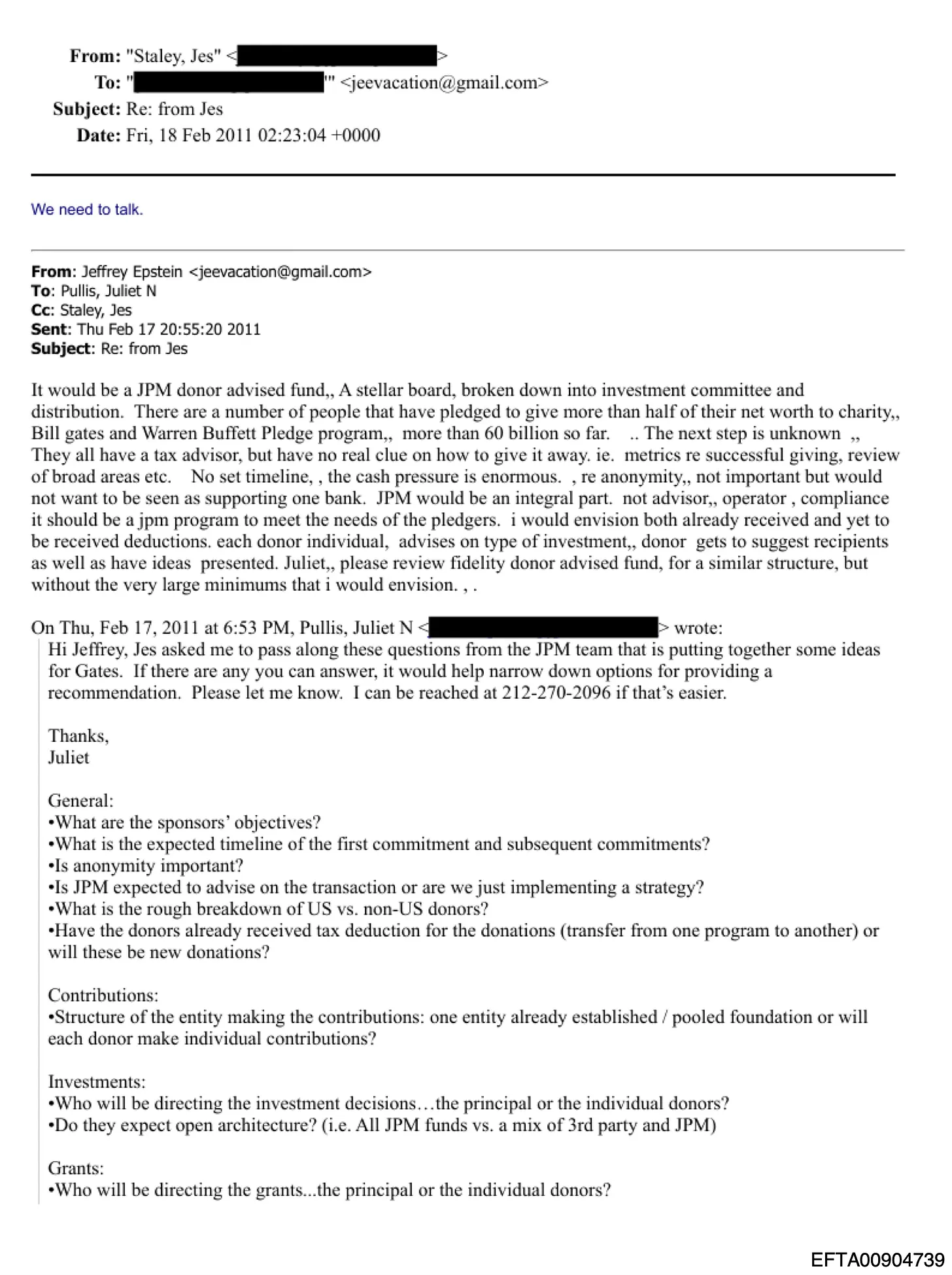
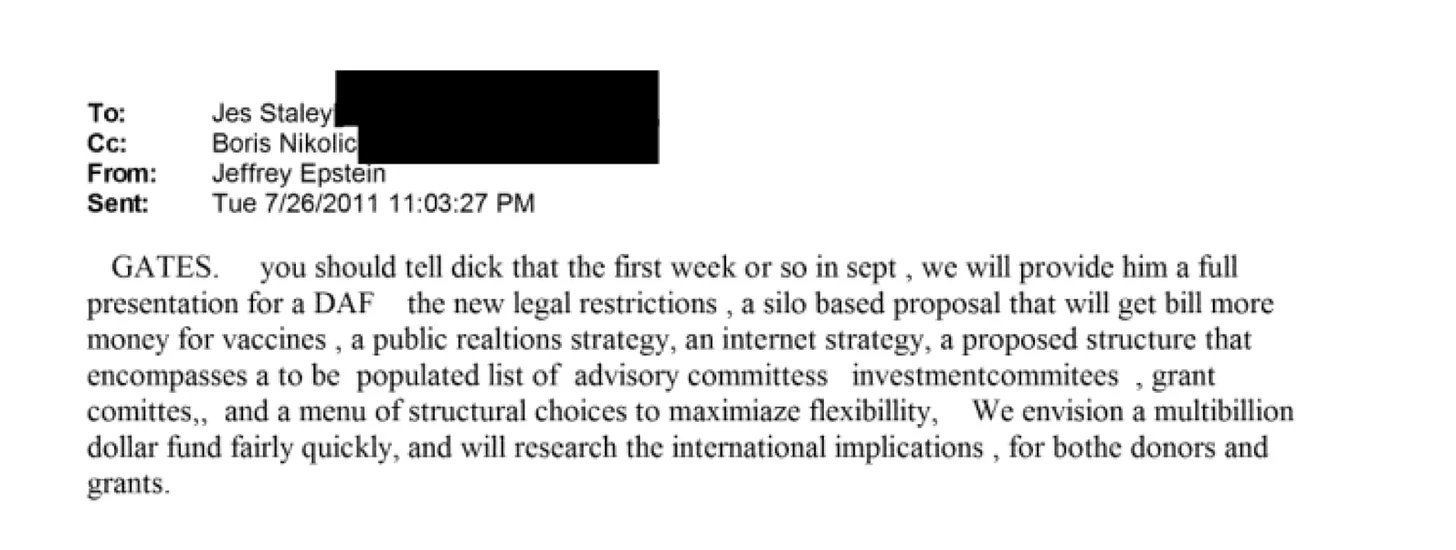
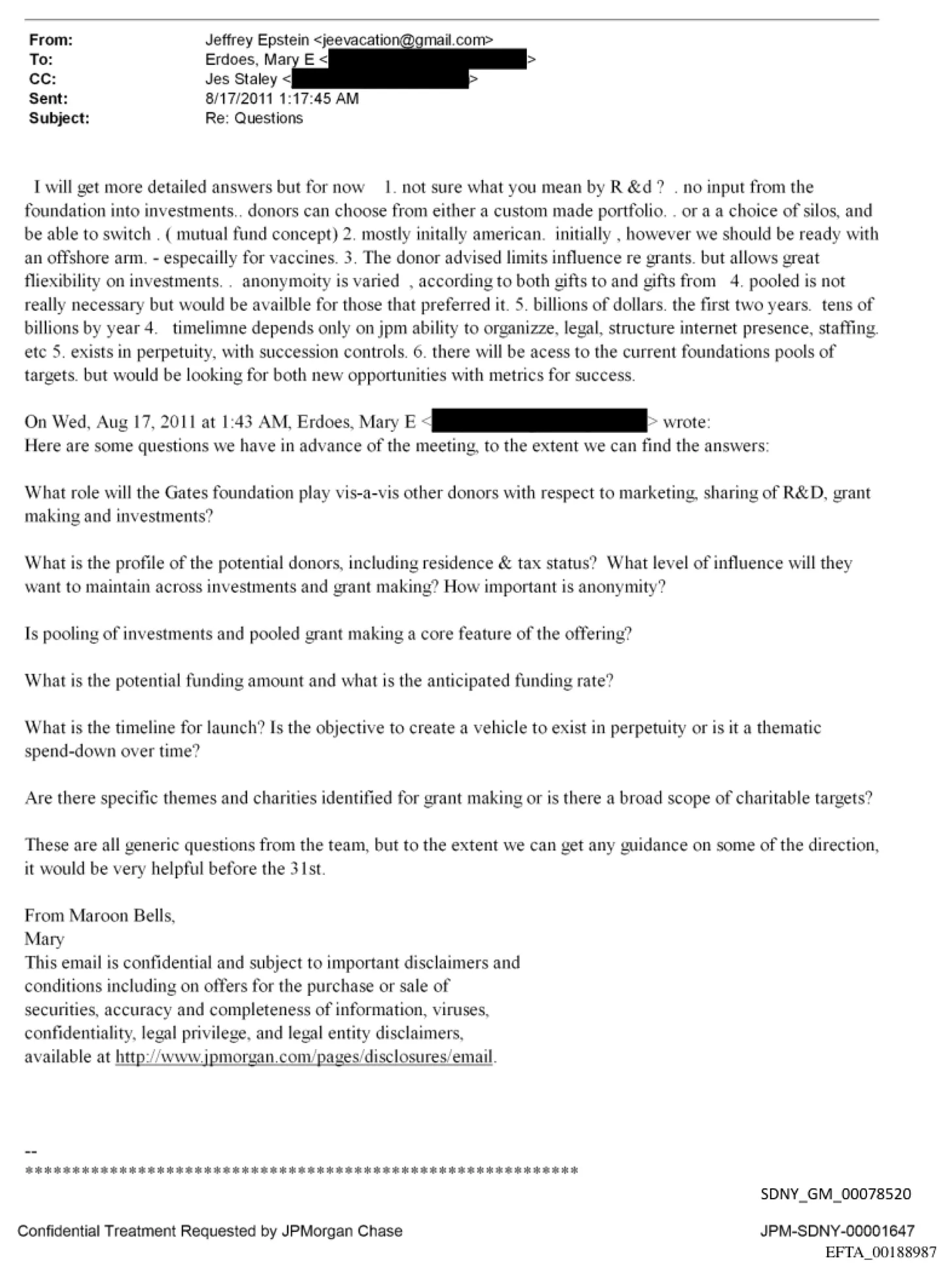


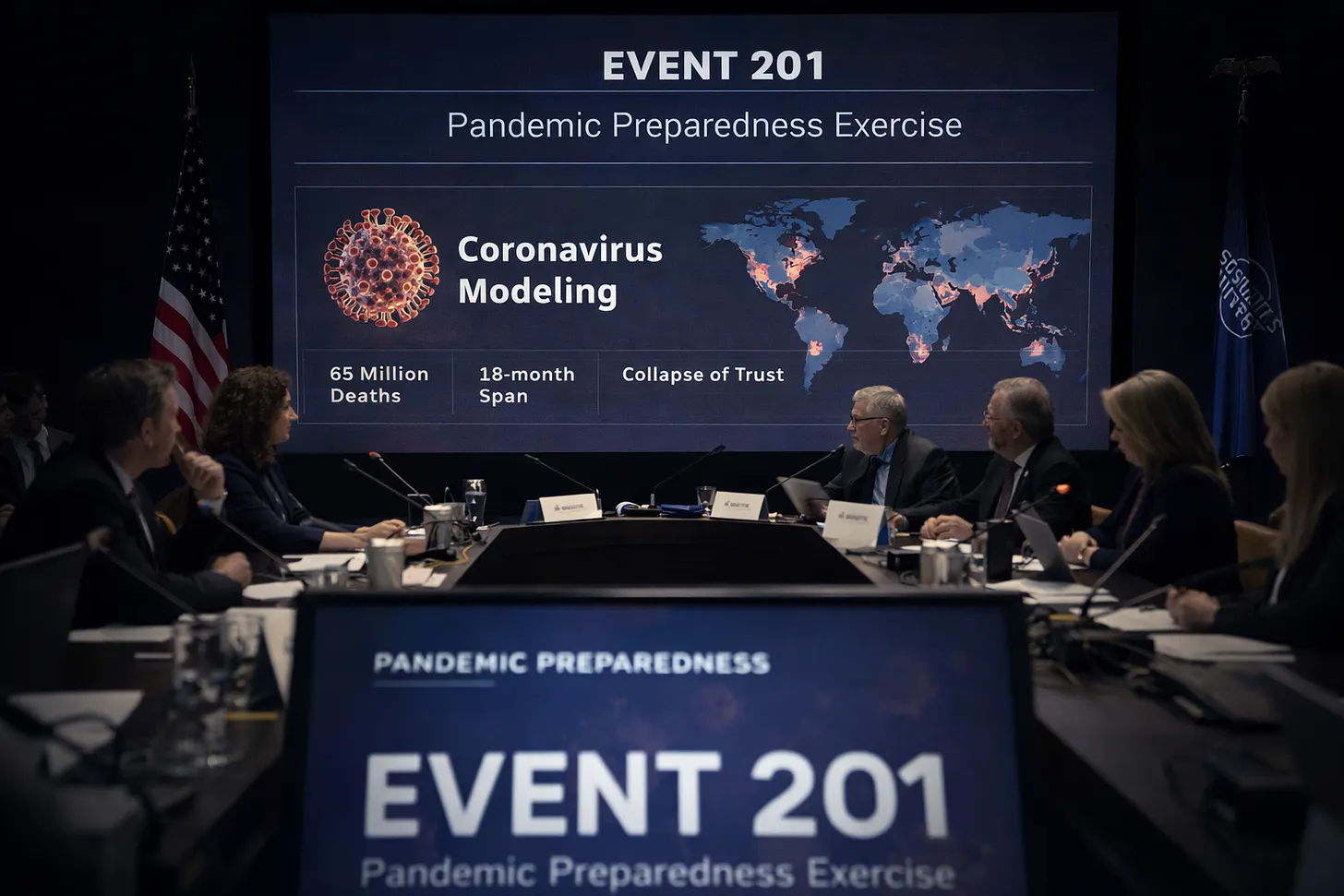


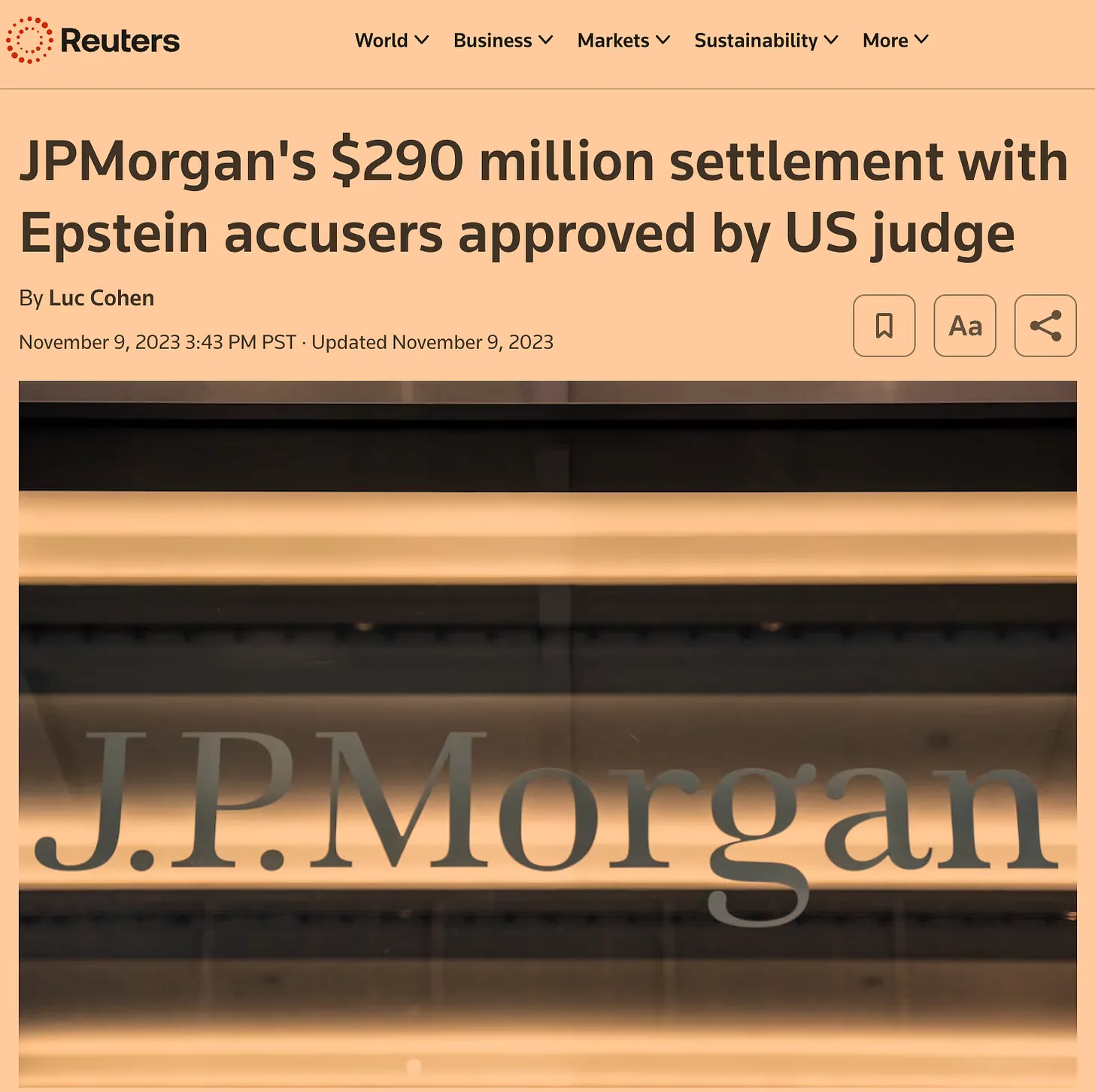


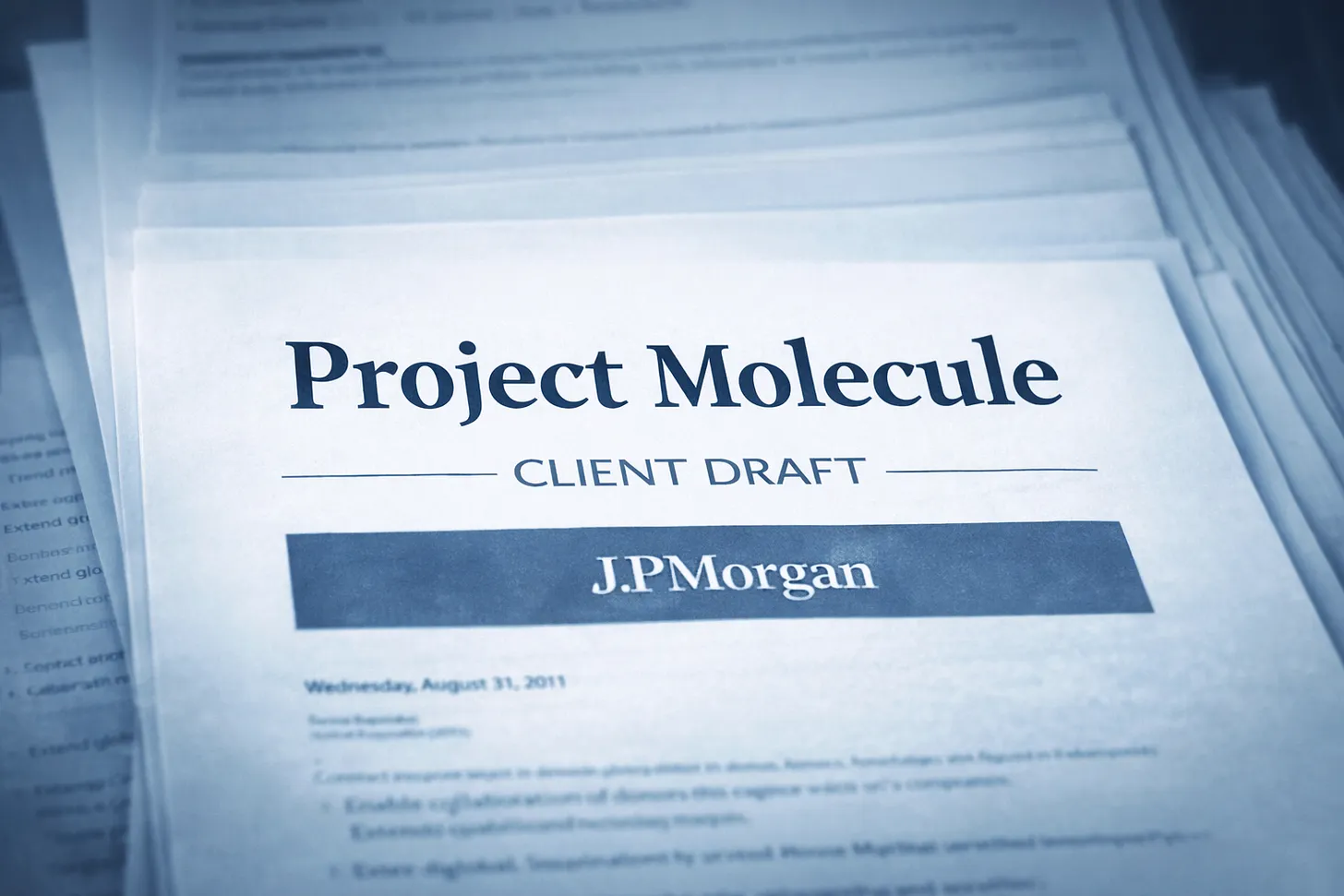
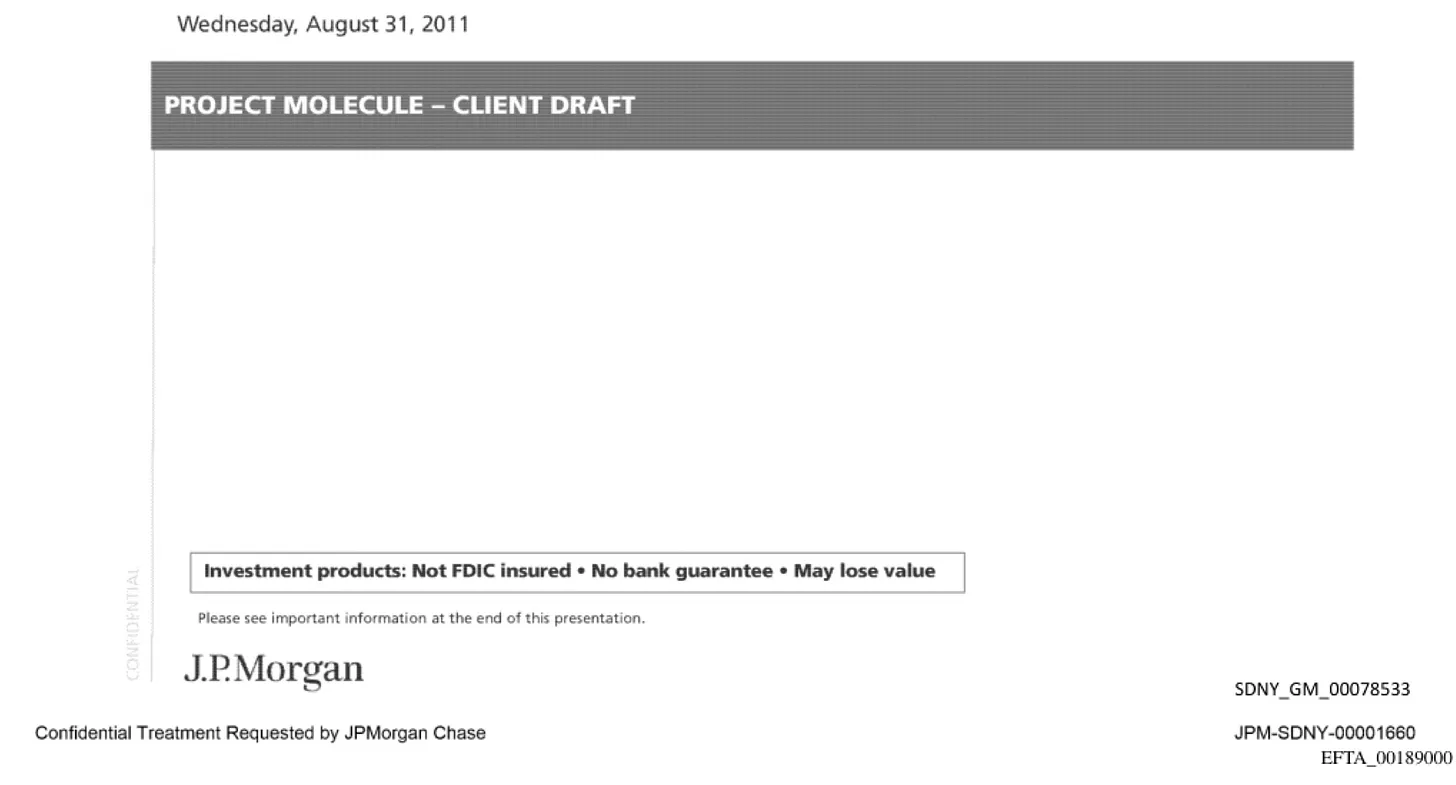
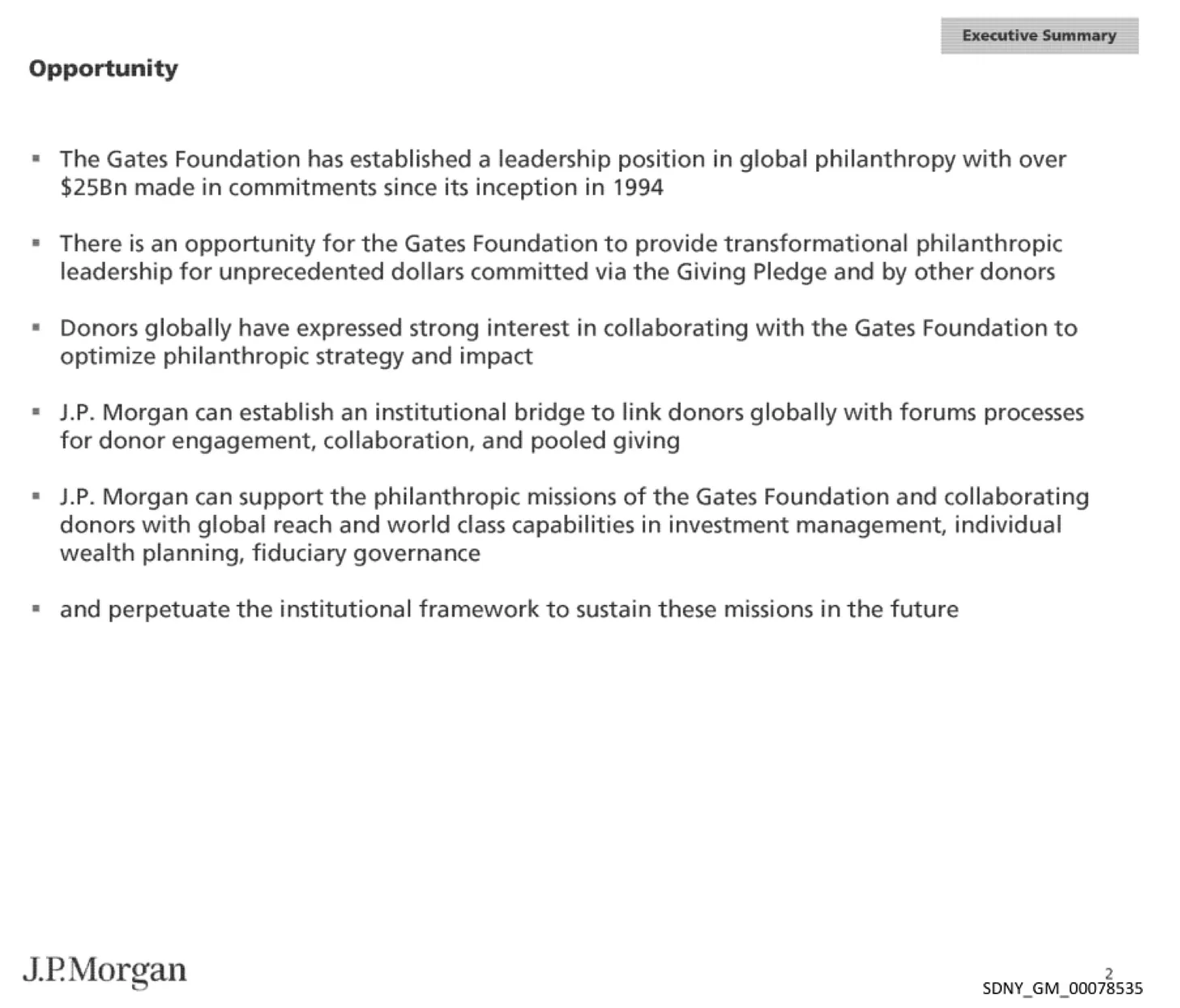
![[IMAGE: Project Molecule organizational chart — EFTA01301118]](https://substackcdn.com/image/fetch/$s_!l2pA!,w_1456,c_limit,f_webp,q_auto:good,fl_progressive:steep/https%3A%2F%2Fsubstack-post-media.s3.amazonaws.com%2Fpublic%2Fimages%2Fdff019e0-c54c-427f-beb1-489e2115aab1_2230x1772.heic "[IMAGE: Project Molecule organizational chart — EFTA01301118]")
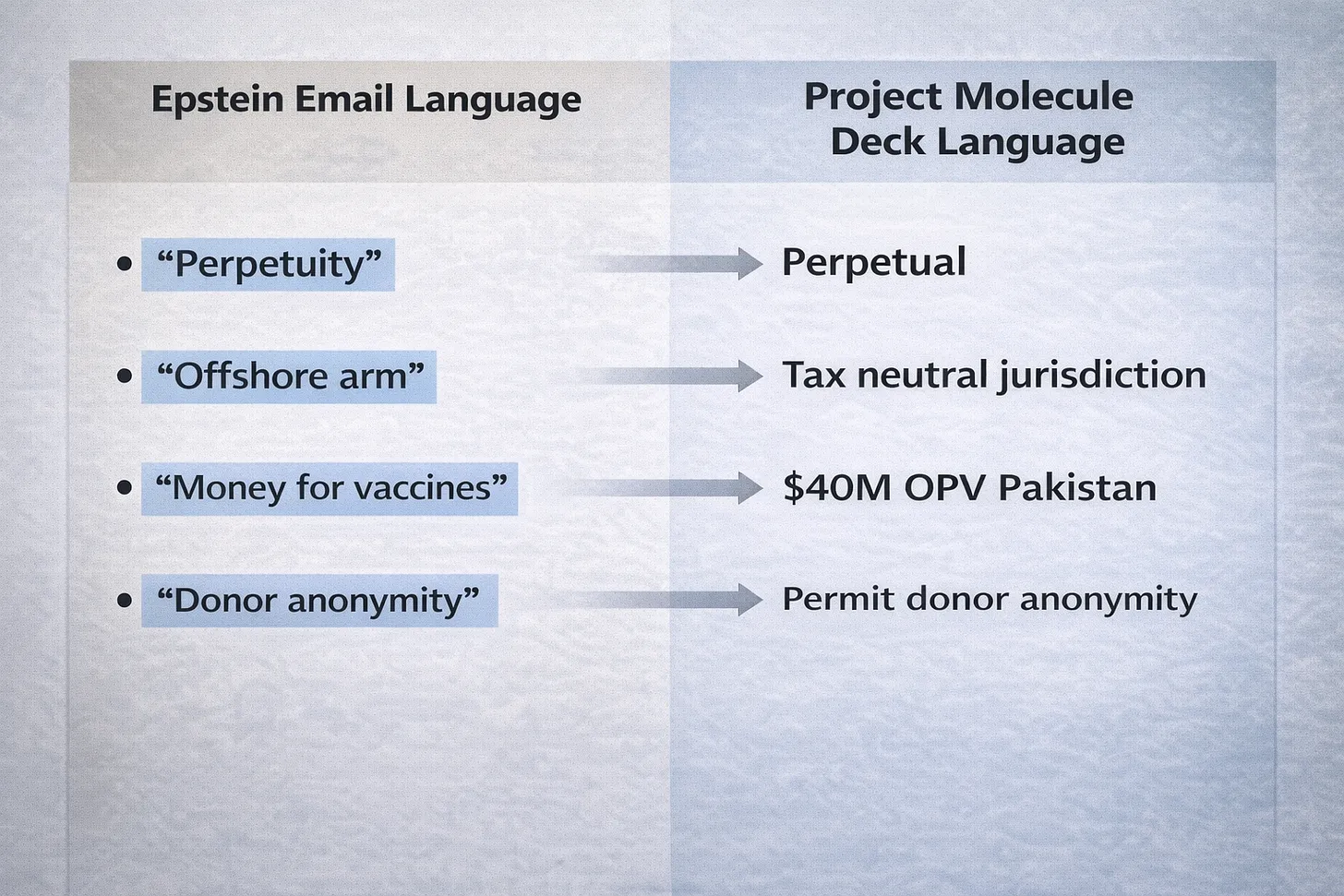
![[IMAGE: “Bill is terribly frustrated” email — EFTA01301108]](https://substackcdn.com/image/fetch/$s_!XV_l!,w_1456,c_limit,f_webp,q_auto:good,fl_progressive:steep/https%3A%2F%2Fsubstack-post-media.s3.amazonaws.com%2Fpublic%2Fimages%2Fdfd52815-5465-465f-a04b-d0b9de8ccf8d_1640x530.heic "[IMAGE: “Bill is terribly frustrated” email — EFTA01301108]")