Οι τελείες ενώνονται ώρα με την ώρα, μέρα με τη μέρα για το ρόλο μίας συγκεκριμένης elite στη Δύση η οποία βρίσκεται πίσω από όλα όσα εξελίσσονται τα τελευταία χρόνια στο δυτικό κόσμο. Πως είναι δυνατόν στα κορυφαία αμερικανικά πενεπιστήμια να κυριαρχεί ο αντισημιτισμός και η βία εναντίον Ισραηλινών σπουδαστών;
Βy Pendulum
Την απάντηση θα τη βρείτε στα σύνορα των ΗΠΑ, εδώ όπου το κυβερνών Δημοκρατικό Κόμμα υποδέχεται και μεταφέρει με πούλμαν 500 χιλιάδες παράνομους μετανάστες τον μήνα οι οποίοι προορίζονται να αντικαταστήσουν τον “κοστοβόρο” δυτικό πληθυσμό στον οποίο οι elites χρεώνουν το σκάσιμο της φούσκας του χρέους-οι Αμερικανοί πολίτες πληρώνουν 200 δις ευρώ τη μέρα μόνο για τους τόκους των 34 τρις του δημοσίου χρέους των ΗΠΑ το οποίο η τελευταία φορά που πληρώθηκε στους ιδιώτες δανειστές του ήταν η 1η Ιανουαρίου του 1835.
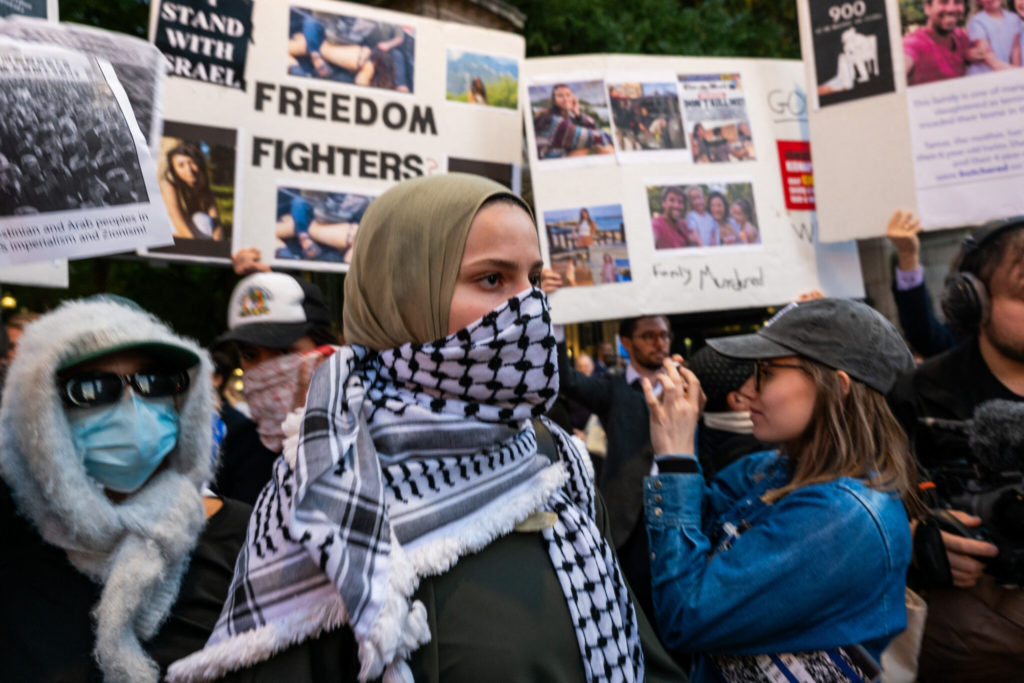
Εκατοντάδες διαδηλωτές λοιπόν κατά του Ισραήλ καλούν σε intifada και χαιρετίζουν τους Houthis στο Columbia University!
Οι διαδηλωτές φωνάζουν για να υποστήριξουν θανατηφόρα εξέγερση, δηλώνουν συμπαράσταση στην ομάδα που υποστηρίζεται από το Ιράν και χτυπά τη ναυτιλία στην Ερυθρά Θάλασσ, ενώ το αντισημιτικό αυτοκόλλητο αναφέρει: «Σιωνιστές δωρητές και διαχειριστές, κάτω τα χέρια από τα πανεπιστήμιά μας»
Η διαμαρτυρία λέγεται ότι οργανώθηκε από τους Students for Justice in Palestine, η οποία υποτίθεται ότι έχει ανασταλεί από την πανεπιστημιούπολη για το υπόλοιπο ακαδημαϊκό έτος, εκτός εάν συμμορφώνεται με τους όρους που θέτει το Columbia.
Οι διαδηλωτές φώναζαν «υπάρχει μόνο μία λύση, η επανάσταση της intifada», αναφερόμενοι στις θανατηφόρες παλαιστινιακές εξεγέρσεις που περιλάμβαναν τρομοκράτες που πραγματοποίησαν θανατηφόρες επιθέσεις αυτοκτονίας εναντίον Ισραηλινών.
Ένα άλλο άσμα που επαναλαμβανόταν ήταν: «Υεμένη, Υεμένη, κάνε μας περήφανους, αιχμαλωτίστε ένα ακόμη πλοίο» — ένα μήνυμα υποστήριξης των ανταρτών Houthi που υποστηρίζονται από το Ιράν, τους οποίους οι ΗΠΑ θεωρούν τρομοκρατική οργάνωση και επιτίθενται στη ναυτιλία της Ερυθράς Θάλασσας τις τελευταίες εβδομάδες .
Οι διαδηλωτές φώναζαν επίσης, «Από το ποτάμι στη θάλασσα, η Παλαιστίνη θα είναι ελεύθερη-From the river to the sea, Palestine will be free», κάτι που αποτελεί έκκληση για απομάκρυνση του κράτους του Ισραήλ.
Ένα αυτοκόλλητο που φωτογραφήθηκε σε έναν κάδο απορριμμάτων πανεπιστημίου έγραφε ένα αντισημιτικό μήνυμα: «Σιωνιστές δωρητές και διαχειριστές, μακριά από τα πανεπιστήμιά μας-“Zionist donors and trustees, hands off our universities.”».
Ένα άλλο βίντεο έδειχνε σπουδαστές να φωνάζουν, «NYPD, KKK, IDF, όλοι ίδιοι είναι», στους αστυνομικούς που ασφάλιζαν τη διαδήλωση.
Δεν ήταν σαφές εάν όλοι οι συμμετέχοντες στη συγκέντρωση ήταν φοιτητές στο Columbia University.
Τουλάχιστον μία συγκέντρωση πραγματοποιήθηκε μέσα σε ένα κτίριο, προφανώς χωρίς καμία ενέργεια από τις αρχές της πανεπιστημιούπολης ή την ασφάλεια.
Το Columbia University ανέστειλε τα κεφάλαια του Students for Justice in Palestine και Jewish Voice for Peace τον Νοέμβριο και είπε ότι θα μπορούσαν να αποκατασταθούν το εαρινό εξάμηνο εάν δείξουν «δέσμευση για συμμόρφωση με τις πανεπιστημιακές πολιτικές».
Αξιωματούχος του πανεπιστημίου είπε ότι οι ομάδες δεν έχουν ακόμη συμφωνήσει να τηρήσουν τους πανεπιστημιακούς κανόνες που θα επέτρεπαν την επαναφορά τους. Ο αξιωματούχος είπε ότι το διοικητικό προσωπικό είχε συναντηθεί με εκπροσώπους των ομάδων για να συζητήσουν τα βήματα προς τον τερματισμό της αναστολής.
Οι αναστολές σημαίνουν ότι οι ομάδες δεν μπορούν να λάβουν πανεπιστημιακή χρηματοδότηση ή να πραγματοποιήσουν εξουσιοδοτημένες εκδηλώσεις στην πανεπιστημιούπολη.
Οι δύο λέσχες ανεστάλησαν καθώς φιλοπαλαιστινιακές και αντι-ισραηλινές δραστηριότητες συντάραξαν την πανεπιστημιούπολη και τα πανεπιστήμια σε όλη τη χώρα, μετά την επίθεση της Ηamas στο Ισραήλ στις 7 Οκτωβρίου και τον πόλεμο στη Γάζα που ακολούθησε.
Το πανεπιστήμιο είπε ότι οι δύο σύλλογοι είχαν παραβιάσει τις πανεπιστημιακές πολιτικές και εξέφρασαν «απειλητική ρητορική και εκφοβισμό».
To Columbia ήταν ένα επίκεντρο διαμάχης τις εβδομάδες μετά τη σφαγή της 7ης Οκτωβρίου, εν μέσω διαμαρτυριών κατά του Ισραήλ και της αναφερθείσας επίθεσης εναντίον ενός Ισραηλινού φοιτητή.
Αλλά η πανεπιστημιούπολη του Columbia είχε βγει εκτός κάδρου από τότε που οι πρόεδροι τριών άλλων elite πανεπιστημίων -Harvard University, the University of Pennsylvania and the Massachusetts Institute of Technology – έδωσαν μαρτυρία στο Κογκρέσο τον περασμένο μήνα που προκάλεσε την οργή των Εβραίων και όχι μόνο. Αυτοί οι πρόεδροι πανεπιστημίων είπαν στους νομοθέτες ότι η έκκληση για γενοκτονία των Εβραίων δεν παραβιάζει απαραίτητα την πανεπιστημιακή πολιτική, προκαλώντας θύελλα διαμάχης που προηγήθηκε της παραίτησης των προέδρων του Penn και του Harvard.
Η Αιγυπτιακής καταγωγής πρόεδρος του Columbia, Minouche Shafik, προσκλήθηκε να εμφανιστεί ενώπιον του Κογκρέσου στην ίδια ακρόαση, αλλά αρνήθηκε, επικαλούμενος το πρόγραμμά του. Η Shafik παρευρέθηκε σε μια διάσκεψη των Ηνωμένων Εθνών για την κλιματική αλλαγή στο Dubai εκείνη την ημέρα.
Εν τω μεταξύ ειδησεογραφικός ιστότοπος επισήμανε την Παρασκευή ότι ο καθηγητής του Χάρβαρντ Derek Penslar, ο οποίος διορίστηκε ως συμπρόεδρος της νέας ειδικής ομάδας αντισημιτισμού που ανακοίνωσε το πανεπιστήμιο, υπέγραψε μια ανοιχτή επιστολή τον Αύγουστο που κατήγγειλε το Ισραήλ για την επιβολή ενός «καθεστώτος apartheid» στους Παλαιστίνιους.
«Οι Αμερικανοί Εβραίοι ήταν εδώ και καιρό στην πρώτη γραμμή των αιτιών κοινωνικής δικαιοσύνης, από τη φυλετική ισότητα μέχρι τα δικαιώματα των αμβλώσεων, αλλά δεν έδωσαν επαρκή προσοχή στον ελέφαντα στην αίθουσα: η μακροχρόνια κατοχή του Ισραήλ που επαναλαμβάνουμε, έχει οδηγήσει σε καθεστώς apartheid», ανέφερε η επιστολή, η οποία επισημάνθηκε από το Washington Free Beacon.
>
The United Nations are currently rolling out Agenda 2030, with the notorious “sustainability goals”. This worldwide project aims to completely transform every aspect of human existence: food, sexuality, family, work, finance, health, education, everything!
This will supposedly put an end to poverty, hunger, inequality, sickness, and other bad things. A former executive director who worked at the UN for two decades, tells a different story
He explains that the UN is controlled by criminals who use it to enrich themselves, and enslave humanity.
To make it clear to everyone that they mean free of Jews, they marched on @Columbia‘s campus shouting a similar chant in Arabic that translates to:
“FROM THE RIVER TO THE SEA PALESTINE WILL BE ARAB”
For them, Jews don’t have a right to exist in their state. pic.twitter.com/dLiaoQ6uep
— Shai Davidai (@ShaiDavidai) January 19, 2024
And then, to make it clear that they support a VIOLENT uprising against Jews and Israeli, they chanted that the *only* solution is Intifada.
Not a two-state solution.
Not co-existence.
No even a permanent ceasefire.They just want us gone (and preferably dead) pic.twitter.com/mactCiEhld
— Shai Davidai (@ShaiDavidai) January 19, 2024
Of course, all the oldest antisemitic tropes were there. pic.twitter.com/NTID5gpII2
— Shai Davidai (@ShaiDavidai) January 19, 2024
If that wasn’t enough, the organizers of these pro-terror groups turned to the *non-White* police officers and shouted at them that the @NYPD is the same as the KKK. @Columbia University let this happen. pic.twitter.com/YiGrpAIY4j
— Shai Davidai (@ShaiDavidai) January 19, 2024
And finally, showing their true colors, they chanted *in support of the Houthis* – calling them to keep attacking American and British ships thousands of miles away from Israel or Gaza. @Columbia University let this happen. pic.twitter.com/gXHvRiWLe6
— Shai Davidai (@ShaiDavidai) January 19, 2024
First, they marched *inside* the buildings of @BarnardCollege, shouting genocidal chants like “from the river to the sea, Palestine will be free”@Columbia University let this happen. pic.twitter.com/YsFKJ24eTT
— Shai Davidai (@ShaiDavidai) January 19, 2024
>
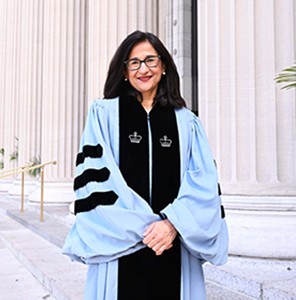
Nemat (Minouche) Shafik became the 20th president of Columbia University on July 1, 2023. President Shafik is a distinguished economist who for more than three decades has served in senior leadership roles across a range of prominent international and academic institutions. She also currently holds the title of Professor of International and Public Affairs at Columbia’s School of International and Public Affairs.
Shafik was born in Alexandria, Egypt. When she was 4 years old, her family fled the country during the political and economic upheaval of the mid-1960s. Her father, a scientist, found work in the United States, where he had done his PhD. Shafik and her sister attended numerous schools in Florida, Georgia, and North Carolina, and she graduated summa cum laude and Phi Beta Kappa from the University of Massachusetts-Amherst with a Bachelor of Arts in economics and politics in 1983. She was awarded a Master of Science in economics from the London School of Economics and Political Science (LSE) in 1986, followed by Doctor of Philosophy in economics from St Antony’s College, Oxford University, in 1989.
A Career in Global Development
Following her Oxford years, Shafik began her career at the World Bank. By age 36, she had become the bank’s youngest-ever vice president. During the early 2000s, she held academic appointments at the Wharton Business School of the University of Pennsylvania and the Economics Department at Georgetown University. In 2008, she was appointed Permanent Secretary of the U.K.’s Department for International Development, where she led an overhaul in British foreign aid. Next, she served as Deputy Managing Director of the International Monetary Fund and then as Deputy Governor of the Bank of England, where she sat on all the monetary, financial, and prudential policy committees and was responsible for a balance sheet of over £500 billion (equivalent of approximately $605 billion). In 2017, she returned to academia as president of the London School of Economics and Political Science.
Throughout her career, Shafik has been at the center of efforts—often during pivotal, high-stakes moments—to address some of the world’s most complex and disruptive challenges. At the World Bank, she worked on the institution’s first-ever report on the environment and later advised governments in Eastern Europe after the fall of the Berlin Wall. At the height of the “Make Poverty History” campaign, Shafik helped secure the UK’s commitment to giving 0.7% of GDP in aid and focused it on fighting poverty in the poorest countries in the world. She worked on both the European debt crisis and the Arab Spring while she was at the IMF. At the Bank of England, she led work on fighting misconduct in financial markets and was responsible for the contingency planning around the Brexit referendum. At LSE, she has encouraged academic work on how to rethink the social contract for the modern economy.
“I have had jobs that are about doing good, such as fighting poverty or leading educational institutions as well as jobs that are about preventing bad things from happening, like at the IMF and Bank of England,” Shafik has said of her career. “Both are vital if we are to make and secure progress for humanity.”
Editor, Author, and Scholar
Shafik has authored, edited, and co-authored a number of books and articles. In her writings and speeches, she has been clear eyed in how leading global institutions must transcend technocratic expertise to engage more fully with the people they serve. She has called for a better social contract to underpin our economic system, most notably in her recent book, What We Owe Each Other: A New Social Contract (2021, Princeton University Press), in which she challenges institutions and individuals to rethink how we can better support each other to thrive. In addition, she has written articles for a number of publications, including Oxford Economic Papers, Columbia Journal of World Business, The Middle East Journal, Journal of African Finance and Economic Development, World Development, and the Journal of Development Economics. Shafik serves or has previously served on numerous boards including as Deputy Chair of the Trustees of the British Museum, board member of the Supervisory Board of Siemens, the Bill and Melinda Gates Foundation the Council of the Institute for Fiscal Studies, and BRAC. In recognition of her public service, she was made a Dame Commander by Queen Elizabeth II in 2015 and a cross-bench peer in the House of Lords in 2020. She is also an Honorary Fellow of the British Academy, St Antony’s College at Oxford University, and a Fellow of the Academy of Social Sciences.
She was awarded Honorary Doctorates from the University of Warwick, the University of Reading, the University of Glasgow, and the American University in Beirut, and was selected “Woman of the Year” at the Global Leadership and Global Diversity awards in 2009. She also was named Forbes “100 Most Powerful Women” in 2015, “100 Women in Finance European Industry Leader” in 2018, and “100 Most Influential Africans” in 2021 by New African magazine.
She is married to Raffael Jovine, a molecular biologist, with whom she has two college-age children and three adult stepchildren.